Kachina Peaks
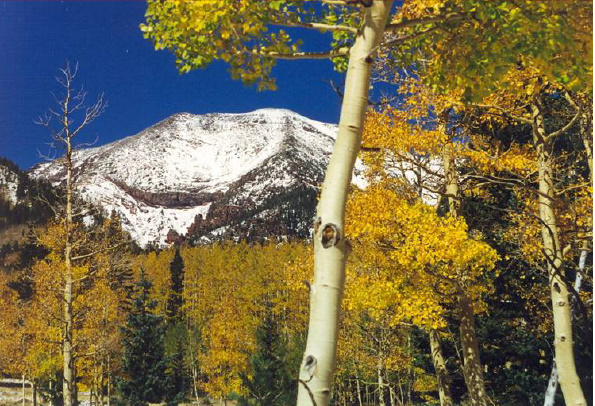
Photo: USFS, Public domain, via Wikimedia Commons
Kachina Peaks rises prominently in north-central Arizona (not New Mexico as sometimes reported), forming part of the San Francisco Peaks volcanic field near Flagstaff. This sacred mountain complex, with Humphreys Peak reaching approximately 12,633 feet as Arizona's highest point, holds profound spiritual significance for multiple Pueblo tribes and the Hopi people. The peaks are named after the Hopi kachina spirits, supernatural beings believed to reside in these mountains during certain seasons. Today, visitors encounter a dramatic volcanic landscape with ancient lava flows, alpine forests, and sweeping views across the Colorado Plateau, while the surrounding region contains numerous Ancestral Puebloan archaeological sites dating back over 1,000 years.
Timeline
Ancestral Puebloan peoples establish settlements throughout the surrounding region
Spanish explorers first document European contact with area's indigenous peoples
San Francisco Peaks area gains federal protection, recognizing both ecological and cultural significance
What the Show Claims
- ›Mesa believed to contain an alien base and serves as a center for otherworldly phenomenaS21E06
- ›Location associated with frequent UFO sightings and extraterrestrial activity in the American SouthwestS21E06
- ›Mysterious mountain holds secrets connecting to ancient astronaut theoriesS21E06
What Archaeology Says
Archaeological investigations in the Kachina Peaks region have revealed extensive evidence of Ancestral Puebloan occupation spanning several centuries. The surrounding areas contain numerous pueblo ruins, petroglyphs, and artifact scatters that demonstrate continuous indigenous presence and the mountain's enduring sacred significance. Researchers have documented sophisticated agricultural systems, including check dams and terraced gardens, showing how ancient peoples adapted to this high-elevation environment.
While the peaks themselves don't contain major structural ruins like those found at Mesa Verde or Chaco Canyon, the mountain's role as a spiritual center is well-documented through oral traditions and ceremonial sites. Archaeological evidence suggests the peaks served as a pilgrimage destination and source of sacred materials, with obsidian and other volcanic minerals being traded across vast distances throughout the Southwest.
The scientific consensus emphasizes the peaks' volcanic origins, formed through eruptions beginning approximately 6 million years ago, with the most recent activity occurring around 1,000 years ago. What remains genuinely intriguing to researchers is the sophisticated astronomical knowledge demonstrated by surrounding Ancestral Puebloan sites, which align with celestial events and suggest the mountains played important roles in ancient calendrical systems.
Modern studies continue to explore the relationship between the area's geology, indigenous cultural practices, and reported anomalous phenomena, though no evidence supports extraterrestrial bases. The intersection of sacred indigenous sites, volcanic geology, and contemporary UFO reports creates a complex landscape where ancient spiritual traditions meet modern mysteries.
Mysteries & Fun Facts
The San Francisco Peaks are considered the sacred home of the Hopi kachina spirits, who are believed to live there for half the year
Arizona Snowbowl ski resort operates on the peaks, making it one of the few places where you can ski on a mountain considered sacred by multiple Native American tribes
The peaks are actually the remnants of a much larger stratovolcano that may have reached over 15,000 feet before collapsing
The area's high elevation creates a unique ecosystem that supports species typically found much farther north, including Engelmann spruce and aspen groves
Planning a Visit
The Kachina Peaks area is generally accessible to visitors through Coconino National Forest, with hiking trails leading to various viewpoints and archaeological sites. Visitors should respect the sacred nature of these mountains to local tribes and follow established trails to minimize impact on sensitive cultural sites.
Flagstaff, Arizona, approximately 10 miles northeast
Late spring through early fall offers the most favorable conditions, with summer providing access to higher elevations. Winter brings heavy snow to the peaks, making some areas inaccessible but offering dramatic alpine scenery.