MARGO Observatory, Crimea
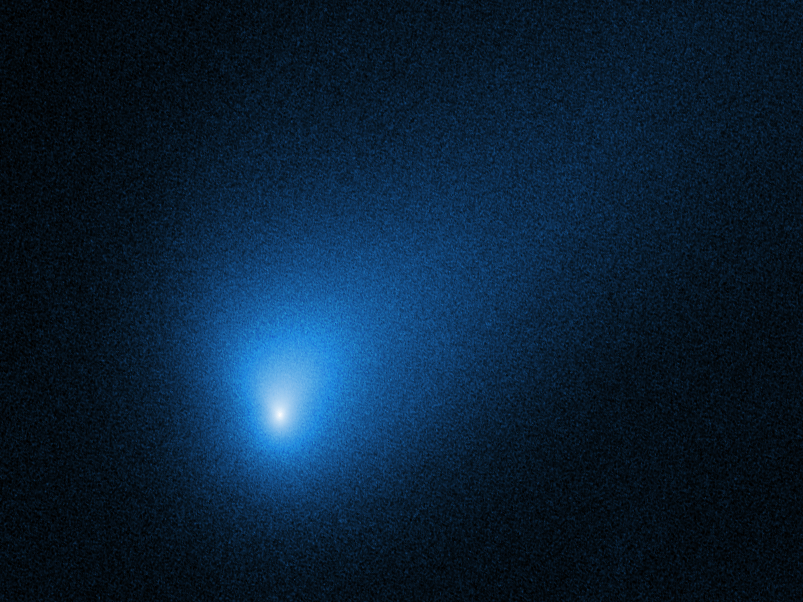
Photo: NASA, ESA, and D. Jewitt (UCLA), Public domain, via Wikimedia Commons
The MARGO Observatory in Crimea operates as an astronomical observation facility that gained international recognition in 2019 when amateur astronomer Gennadiy Borisov discovered the first confirmed interstellar comet using its telescopic equipment. Located in the Crimean Peninsula at coordinates 45°N, 34°E, the observatory represents a modern astronomical research station rather than an ancient archaeological site. The facility houses telescopes capable of detecting and tracking celestial objects across vast interstellar distances. MARGO's contribution to astronomy includes the historic discovery of 2I/Borisov, which traveled from beyond our solar system at speeds exceeding 30 kilometers per second.
Timeline
MARGO Observatory established as astronomical research facility in Crimea
Gennadiy Borisov discovers interstellar comet 2I/Borisov on August 30
International astronomical community confirms second interstellar object detection
What the Show Claims
- ›Theorists suggest that the Borisov comet, discovered at the MARGO Observatory in August 2019, may be a second intelligently directed interstellar probe, potentially sent by a different extraterrestrial civilization than the one that sent 'OumuamuaS15E07
Theorist Takes
“This is kind of alarming to some astronomers because we wonder, are these cosmic messengers coming here bringing us warnings? Are they signaling something? Is this just the start of more interstellar objects entering into our solar system?”
From the Transcripts
“Crimea, August 30, 2019. At the MARGO Observatory, amateur astronomer Gennadiy Borisov detects a strange object traveling through the sky. It is dubbed the Borisov comet, and becomes the second interstellar object ever discovered in our solar system.”
What Archaeology Says
Unlike traditional archaeological sites, MARGO Observatory represents a modern scientific facility dedicated to astronomical observation and research. The observatory's significance lies not in ancient construction techniques or historical civilizations, but in its role as a detection point for interstellar phenomena that challenge our understanding of cosmic mechanics and potential extraterrestrial activity.
The discovery of Comet Borisov at MARGO marked a pivotal moment in interstellar astronomy, providing scientists with the second confirmed object originating from beyond our solar system. Amateur astronomer Gennadiy Borisov's detection work using the observatory's equipment demonstrated how modern ground-based facilities can contribute to groundbreaking astronomical discoveries. The comet exhibited typical cometary characteristics including outgassing activity and a distinctive coma, distinguishing it from the previous interstellar visitor 'Oumuamua.
Scientific consensus views Comet Borisov as a natural celestial body formed in another star system, likely ejected during planetary formation processes billions of years ago. Spectroscopic analysis revealed familiar cometary composition including water ice and organic compounds, supporting natural origin theories. However, the comet's interstellar trajectory and timing have prompted speculation about potential artificial guidance or intentional direction toward our solar system.
What remains genuinely intriguing is the statistical improbability of detecting two interstellar objects within such a short timeframe, raising questions about whether such visitors are more common than previously assumed. The precise mechanisms that ejected both 'Oumuamua and Comet Borisov from their origin systems continue to challenge astronomical models, leaving room for continued research and debate about interstellar object behavior and origins.
Mysteries & Fun Facts
Comet Borisov traveled through space for potentially millions of years before entering our solar system
The discovery represents only the second confirmed interstellar object detected by human astronomers
Amateur astronomer Gennadiy Borisov made the historic discovery using relatively modest telescopic equipment
The comet's interstellar origin was confirmed through precise trajectory calculations showing its hyperbolic orbit
Planning a Visit
MARGO Observatory is generally accessible to astronomy enthusiasts and researchers, though specific visiting arrangements may require coordination with local authorities. The facility operates as a working research station, so public access may be limited during active observation periods.
Simferopol, approximately 50 kilometers from the observatory location
Clear night conditions during autumn and winter months typically provide optimal astronomical observation opportunities. Check with local tourism authorities for current access policies and weather conditions.
Related Sites
Tunguska explosion site
Another location where mysterious celestial objects or phenomena have impacted or been observed from Earth
Big Ear Radio Telescope, Ohio State University
Radio astronomy facility that detected potential extraterrestrial signals, connecting to theories about intelligently directed cosmic objects