Ozarks spook light site
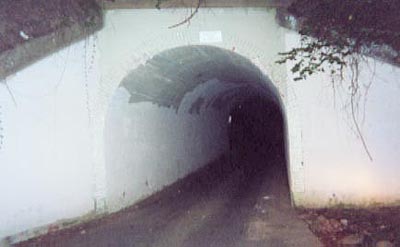
Photo: Secretsqurl (talk) (Uploads), Public domain, via Wikimedia Commons
The Ozark spook light appears as a small, intensely bright ball of light that manifests near the Oklahoma-Missouri border in the rural Ozarks region. Witnesses describe the phenomenon as typically orange, red, or white in color, approximately the size of a basketball, hovering or moving erratically at heights ranging from ground level to several feet above the terrain. The light reportedly appears most frequently along a four-mile stretch of gravel road known locally as the Devil's Promenade or Spook Light Road. The surrounding landscape consists of rolling hills, dense forests, and open fields typical of the Ozark Mountains, with the phenomenon generally observed in areas of low population density and minimal artificial lighting.
Timeline
First documented reports of mysterious lights in the Ozark region begin appearing in local accounts
U.S. Army Corps of Engineers conducts official investigation into the spook light phenomenon
Peak period of public interest and media coverage brings increased scientific attention to the phenomenon
Modern paranormal investigators and television documentaries renew scientific and popular interest in the lights
What the Show Claims
- ›The Ozark spook light represents an anomalous orb phenomenon consistent with non-human intelligence manifestationsS21E08
- ›The light demonstrates apparent awareness and interaction with human observers, responding to calls and following vehiclesS21E08
- ›Conventional explanations like swamp gas, distant car headlights, and ball lightning fail to account for all reported characteristics and behaviorsS21E08
What Archaeology Says
The Ozark spook light phenomenon, while not archaeological in the traditional sense, has been the subject of systematic investigation by both civilian researchers and government agencies for nearly two centuries. The U.S. Army Corps of Engineers conducted one of the most thorough official studies in 1946, though their findings reportedly remained inconclusive. Military investigators documented multiple eyewitness accounts and attempted to correlate sightings with weather patterns, geological features, and human activity in the region.
Researchers have proposed numerous conventional explanations over the decades, including marsh gas emissions from the area's wetlands, refracted light from distant automobile headlights on Highway 66, atmospheric temperature inversions creating optical illusions, and rare ball lightning phenomena. However, witnesses and investigators note that many sightings predate widespread automobile use and occur in locations where geographical features would preclude distant headlight reflection. The light's reported interactive behavior - appearing to respond to observers' presence or calls - has proven particularly challenging for conventional explanations to address.
The scientific consensus remains divided, with most mainstream researchers favoring atmospheric or optical explanations while acknowledging that no single theory adequately accounts for all documented characteristics. The phenomenon continues to attract both serious paranormal investigators and curious tourists, with sighting reports maintaining remarkable consistency across different decades and observer groups. Local folklore and Native American traditions in the region include references to mysterious lights, though establishing direct connections between historical accounts and modern sightings remains speculative.
What genuinely remains unknown is the precise mechanism behind the most well-documented sightings, particularly those involving apparent intelligent behavior or interaction with observers. The longevity and consistency of reports across nearly two centuries suggests a real phenomenon, though its exact nature and origin continue to elude definitive scientific explanation.
Mysteries & Fun Facts
The phenomenon has reportedly been investigated by the U.S. Army Corps of Engineers, making it one of the few unexplained light phenomena to receive official military study
Sighting reports have remained remarkably consistent across nearly two centuries, with observers describing similar size, color, and behavioral characteristics
The light is also known locally as the Hornet Spook Light, named after the small community of Hornet, Missouri, near where many sightings occur
Some witnesses report that the light appears to respond to automobile horn honks or shouted calls, suggesting possible interactive behavior
Planning a Visit
The primary viewing area is generally accessible via gravel roads near the Oklahoma-Missouri border, though exact locations vary depending on local landowner permissions and seasonal road conditions. Visitors typically gather along rural roads during evening hours when sightings are most commonly reported, though success in observing the phenomenon cannot be guaranteed.
Joplin, Missouri, approximately 12 miles northeast
Evening hours during clear weather conditions are considered optimal for potential sightings. Local tourism sources suggest that spring and fall months may offer the best combination of favorable weather and road accessibility.
Related Sites
Roswell
Another location in the United States associated with unexplained aerial phenomena and government investigation
Tunguska explosion site
A remote location known for mysterious atmospheric phenomena that has attracted scientific study and speculation
Joshua Tree National Park
A desert location in the American Southwest known for unusual light phenomena and UFO sightings