The Open University, Milton Keynes
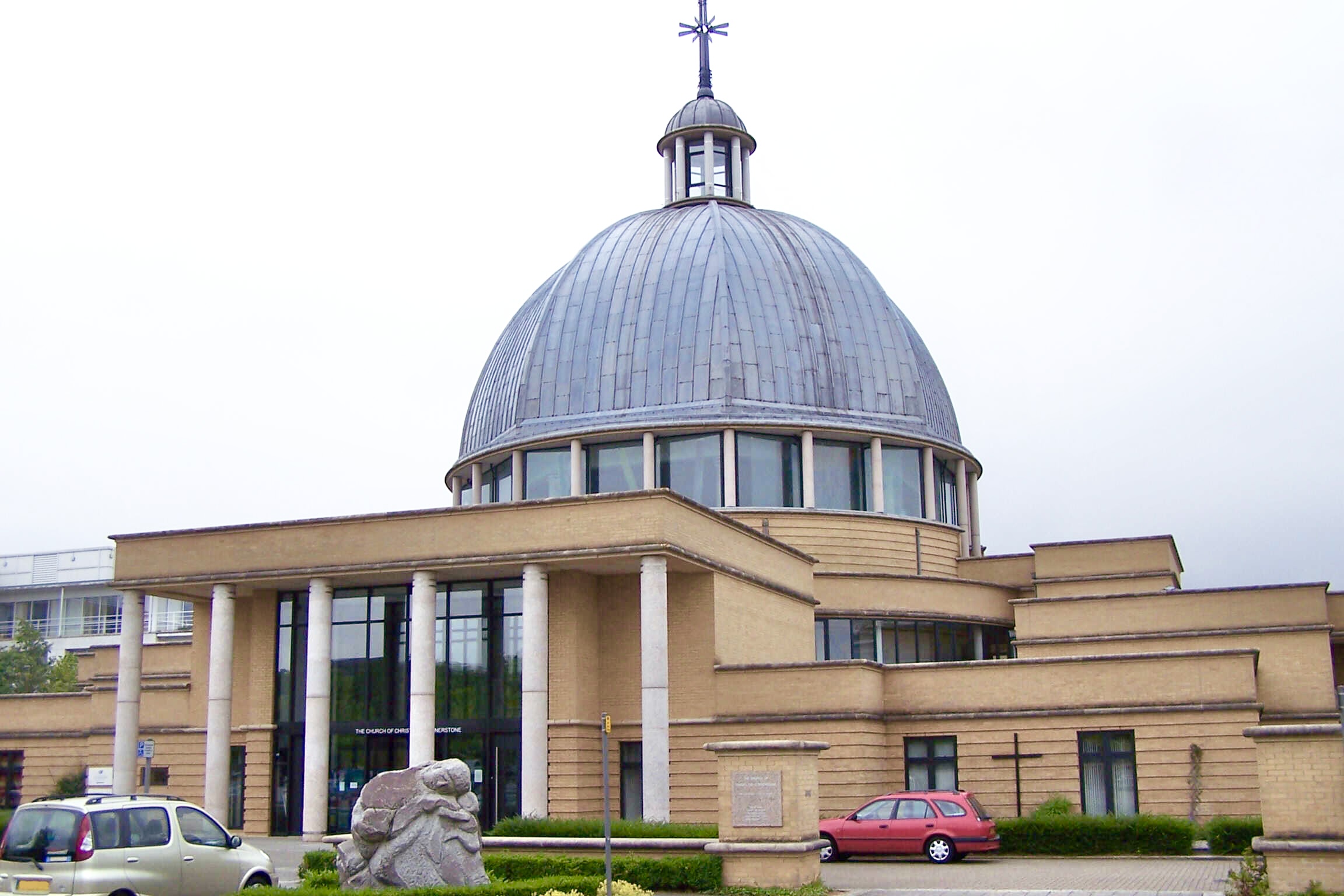
Photo: Cnyborg, CC BY-SA 3.0, via Wikimedia Commons
The Open University in Milton Keynes represents a unique modern location featured on Ancient Aliens, where cutting-edge planetary science research takes place on a sprawling 930-acre campus. Established in 1969, this distance-learning institution houses state-of-the-art laboratories where researchers like Dr. Queenie Chan analyze extraterrestrial materials. The university's modern concrete and glass buildings create an academic environment where ancient questions about life's origins are explored through contemporary scientific methods. Visitors to the campus encounter a blend of brutalist architecture and landscaped grounds, designed to accommodate both residential and research facilities.
Timeline
The Open University receives its Royal Charter and begins operations as Britain's first distance-learning university
Zag and Monahans meteorites fall to Earth, later becoming subjects of intensive study
Dr. Queenie Chan begins groundbreaking research on meteorite samples containing liquid water inclusions
Ancient Aliens features the university's meteorite research in 'They Came from the Sea' episode
What the Show Claims
- ›Meteorite samples containing liquid water and amino acids support the panspermia hypothesis that life was seeded on Earth by extraterrestrialsS14E05
- ›Blue salt crystals within meteorites preserve ancient liquid water that may contain the building blocks of lifeS14E05
Theorist Takes
“I immediately go to the idea of panspermia... that life has been brought throughout the entire galaxy by means with which we can't even fathom how it was done.”
From the Transcripts
“Milton Keynes, England. March 2019. Ancient astronaut theorist Giorgio Tsoukalos travels to The Open University to meet with planetary scientist Dr. Queenie Chan.”
What Archaeology Says
While The Open University isn't an archaeological site in the traditional sense, it serves as a crucial research hub for understanding humanity's cosmic origins through the study of extraterrestrial materials. Dr. Queenie Chan's laboratory has become internationally recognized for its analysis of meteorite samples, particularly the Zag and Monahans specimens that fell in 1998. These meteorites contain remarkable blue salt crystals with liquid water inclusions that have remained trapped for potentially billions of years.
The scientific work conducted here follows rigorous peer-review processes, with Dr. Chan's findings published in respected journals and confirmed through multiple analytical techniques. Her research demonstrates that amino acids — the building blocks of proteins essential for life — can indeed survive within meteorites alongside liquid water. This represents genuine scientific discovery rather than speculation, providing concrete evidence that the ingredients for life exist beyond Earth.
The broader scientific community acknowledges these findings as significant contributions to astrobiology, though most researchers interpret them as evidence for the widespread distribution of life's basic components rather than proof of directed seeding by intelligent extraterrestrials. The presence of amino acids in meteorites supports the hypothesis that similar chemistry likely occurs throughout the universe.
What remains genuinely intriguing is the question of how complex the organic chemistry within these ancient water inclusions might be, and whether more sophisticated molecular structures await discovery. The university's ongoing research continues to push the boundaries of our understanding about life's potential origins and distribution in the cosmos.
Mysteries & Fun Facts
The Open University was the world's first successful distance-learning university and has educated over 2 million students since 1971
The Zag meteorite studied here contains salt crystals that may preserve water older than our solar system
Dr. Chan's meteorite research has implications for understanding potential life on Mars and other planetary bodies
The university's campus features distinctive 1970s architecture including the iconic concrete and glass Faculty of Science building
Planning a Visit
The Open University campus is generally accessible to visitors, though specific laboratory facilities typically require advance arrangements for tours. The campus features modern architecture and landscaped grounds that can be explored, with visitor parking available near the main buildings.
Milton Keynes city center is approximately 3 miles away.
The campus can be visited year-round, though spring and summer months offer the most pleasant weather for exploring the outdoor areas and walking paths.
Related Sites
Royal Society, London
Another British institution featured on Ancient Aliens for its role in advancing scientific understanding of cosmic phenomena
Cambridge University
Fellow academic institution where researchers explore questions about ancient knowledge and cosmic connections
Tunguska explosion site
Site of a mysterious 1908 explosion that some theorize involved extraterrestrial materials similar to those studied at Open University