Karnak Temple Complex
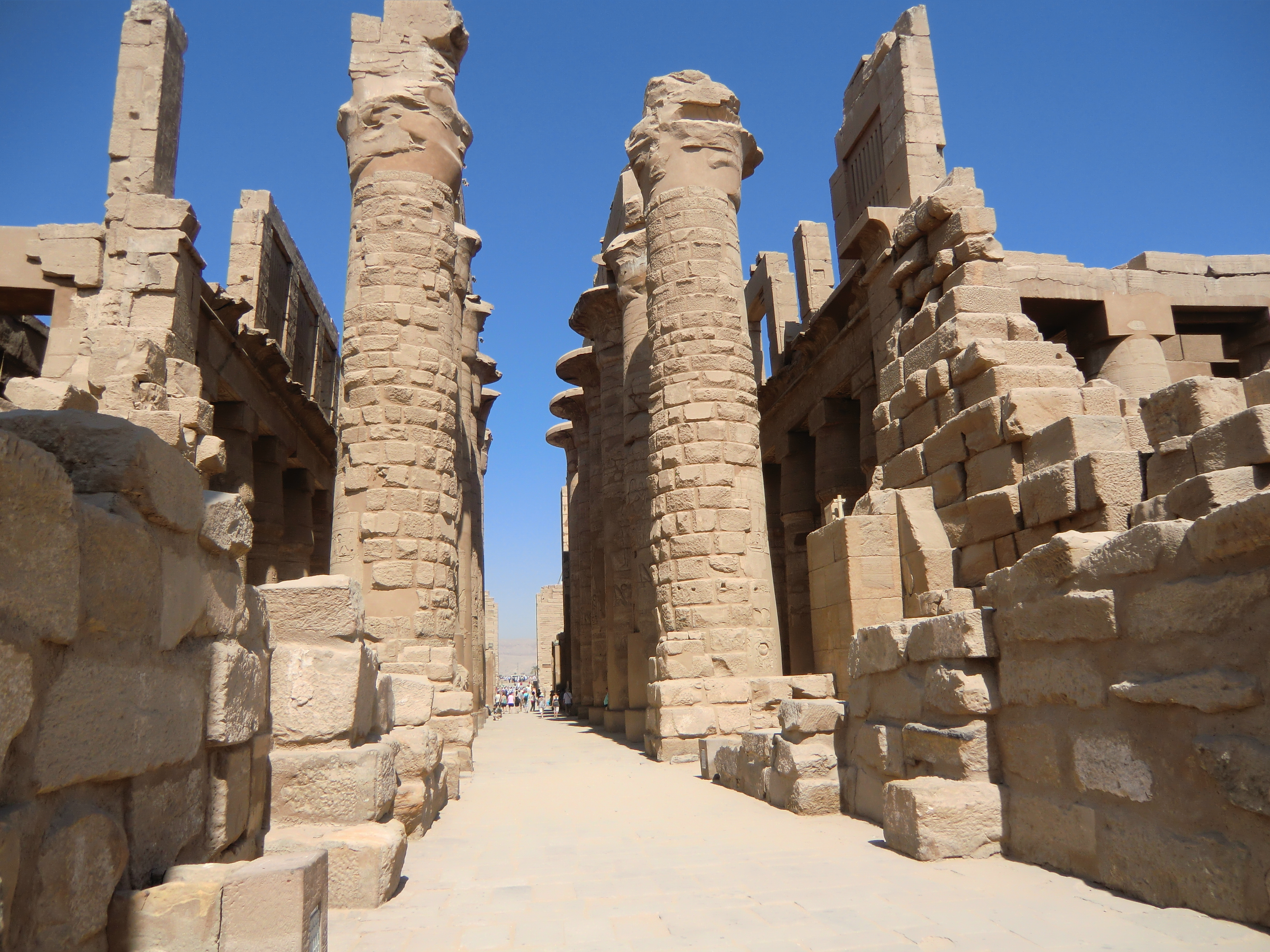
Photo: René Hourdry, CC BY-SA 4.0, via Wikimedia Commons
The Karnak Temple Complex is a vast collection of temples, pylons, chapels, and other sacred buildings covering approximately 200 acres near Luxor, Egypt. Visitors today encounter the largest ancient religious site in the world, dominated by the spectacular Great Hypostyle Hall with its forest of 134 massive sandstone columns, some reaching heights of 69 feet. The complex served as the primary worship center for the Theban Triad of gods, with Amun-Ra at its head, and represents over 2,000 years of continuous construction and renovation. The site sits on the east bank of the Nile River, connected to Luxor Temple by an ancient avenue of sphinxes that archaeologists are still uncovering.
Timeline
Construction begins during Middle Kingdom under Senusret I
Major expansion during New Kingdom, most extant buildings constructed
Final additions made during Ptolemaic period
Auguste Mariette begins systematic archaeological excavation
Becomes part of UNESCO World Heritage Site as Ancient Thebes
What the Show Claims
- ›The largest ancient religious site in the world required alien engineering to buildS05E01S13E07
- ›The Hypostyle Hall's 134 massive columns were cut with alien-precision machineryS05E01
- ›An ancient helicopter, submarine, and spacecraft are depicted in hieroglyphs on the Seti I temple ceilingS09E05
- ›Acoustic properties of certain chambers may have been used for alien communicationS13E07
Theorist Takes
“The whole reign of Akhenaten leads us to think that he had contact with extraterrestrials.”
From the Transcripts
“Luxor, Egypt. Along the east bank of the Nile River, lie the ruins of the Karnak temple complex, dating to the 32nd century B.C.”
What Archaeology Says
Archaeological excavations at Karnak have revealed a complex construction history spanning over two millennia. Auguste Mariette's pioneering work in the 19th century established the site's chronology, while subsequent excavations by the Oriental Institute of Chicago and other institutions have uncovered administrative papyri, workers' marks, and quarry records that document the human engineering behind this massive project. These discoveries show how successive pharaohs expanded and modified existing structures, creating the layered complexity visitors see today.
The famous 'helicopter hieroglyphs' in the Seti I temple represent one of archaeology's best-documented examples of palimpsest — the practice of carving new inscriptions over older ones. When Seti I died, his son Ramesses II had his father's cartouche plastered over and replaced with his own. Over centuries, as the plaster eroded, the underlying and overlying hieroglyphs merged to create shapes that modern eyes might interpret as helicopters or aircraft. Egyptologists have photographed and documented this layering process, showing exactly how these ambiguous forms developed.
The construction techniques used at Karnak, while impressive, align with well-understood ancient Egyptian methods. Tool marks on the massive columns show evidence of copper chisels, wooden wedges, and bronze saws — technologies documented throughout pharaonic Egypt. The precision of the stonework reflects the high skill level of Egyptian craftsmen rather than unknown technology. Quarry inscriptions indicate the sandstone came from Gebel el-Silsila, about 65 kilometers south, transported via Nile barges during flood season.
Despite extensive study, certain aspects of Karnak remain genuinely mysterious. The complex acoustic properties of some chambers continue to intrigue researchers, though these likely result from intentional architectural design for religious ceremonies rather than extraterrestrial communication. The exact methods used to erect the heaviest obelisks and architraves also remain subjects of scholarly debate, with various theories about ramps, levers, and counterweight systems still being tested and refined.
Mysteries & Fun Facts
The Great Hypostyle Hall covers an area of 54,000 square feet — large enough to fit Notre-Dame Cathedral inside
The site contains the tallest obelisk ever successfully erected, standing 97 feet high and weighing an estimated 323 tons
Construction spanned the reigns of approximately 30 different pharaohs from the Middle Kingdom through Ptolemaic period
The complex was originally connected to Luxor Temple by a 1.7-mile avenue lined with over 1,000 sphinx statues
Planning a Visit
Karnak is generally accessible to visitors year-round, with regular opening hours and ticket facilities on-site. The complex is vast, so plan at least 2-3 hours to explore the main areas including the Great Hypostyle Hall and the Sacred Lake. Evening sound and light shows are often available, though visitors should check current schedules with local tourism authorities.
Luxor, approximately 3 kilometers away
The cooler months from October through March offer the most comfortable touring conditions, with temperatures rarely exceeding 25°C (77°F). Early morning visits help avoid both crowds and the intense midday heat that can make stone surfaces uncomfortably hot to touch.
Featured Locations2 sites within this area
Karnak Temple Complex, Luxor
EgyptTemple of Karnak
EgyptRelated Sites
Luxor Temple
Connected to Karnak by the ancient Avenue of Sphinxes and part of the same Theban religious complex
Abu Simbel
Another monumental Egyptian temple complex that Ancient Aliens claims required advanced technology to construct
Akhenaten's City - Amarna
Akhenaten's revolutionary capital represents another period of Egyptian temple building that the show suggests had extraterrestrial influences
Featured In3 episodes
Historical data sourced from Wikipedia