Lake Vostok
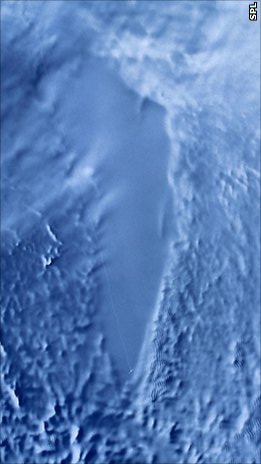
Photo: Goddard Space Flight Center, Public domain, via Wikimedia Commons
Lake Vostok lies approximately 4,000 meters beneath Antarctica's ice sheet, making it one of Earth's most isolated environments and the largest of Antarctica's 675 known subglacial lakes. Covering roughly 14,000 square kilometers, it ranks as the 16th largest lake in the world by area, with its surface positioned about 500 meters below sea level. The lake sits beneath Russia's Vostok Station at the southern Pole of Cold, where the overlying ice sheet reaches 3,488 meters above mean sea level. This pristine freshwater environment may have remained sealed off from the outside world for 15 to 25 million years, creating conditions that scientists believe could mirror those found on Jupiter's moon Europa. Some theorists have interpreted a magnetic anomaly detected at Lake Vostok's southeastern corner—spanning roughly 65 by 46 miles—as evidence of a buried artificial structure or extraterrestrial installation. While the anomaly itself is genuine and was documented by the scientific teams conducting magnetic surveys, researchers studying the data have attributed it to natural geological formations rather than constructed artifacts, and no mainstream archaeological evidence supports the presence of artificial structures beneath the ice. The magnetic signature remains an intriguing natural phenomenon that continues to invite speculation alongside rigorous geological investigation.
Timeline
Russian geographer Andrey Kapitsa first suggests existence of subglacial lake based on seismic soundings during Soviet Antarctic Expeditions
Final confirmation of Lake Vostok's existence by J.P. Ridley using ERS-1 laser altimetry
Russian scientists complete longest ice core drilling at 3,768 meters, piercing through to lake surface
First sample of freshly frozen lake ice obtained from depth of 3,406 meters
What the Show Claims
- ›An anomalous magnetic field spanning roughly 65 by 46 miles at Lake Vostok's southeastern corner matches the magnetic signature of a city, suggesting a buried alien base or lost civilization beneath the iceS11E01
Theorist Takes
“This anomaly was roughly, uh, 50 miles in diameter and was something that would be commensurate with the magnetic field being generated by a city.”
From the Transcripts
“In 2001, pilots collecting data here recorded unusual and extreme irregularities in the magnetic field at the southeastern corner of the lake. Spanning a remarkable 65 by 46 miles, the anomalous area is producing an unusually high level of magnetic energy.”
What Archaeology Says
Lake Vostok represents one of modern science's most ambitious drilling projects rather than a traditional archaeological site. The ongoing Russian-led research program has extracted ice cores providing a continuous paleoclimatic record spanning 400,000 years, offering unprecedented insights into Earth's ancient climate patterns. The drilling efforts culminated in 2012 when scientists pierced through nearly 4 kilometers of ice to reach the lake's surface, though the breakthrough resulted in lake water mixing with drilling fluids used to prevent borehole freezing.
The scientific significance of Lake Vostok extends far beyond Earth-based research. Astrobiologists consider it an analog for potentially habitable environments on icy moons like Europa and Enceladus, where similar subglacial oceans might harbor life. The lake's extreme isolation and unique chemical conditions could preserve ancient microbial communities that evolved independently from surface life, making it a natural laboratory for studying extremophile organisms.
While environmental groups have raised concerns about contamination from hot-water drilling methods, the research continues under strict protocols designed to minimize impact on this pristine environment. The magnetic anomaly detected in the lake's southeastern region remains unexplained by mainstream scientists, who acknowledge the unusual readings but have not attributed them to artificial structures. The challenge of accessing and studying this remote environment means many questions about Lake Vostok's composition and potential biological inhabitants remain unanswered.
Mysteries & Fun Facts
Lake Vostok contains an estimated 5,400 cubic kilometers of liquid water despite being buried under nearly 4 kilometers of ice
The lake's water may have been isolated from the surface for up to 25 million years, potentially preserving ancient life forms
Temperatures at the lake's surface remain around -3°C due to the immense pressure from the overlying ice sheet
The drilling project used Freon and kerosene to prevent the borehole from freezing during the decades-long excavation process
Planning a Visit
Lake Vostok is completely inaccessible to general visitors, located beneath miles of ice at one of Earth's most remote research stations. Only authorized scientists and support personnel involved in Antarctic research programs can reach Vostok Station, which requires extensive logistical coordination and extreme weather survival training.
The nearest permanent settlement is several thousand kilometers away, with research stations like McMurdo Base representing the closest human habitation.
Antarctic research operations typically occur during the brief summer season from November to February when temperatures are relatively warmer and daylight hours are extended.
Related Sites
Allen Hills, Antarctica (ALH 84001 meteorite find site)
Another Antarctic location where researchers have discovered evidence that ancient alien theorists interpret as extraterrestrial in origin
Tunguska explosion site
Another remote location where unexplained phenomena have been attributed to possible extraterrestrial activity or technology
GIMBAL UAP Incident Site (Atlantic Coast of Florida)
A modern site where anomalous readings and unexplained phenomena have sparked speculation about non-human technology
Featured In1 episodes
Historical data sourced from Wikipedia