Japan UFO Crash Site
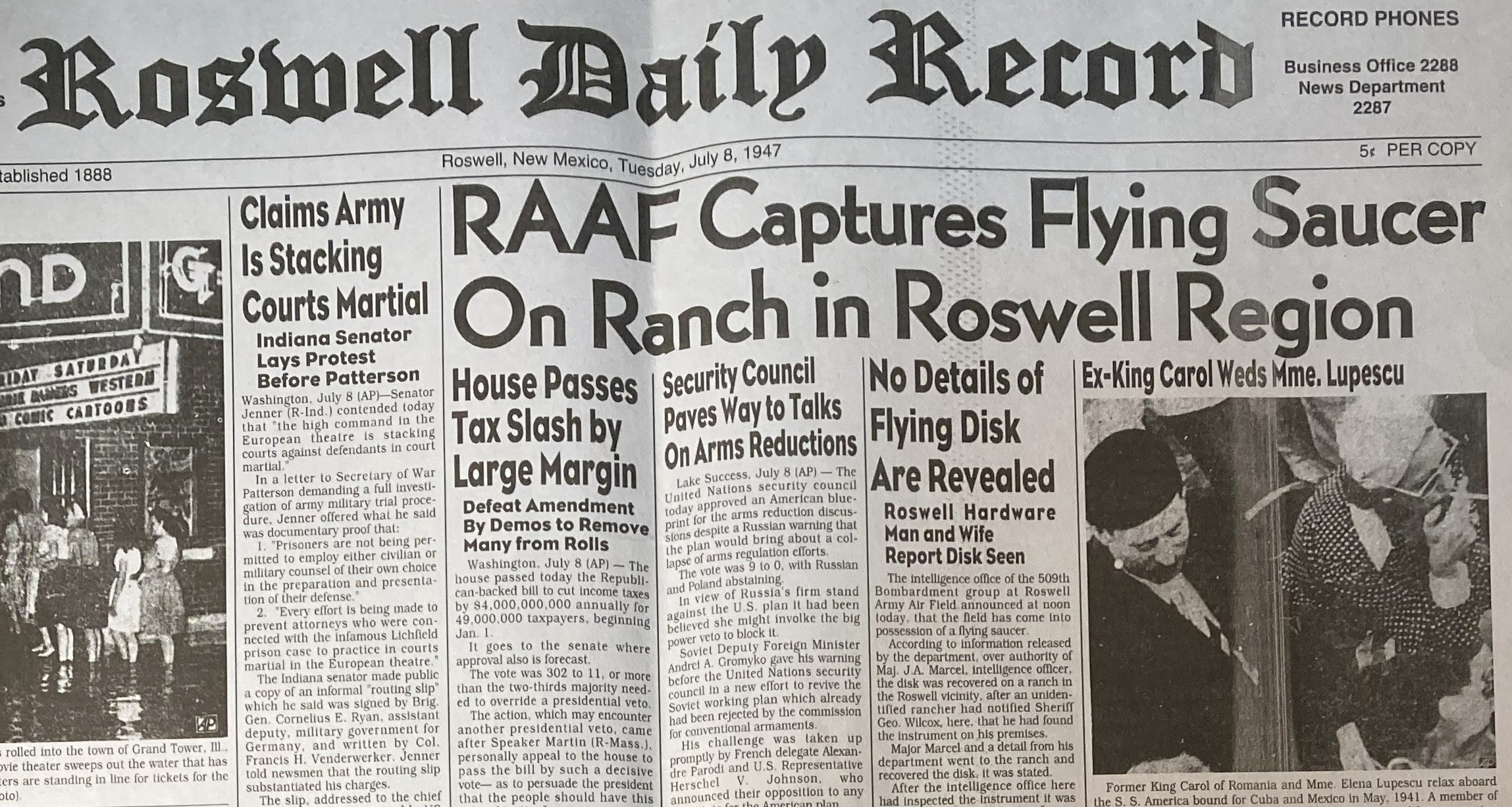
Photo: Roswell Daily Record., Public domain, via Wikimedia Commons
The Japan UFO Crash Site refers to a location along Japan's coastline where, according to contemporary UFO reports, an unidentified craft allegedly washed ashore in modern times. The coordinates provided point to the Tokyo metropolitan area, though the exact location and physical evidence of any crash remain unspecified in available documentation. Unlike ancient archaeological sites with visible structures or artifacts, this location represents a modern anomalous incident site where visitors would find typical coastal geography rather than monument ruins. The incident has gained attention primarily through UFO research communities and television coverage rather than through traditional archaeological investigation.
Timeline
Alleged UFO craft incident occurs along Japanese coastline
Site featured on Ancient Aliens as compelling UFO crash case
What the Show Claims
- ›A mysterious craft washed ashore in Japan representing one of the most compelling UFO crash incidents reported globallyS21E03
What Archaeology Says
Unlike traditional archaeological sites with extensive excavation histories, the Japan UFO Crash Site lacks verified scientific documentation or formal archaeological investigation. No peer-reviewed studies, academic excavations, or institutional research have been conducted to substantiate the reported incident, distinguishing it from historically documented archaeological discoveries.
The absence of physical evidence, witness testimonies recorded by academic institutions, or government documentation makes this case fundamentally different from sites with established archaeological provenance. Traditional archaeological methodology relies on material culture, stratigraphic analysis, and peer review — none of which appear to be available for this particular incident.
What remains genuinely unknown is the specific nature of the original reports that led to this location being identified as a UFO incident site. Without access to primary source documentation, witness accounts, or physical evidence, the scientific community cannot evaluate the claims using standard archaeological or forensic methods.
The site represents an interesting case study in how modern anomalous events become incorporated into alternative historical narratives, even without the evidentiary foundation that characterizes genuine archaeological discoveries. This highlights the importance of distinguishing between documented historical sites and contemporary incident reports when evaluating ancient mysteries.
Mysteries & Fun Facts
Japan has one of the world's most active UFO research communities, with numerous organizations documenting unexplained aerial phenomena
The Tokyo Bay area has been the subject of various unexplained incident reports throughout the modern era
Japan's extensive coastline and maritime traffic create numerous opportunities for unusual sightings and reports
Modern UFO incident sites differ fundamentally from archaeological sites in their lack of physical evidence and scientific documentation
Planning a Visit
The coordinates provided point to the Tokyo metropolitan area, making the general region easily accessible to visitors through Japan's extensive transportation network. However, without specific documentation of the exact incident location or any physical markers, visitors would not find dedicated site infrastructure or interpretive materials related to the UFO claims.
Tokyo, approximately within the metropolitan area.
Tokyo's coastal areas are generally pleasant during spring and autumn when temperatures are moderate and rainfall is lighter.
Related Sites
Roswell
Both locations are associated with alleged UFO crash incidents that have gained significant media attention
Tunguska explosion site
Another site where mysterious aerial phenomena allegedly impacted the ground, creating lasting geographical evidence
Berwyn Mountains, Llandrillo
Welsh location of reported UFO incident that has become part of modern unexplained phenomena folklore