Mount Olympus
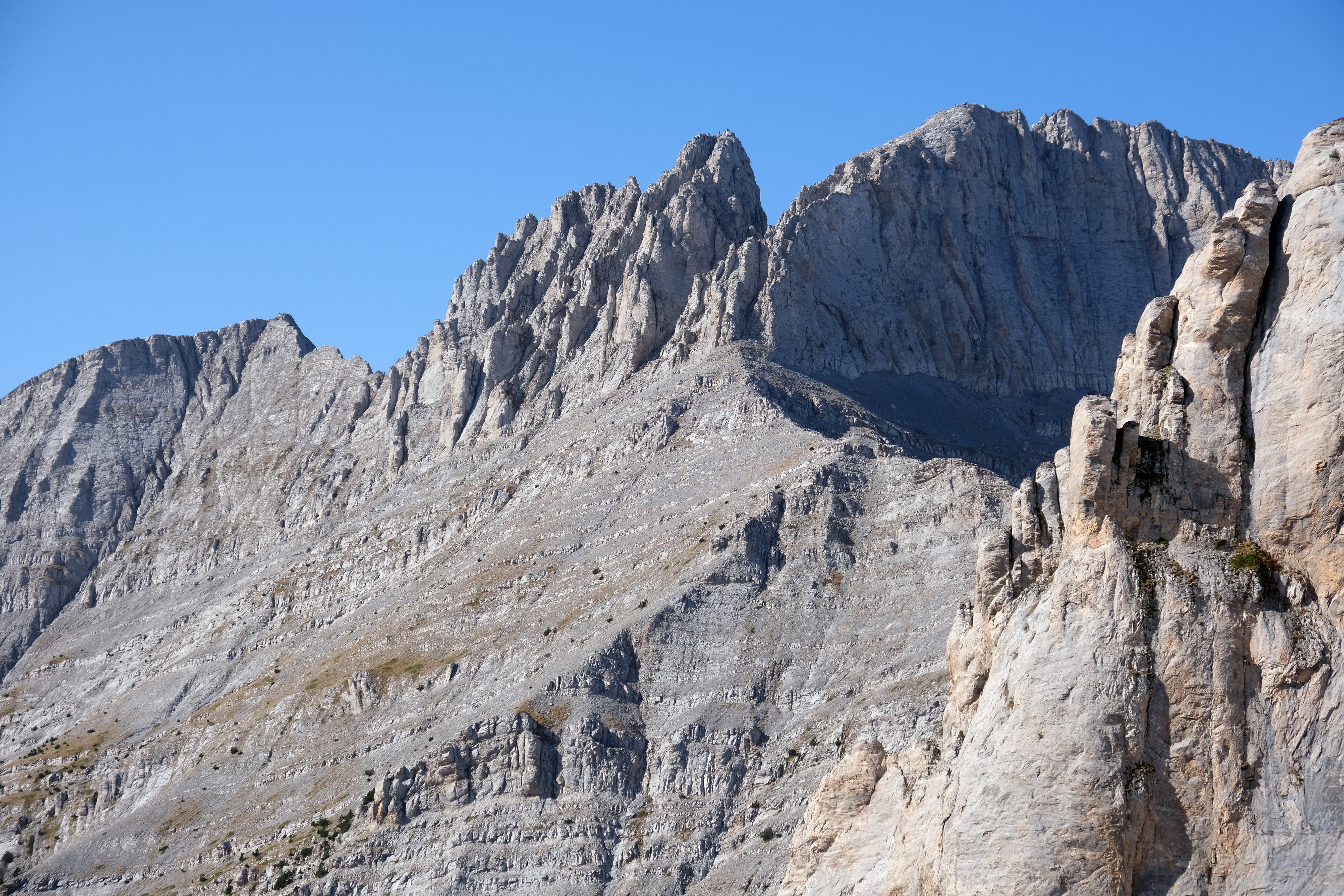
Photo: kallerna, CC BY-SA 4.0, via Wikimedia Commons
Mount Olympus is Greece's highest mountain, rising to 2,917.727 metres (9,572.60 ft) at its peak called Mytikas, meaning "nose." This extensive massif contains 52 peaks and deep gorges, located about 80 km southwest of Thessaloniki near the Thermaic Gulf. The mountain straddles the border between Thessaly and Macedonia and has served as Greece's first National Park since 1938. In ancient Greek mythology, Olympus was considered the sacred home of the twelve Olympian deities, making it one of the most spiritually significant locations in classical civilization.
Timeline
Homer's epics establish Mount Olympus as the mythological home of the Greek gods in popular culture
Ancient Greek sanctuaries and religious sites established on the mountain slopes
Mount Olympus designated as Greece's first National Park
UNESCO recognizes Mount Olympus as a World Biosphere Reserve
What the Show Claims
- ›Ancient Astronaut theorists suggest that Mt. Olympus was the actual home of powerful extraterrestrial beings whom the Greeks called godsS06E11S19E16
- ›The mountain served as a base where these otherworldly entities conducted their affairs and interacted with early humansS06E11
Theorist Takes
“Whenever we have references to Mount Olympus, it is described to be this magnificent palace on top of Mount Olympus allegedly, and the temple walls were always gleaming of gold, or gleaming with silver, and a lot of little lights that they described as jewels. Well, if you look at that from modern perspective, what if that place... Mount Olympus... wasn't necessarily the top of a mountain, but it was, in fact, a spaceship, because it is described how sometimes there was a big rumbling with Mount Olympus, and the entire top lifted off.”
From the Transcripts
“Mount Olympus. Greece's highest mountain. According to ancient myths, this site was the home of the gods. It was here, on Mount Olympus, that Zeus sat on his throne and determined the fate of mortal men.”
What Archaeology Says
Archaeological investigations on Mount Olympus have revealed numerous ancient Greek sanctuaries and settlement remains scattered across the mountain's lower slopes and accessible areas. These findings include stone foundations of temples, votive offerings, and evidence of religious ceremonies that date back to classical antiquity. The discoveries align perfectly with historical accounts of the mountain's sacred status in Greek religion.
Key archaeological evidence consists of pottery fragments, inscriptions, and architectural remains that demonstrate continuous religious activity from the Classical through Roman periods. Excavations have uncovered altars and shrine complexes where ancient Greeks made offerings to the Olympian deities, particularly Zeus, who was considered the mountain's primary divine resident. These material remains show sophisticated religious practices consistent with documented Greek worship traditions.
The scientific consensus among archaeologists and historians is that Mount Olympus functioned as a major pilgrimage and religious center in the ancient world. The physical evidence supports the mountain's role as a sacred landscape where Greeks projected their religious beliefs onto the imposing natural environment. The combination of the mountain's dramatic height and frequent cloud cover would have reinforced its mystical associations in the ancient imagination.
What remains genuinely intriguing is the specific nature of some ritual practices conducted on the mountain's higher, less accessible peaks. While lower elevation sites are well-documented, the challenging terrain of the upper reaches means that potential archaeological evidence at extreme altitudes has not been systematically investigated, leaving some aspects of ancient religious activity on Olympus still open to discovery.
Mysteries & Fun Facts
Mount Olympus contains 52 distinct peaks within its extensive massif
The highest peak Mytikas gets its name from the Greek word meaning "nose"
It was established as Greece's very first National Park in 1938
The mountain is one of the highest peaks in Europe in terms of topographic prominence
Planning a Visit
Mount Olympus is accessible to visitors through well-established hiking routes, with the town of Litochoro serving as the primary starting point about 100 km from Thessaloniki. The mountain offers organized refuges and various mountaineering routes for different skill levels. Visitors can experience both the natural biodiversity that earned it World Biosphere Reserve status and explore areas of historical significance.
Thessaloniki, approximately 80 km northeast
The optimal climbing season runs from May through October when weather conditions are most favorable and mountain refuges are typically open. Summer months offer the clearest access to higher elevations, though they also bring the heaviest tourist traffic.
Featured Locations1 sites within this area
Mount Olympus, Greece
GreeceRelated Sites
Featured In2 episodes
Historical data sourced from Wikipedia