Zealandia
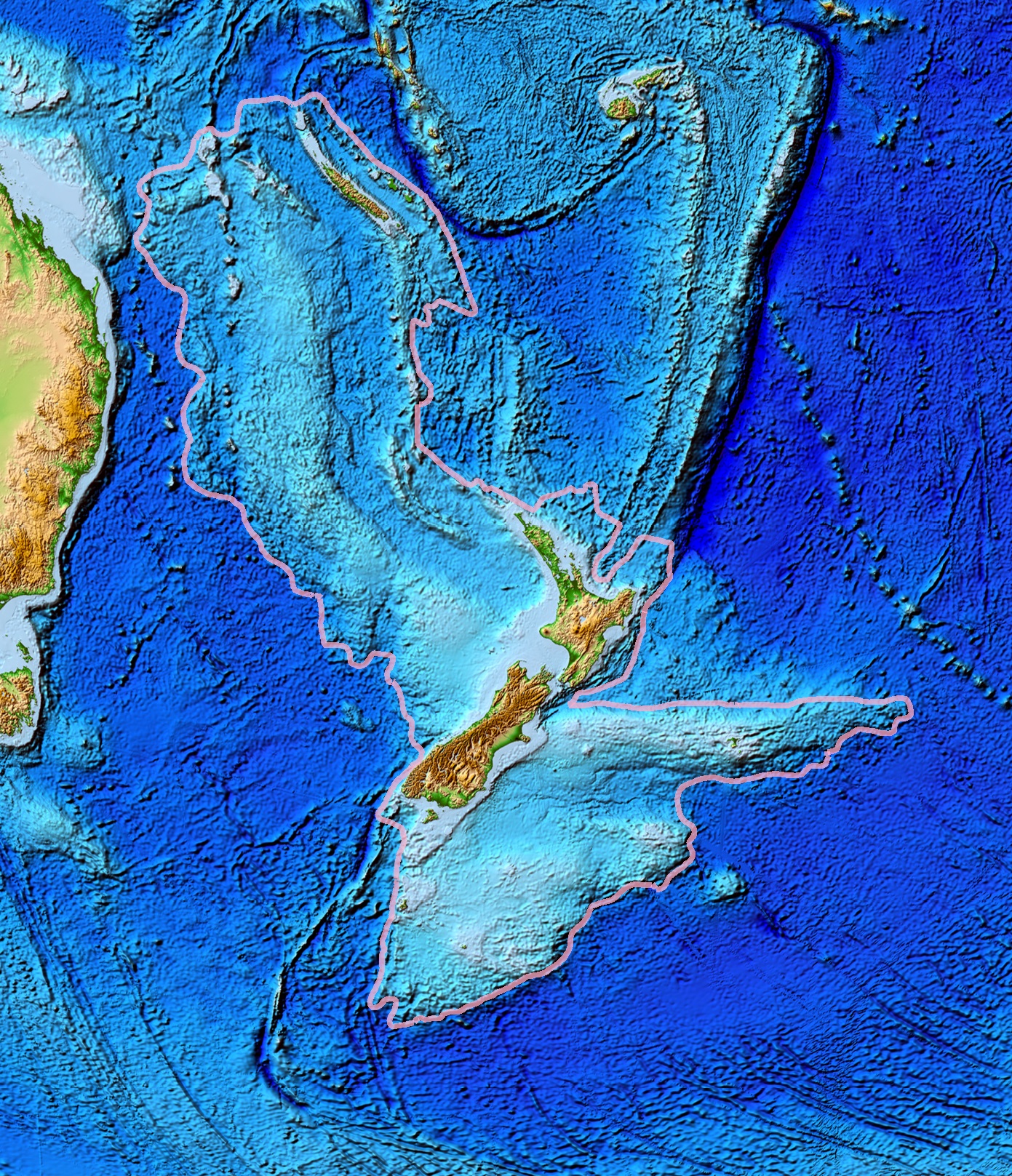
Photo: World Data Center for Geophysics & Marine Geology (Boulder, CO), National Geophysical Data Center, NOAA, Public domain, via Wikimedia Commons
Zealandia is an almost entirely submerged continental mass spanning approximately 4,900,000 square kilometers beneath the southwestern Pacific Ocean, making it six times larger than Madagascar and more than half the size of Australia's exposed landmass. About 94% of this ancient continental fragment remains underwater, with New Zealand representing its largest above-sea-level portion. Originally proposed as a continent by geologist Bruce Luyendyk in 1995, Zealandia separated from the supercontinent Gondwana between 83-79 million years ago and may have been completely submerged by approximately 23 million years ago. Recent mapping completed in 2023 has revealed the full extent of this hidden continent, which some geologists argue meets all criteria to be classified as Earth's eighth continent rather than merely a microcontinent.
Timeline
Formation of Zealandia's ancient continental crust, according to 2021 geological studies
Zealandia separates from supercontinent Gondwana and begins subsiding
Zealandia becomes completely submerged beneath Pacific Ocean waters
Geologist Bruce Luyendyk proposes the name and concept of Zealandia
GNS Science researchers formally propose Zealandia as a distinct continent
Comprehensive mapping of Zealandia completed, revealing full continental structure
What the Show Claims
- ›Zealandia could be the lost continent of Atlantis and a place where human beings once dwelled, potentially rewriting historyS12E06
Theorist Takes
“This was a shocking discovery, because they thought the number of continents on Earth had been basically fixed. Now, this one looks like it could have been another continent, where perhaps human beings dwelled. And if it was, this could certainly rewrite a lot of history books.”
From the Transcripts
“Scientists at New Zealand's top geological institute, GNS Science, announce the discovery of a lost continent, one that sunk into the ocean millions of years ago. They dub the landmass 'Zealandia,' as it extends directly under New Zealand.”
What Archaeology Says
Zealandia presents a unique case in continental geology rather than traditional archaeology, as its submersion occurred tens of millions of years before any human presence on Earth. The continental fragment has been studied extensively by researchers from GNS Science and other institutions, who have used satellite imagery, seabed mapping, and geological surveys to understand its structure and history. Mapping efforts completed in 2023 have revealed that Zealandia possesses all the geological characteristics of a continent, including continental crust thickness and density distinct from oceanic crust.
The scientific consensus, established through decades of geological research, indicates that Zealandia subsided beneath the Pacific Ocean between 83-79 million years ago, during the Cretaceous period when dinosaurs still roamed the Earth. This timeline places Zealandia's submersion approximately 80 million years before the earliest human ancestors appeared in the fossil record. Researchers like Nick Mortimer have noted that if ocean levels were lower, Zealandia would have been recognized as a continent much earlier due to its substantial size and geological properties.
While the landmass itself predates human civilization by millions of years, the waters above Zealandia support substantial marine ecosystems and contain significant natural resources. The region includes the Maui gas field near Taranaki and has been explored for oil deposits, particularly in the Great South Basin where permits were issued in 2007. The seabed also contains valuable mineral resources including ironsands, volcanic massive sulfides, and ferromanganese nodule deposits, making it an area of ongoing scientific and economic interest despite its ancient geological origins.
Mysteries & Fun Facts
Zealandia is known by the Māori name Te Riu-a-Māui, connecting it to indigenous Pacific cultures
Recent studies suggest Zealandia is over a billion years old, twice as old as previously estimated
If it were above sea level, Zealandia would be recognized as the world's smallest continent
The submerged continent contains the world's largest known gas field in its waters, the Maui gas field
Planning a Visit
Zealandia itself cannot be visited as it lies submerged beneath the Pacific Ocean, but visitors can explore its above-water portions in New Zealand and New Caledonia. Educational exhibits about Zealandia's discovery and significance may be found at geological museums and research institutions throughout New Zealand.
Auckland, New Zealand, located directly above the northern portion of Zealandia
As Zealandia is underwater, timing considerations apply to visiting New Zealand's research institutions and museums that feature exhibits about this submerged continent year-round.
Related Sites
Featured In1 episodes
Historical data sourced from Wikipedia