Novo Selo, Bulgaria
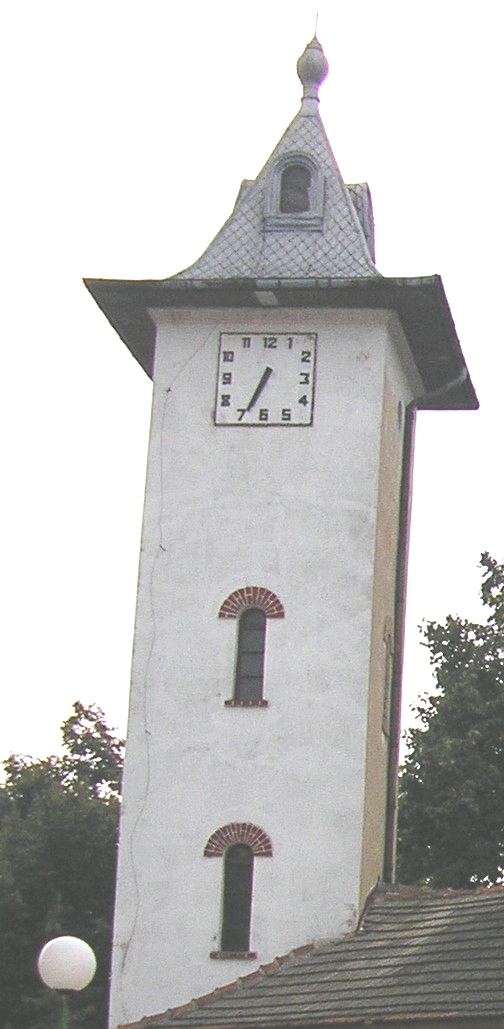
Photo: Unknown, Public domain, via Wikimedia Commons
Novo Selo is a modest village nestled along the right bank of the Danube River in northwestern Bulgaria's Vidin Province, serving as the administrative center of its municipality. The village sits in the fertile Danubian Plain, where rolling agricultural lands meet the historic waterway that has served as a natural boundary for millennia. While unremarkable architecturally, this rural settlement gained international attention as the childhood home and spiritual center of Vangelia Pandeva Dimitrova, better known as Baba Vanga. Today, visitors find a quiet agricultural community where traditional Bulgarian village life continues much as it has for generations, with the legacy of its most famous resident preserved in local memory and pilgrimage sites. Ancient astronaut theorists suggest that Baba Vanga's reputed prophetic abilities—reportedly triggered by a 1923 tornado incident near the village—may represent contact with an Akashic record, a cosmic information source potentially accessible to extraterrestrial intelligences. While researchers documented an approximately 80% accuracy rate in her predictions, mainstream scholars attribute her insights to psychological factors, cold-reading techniques, and the tendency of observers to selectively remember fulfilled predictions while overlooking failures. The village remains a pilgrimage site for those intrigued by her legacy, though scientific analysis has found no evidence requiring paranormal or extraterrestrial explanations.
Timeline
Vangelia Pandeva Dimitrova (Baba Vanga) born in nearby Strumica, Ottoman Empire
Tornado incident near Novo Selo allegedly blinds young Vanga and triggers her prophetic abilities
Baba Vanga begins formal practice as a mystic and healer, attracting visitors to the region
Death of Baba Vanga, cementing Novo Selo's place in Bulgarian spiritual folklore
What the Show Claims
- ›Baba Vanga's prophetic abilities, reportedly triggered by a 1923 tornado incident, represent evidence of human access to the Akashic record — a cosmic repository of information potentially shared with extraterrestrial intelligencesS12E10
Theorist Takes
“Baba Vanga talked about these extraterrestrials that are invisible, or more like they are presences like clear reflections of water shimmering. And they shared with her many secrets, which she says are locked inside the scriptures of many religions.”
From the Transcripts
“Novo Selo, Bulgaria. 1923. A 12-year old peasant girl, Vangelia, is playing with her cousins in a field when she gets caught up in a freak storm.”
What Archaeology Says
Archaeological investigation of Novo Selo itself remains limited, as the site's significance lies primarily in its 20th-century spiritual associations rather than ancient monuments or structures. The village represents typical Danubian settlement patterns, with evidence of continuous habitation dating back several centuries, though no major excavations have been conducted to explore deeper historical layers.
The focus of scholarly attention has centered on documenting and analyzing Baba Vanga's life and claimed abilities rather than traditional archaeological research. Bulgarian researchers and international investigators studied her predictions and methods extensively during her lifetime, with some academic studies suggesting an accuracy rate of approximately 80% for her prophecies, though mainstream science attributes this to psychological factors rather than supernatural sources.
The 1923 tornado incident that allegedly transformed the young Vangelia into a mystic remains the cornerstone of the site's mystical reputation. Local accounts describe a powerful storm that swept the child away, leaving her blind but allegedly gifted with prophetic sight. While meteorological records from the period are incomplete, severe weather events in the Danubian region are well-documented historically.
What remains genuinely intriguing to researchers is the sociological phenomenon of how a small village became a pilgrimage destination for thousands of visitors from across Eastern Europe and beyond, seeking guidance from someone they believed could see beyond the veil of time. The psychological and cultural impact of Baba Vanga's presence transformed this quiet agricultural community into an unlikely center of spiritual tourism that continues today.
Mysteries & Fun Facts
The village lies along the Danube River, which forms Bulgaria's natural border with Romania
Novo Selo serves as an administrative center despite its small size, governing the surrounding rural municipality
The 1923 tornado that allegedly changed Baba Vanga's life occurred during a period of unusual weather patterns across southeastern Europe
Visitors from across the former Eastern Bloc countries traveled to this remote village seeking Baba Vanga's prophecies during her lifetime
Planning a Visit
Novo Selo is generally accessible to visitors, located along regional roads connecting to the broader Vidin Province transportation network. The village maintains sites associated with Baba Vanga's memory, though visitors should check with local tourism offices for current accessibility and any specific memorial locations.
Vidin, approximately 30 kilometers to the southeast.
Late spring through early autumn offers the most pleasant weather for exploring the Danubian countryside, with mild temperatures and accessible rural roads.
Related Sites
Dogon Country
The Dogon people of Mali are claimed by ancient astronaut theorists to have received prophetic knowledge from extraterrestrial visitors, similar to claims about Baba Vanga's alleged cosmic connection
Cambridge University
Cambridge University has been a center for consciousness research and studies of anomalous human abilities, relevant to investigating claims about psychic phenomena
Royal Society, London
The Royal Society has historically evaluated extraordinary claims about human capabilities and serves as a model for scientific investigation of unusual phenomena
Featured In1 episodes
Historical data sourced from Wikipedia