South Pole, Antarctica
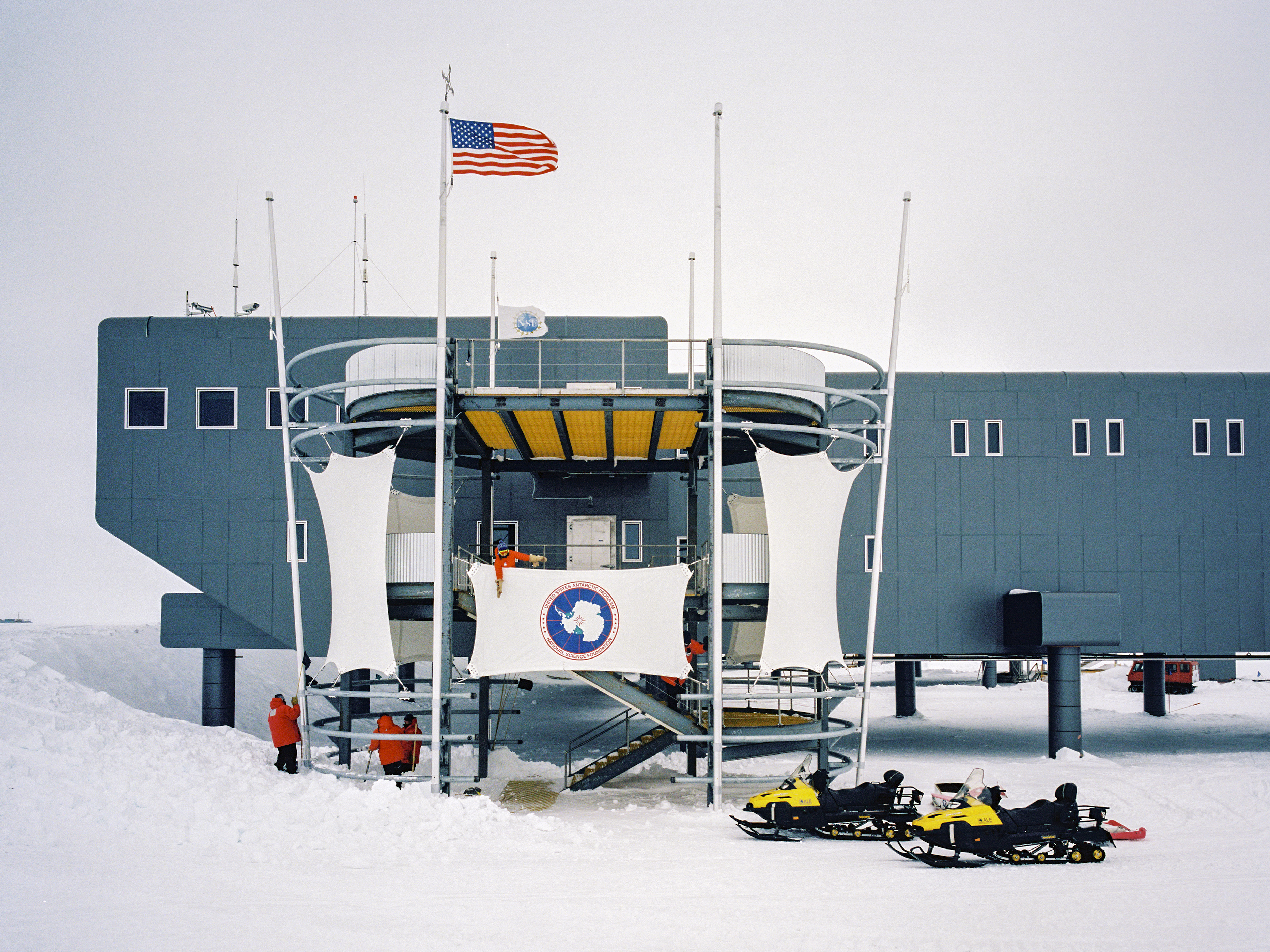
Photo: Christopher Michel, CC BY 4.0, via Wikimedia Commons
The geographic South Pole represents Earth's southernmost point, located at coordinates 90°S on the East Antarctic Ice Sheet at an elevation of approximately 2,835 meters (9,301 feet) above sea level. Visitors today encounter the Amundsen-Scott South Pole Station, a sophisticated research facility operated by the United States Antarctic Program since 1956. The station sits atop nearly 3 kilometers of ice and experiences extreme conditions with temperatures dropping below -60°C (-76°F) during the austral winter. The ceremonial South Pole marker, relocated annually due to ice sheet movement, stands alongside flags of the original Antarctic Treaty signatory nations, while the actual geographic pole shifts roughly 10 meters per year due to glacial flow. Some Ancient Aliens theorists have pointed to atmospheric anomalies and restricted airspace near the South Pole as potential evidence of extraterrestrial activity or hidden underground facilities. Scientists and station operators attribute the restricted zones to standard safety protocols and environmental monitoring necessary for polar research operations, where the extreme conditions and sensitive instrumentation require carefully controlled access. The South Pole's inhospitable environment and remote location have made it a focus of both legitimate scientific curiosity and speculative theories about what might remain undiscovered beneath its ice sheet.
Timeline
Norwegian explorer Roald Amundsen becomes first person to reach the geographic South Pole
British explorer Robert Falcon Scott reaches the South Pole, discovering Amundsen's tent
United States establishes first permanent research station at the South Pole
Antarctic Treaty signed, designating Antarctica as scientific preserve
What the Show Claims
- ›A large hole in the ice near the South Pole, surrounded by a restricted no-fly zone labeled an 'air sampling station,' represents evidence of a hidden underground entrance possibly used by extraterrestrialsS14E01
Theorist Takes
“There's been a lot of talk about underground bases in Antarctica and certain satellite photos show mountain areas that have unusual caverns in them, literal windows that are the shape of a flying saucer.”
From the Transcripts
“There was this giant indentation that looked like a hole in the ice that looked like a snow ramp that went down into it. The Polar Plateau at South Pole is completely flat; there are no holes there.”
What Archaeology Says
While the South Pole itself predates human presence by millions of years, the region holds significant scientific value rather than traditional archaeological remains. The ice sheet beneath the research station contains climate data spanning hundreds of thousands of years, with ice core samples serving as a record of Earth's atmospheric history. Research conducted at the station focuses on glaciology, atmospheric physics, and astronomy, taking advantage of the unique polar environment.
The Amundsen-Scott South Pole Station has undergone several reconstructions since its establishment, with the current elevated structure completed in 2008. This design allows wind to flow underneath, preventing dangerous snow accumulation that plagued earlier versions. The station's construction represents one of the most challenging engineering projects on Earth, with all materials transported by aircraft during the brief austral summer.
No traditional archaeological excavations occur at the South Pole due to the extreme environment and the thickness of the ice sheet. However, the station's scientific work contributes to understanding Earth's climate history and cosmic phenomena. The clear, dry air and months of darkness make it an ideal location for certain types of astronomical observations.
What remains genuinely unknown about Antarctica includes the full extent of subglacial lakes and geological features hidden beneath kilometers of ice. Satellite imagery and ground-penetrating radar continue to reveal new aspects of the continent's hidden landscape, though much remains unexplored due to the harsh conditions and logistical challenges.
Mysteries & Fun Facts
The South Pole experiences six months of continuous daylight followed by six months of complete darkness
Due to the Earth's rotation, all directions from the South Pole point north
The ceremonial South Pole marker must be relocated annually because the ice sheet moves approximately 10 meters per year
Internet access at the South Pole is limited and relies on satellite connections with significant delays
Planning a Visit
Access to the South Pole is extremely limited and generally restricted to scientific personnel and support staff. Tourist visits are exceptionally rare and require special arrangements through Antarctic tour operators at considerable expense. The station operates on New Zealand time despite its location, and the extreme environment makes any visit a serious logistical undertaking.
Christchurch, New Zealand, approximately 3,800 kilometers away
The austral summer months from November to February offer the only viable window for visits, when temperatures are merely frigid rather than deadly. Even during summer, conditions remain harsh with temperatures rarely rising above -20°C (-4°F).
Related Sites
Allen Hills, Antarctica (ALH 84001 meteorite find site)
Both Antarctic locations have been connected to theories about extraterrestrial evidence, with Allen Hills being the discovery site of a controversial meteorite
Tunguska explosion site
Another remote location associated with mysterious phenomena and potential extraterrestrial explanations
Roswell
Classic UFO incident site that shares themes of government secrecy and restricted access