Temple of the Sun at Cusco
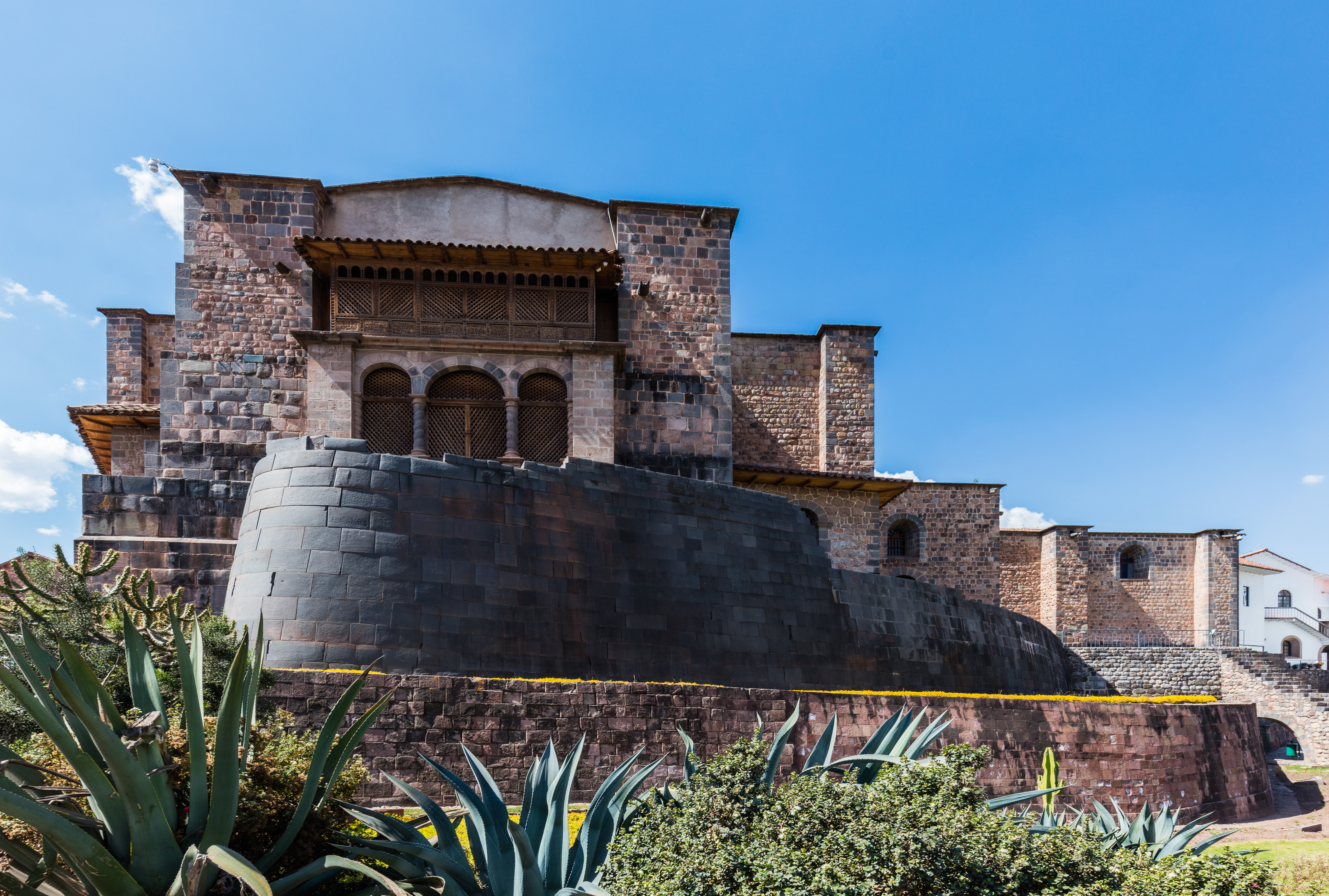
Photo: Diego Delso, CC BY-SA 4.0, via Wikimedia Commons
The Qorikancha, meaning "Golden Enclosure" in Quechua, was the most sacred temple complex in the Inca Empire, located in the heart of Cusco at approximately 11,150 feet above sea level. The temple's walls were reportedly covered in sheets of gold and featured rooms dedicated to the sun, moon, stars, and other celestial bodies. Today, visitors can see the remarkable stone foundations with their precisely fitted blocks, upon which the Spanish built the Santo Domingo Convent in the 16th century. The complex originally covered an estimated area of several acres and served as both the spiritual center of Inca religion and an astronomical observatory. Some theorists have proposed that the Qorikancha's exceptional stonework and celestial alignments suggest extraterrestrial intervention in its design and construction. However, archaeologists attribute the temple's precision to the Inca's sophisticated understanding of engineering principles and astronomy, developed through generations of observation and experimentation—skills evident in other Inca structures built across their empire without such extraordinary claims. The Qorikancha's alignment with solstices reflects the kind of astronomical knowledge that many ancient civilizations independently developed based on careful sky-watching and mathematical calculation.
Timeline
Early construction begins at the site during the formation of the Inca state
Major expansion and reconstruction under Pachacuti Inca Yupanqui transforms the temple into the empire's most important religious center
Spanish conquistadors strip the temple of its gold and begin construction of Santo Domingo Convent on the foundations
What the Show Claims
- ›The Qorikancha's precise stonework demonstrates alien guidance in Inca construction techniquesS18E03
- ›The temple's astronomical alignments suggest extraterrestrial knowledge of celestial mechanicsS18E03
- ›The Inca possessed advanced engineering knowledge that could only have come from alien interventionS18E03
What Archaeology Says
Archaeological investigations at Qorikancha have revealed the sophisticated construction techniques employed by Inca builders during the mid-15th century expansion under Pachacuti. The ashlar masonry demonstrates the characteristic Inca technique of cutting massive stone blocks to fit together without mortar, creating joints so precise that not even a knife blade can be inserted between them. Spanish chroniclers documented that the temple's interior walls were lined with gold sheets and contained life-sized golden representations of plants, animals, and human figures.
Researchers have confirmed that the temple complex was designed with careful astronomical alignments, particularly oriented toward the winter solstice sunrise. The curved wall that survives today likely formed part of the sun temple's apse, demonstrating advanced understanding of both engineering and celestial observation. Studies of the stonework reveal that the builders used bronze tools and techniques of controlled fracturing to achieve their remarkable precision.
While the engineering achievements are undeniably impressive, mainstream archaeology attributes them to the sophisticated knowledge and skilled craftsmanship developed by Inca builders over generations. The astronomical alignments reflect the Inca's deep cultural connection to celestial cycles and their practical need for agricultural timing. What remains partially mysterious is the exact methods used to transport and position some of the largest stones, though theories involving ramps, levers, and coordinated human labor are generally accepted by scholars.
Mysteries & Fun Facts
Spanish chroniclers reported that the temple's walls were covered with over 700 sheets of pure gold, each weighing about 4.5 pounds
The complex included a garden with life-sized golden replicas of corn plants, llamas, and other sacred objects
The curved wall visible today survived the 1650 earthquake that destroyed much of colonial Cusco, demonstrating superior Inca engineering
The temple served as the starting point for the ceque system, a network of ritual pathways radiating out across the Inca Empire
Planning a Visit
The Qorikancha is generally accessible to visitors as part of the Santo Domingo Convent complex in central Cusco, though access may be limited during religious services. Visitors can explore both the Inca stone foundations and the colonial church built above them. The site is easily walkable from Cusco's main plaza and includes a small museum with artifacts and interpretive displays.
Cusco city center - the temple is located within the historic downtown area
The dry season from May to September offers the clearest weather and best conditions for exploring Cusco, though the site can be visited year-round. Early morning visits may help avoid crowds, especially during peak tourist season.
Featured Locations7 sites within this area
Sacsayhuamán, Peru
PeruSacsayhuamán
PeruMuyuq Marka, Saksaywaman, Cusco
PeruSaksaywaman
PeruSaksaywaman Underground Tunnels
PeruMoray (Incan ruins)
PeruX-Zone (outside Cusco)
PeruRelated Sites
Sacsayhuaman
Another remarkable example of precision Inca stonework near Cusco that Ancient Aliens attributes to extraterrestrial guidance
Palenque
A Mesoamerican temple complex with sophisticated astronomical alignments that the show suggests involved alien knowledge
Temple of the Sun at Teotihuacan
Another Sun temple with precise architectural and astronomical features that Ancient Aliens theorists cite as evidence of extraterrestrial influence