Lake Texcoco
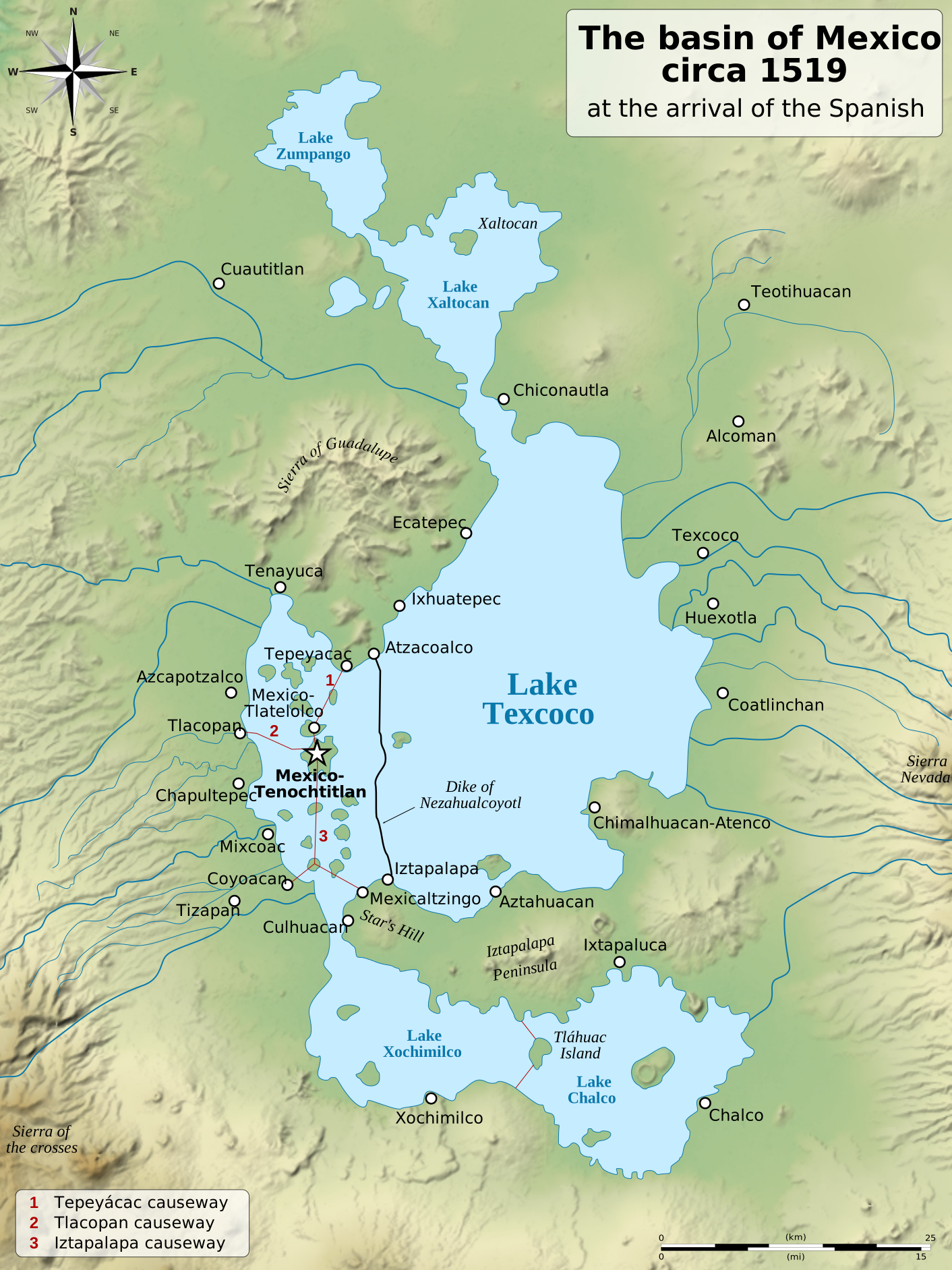
Photo: File:Lago de Texcoco-posclásico.png: Yavidaxiu File:Valley of Mexico c.1519-fr.svg: historicair 13:51, 11 September 2007 (UTC) derivative work: Sémhur, CC BY-SA 4.0, via Wikimedia Commons
Lake Texcoco was a natural saline lake in Mexico's Valley of Mexico, covering approximately 1,500 square kilometers at its peak. The lake is best known as the site where the Mexica people built their magnificent capital city of Tenochtitlan on an island on the lake's western shore around 1325 AD. This extraordinary urban center became the heart of the Aztec Empire, connected to the mainland by elaborate causeways and featuring an intricate network of canals. After the Spanish conquest in 1521, colonial authorities began draining the lake to prevent flooding, and today the entire lake basin is occupied by Mexico City, one of the world's largest metropolitan areas.
Timeline
Mexica people establish Tenochtitlan on an island in Lake Texcoco
Spanish conquistadors under Hernán Cortés capture and destroy Tenochtitlan
Spanish colonial authorities begin systematic drainage of Lake Texcoco to control flooding
Lake basin becomes completely occupied by expanding Mexico City
What the Show Claims
- ›The Aztec capital of Tenochtitlan was constructed under guidance of extraterrestrial beingsS21E07
- ›The city's advanced engineering and astronomical alignment demonstrate alien knowledge transferS21E07
What Archaeology Says
Archaeological investigations of the former Lake Texcoco and Tenochtitlan have revealed one of the most sophisticated urban centers in pre-Columbian America. The city covered approximately 13 square kilometers and housed an estimated 200,000 to 400,000 inhabitants at its peak, making it larger than most European cities of the time. Excavations have uncovered the remains of the Templo Mayor, the great pyramid at the city's ceremonial center, along with evidence of the complex canal system that served as the city's primary transportation network.
The engineering achievements documented by archaeologists include the construction of chinampas (artificial islands used for agriculture), sophisticated aqueduct systems that brought fresh water from mainland springs, and massive causeways that connected the island city to the shore. These causeways featured removable sections that could be raised to control access to the city, demonstrating advanced urban planning and defensive strategies.
Researchers have confirmed that Tenochtitlan was laid out according to precise astronomical alignments, with the Templo Mayor oriented to mark important celestial events. The city's grid pattern and ceremonial architecture reflect deep knowledge of mathematics, engineering, and astronomy. However, scholars attribute these achievements to the accumulated knowledge and ingenuity of Mesoamerican civilizations developed over centuries.
What remains genuinely intriguing is how the Aztecs managed such complex hydraulic engineering in a challenging lake environment. The precise methods used to construct foundations in the lake bed and maintain the city's infrastructure continue to be studied by archaeologists and engineers seeking to understand these remarkable pre-Columbian achievements.
Mysteries & Fun Facts
Tenochtitlan was built entirely on an artificial island, connected to the mainland by three major causeways
The city featured floating gardens called chinampas that were so productive they could support the massive urban population
Spanish conquistador Hernán Cortés described Tenochtitlan as more beautiful than any European city he had seen
The drainage of Lake Texcoco has caused Mexico City to sink at a rate of up to 10 centimeters per year due to ground subsidence
Planning a Visit
The former Lake Texcoco site is now completely urbanized as Mexico City, but visitors can explore archaeological remains at the Templo Mayor Museum in downtown Mexico City's historic center. The museum displays artifacts and foundations of the great Aztec temple, providing insight into Tenochtitlan's grandeur.
Mexico City, as the site is now within the modern capital city
Mexico City can be visited year-round, though the dry season from November to April offers more pleasant weather for exploring archaeological sites.
Featured Locations4 sites within this area
Tenochtitlán
MexicoBasilica of Our Lady of Guadalupe
MexicoTepoztlán
MexicoTepeyac Hill (Basilica of Our Lady of Guadalupe)
MexicoRelated Sites
Featured In1 episodes
Historical data sourced from Wikipedia