Mathura
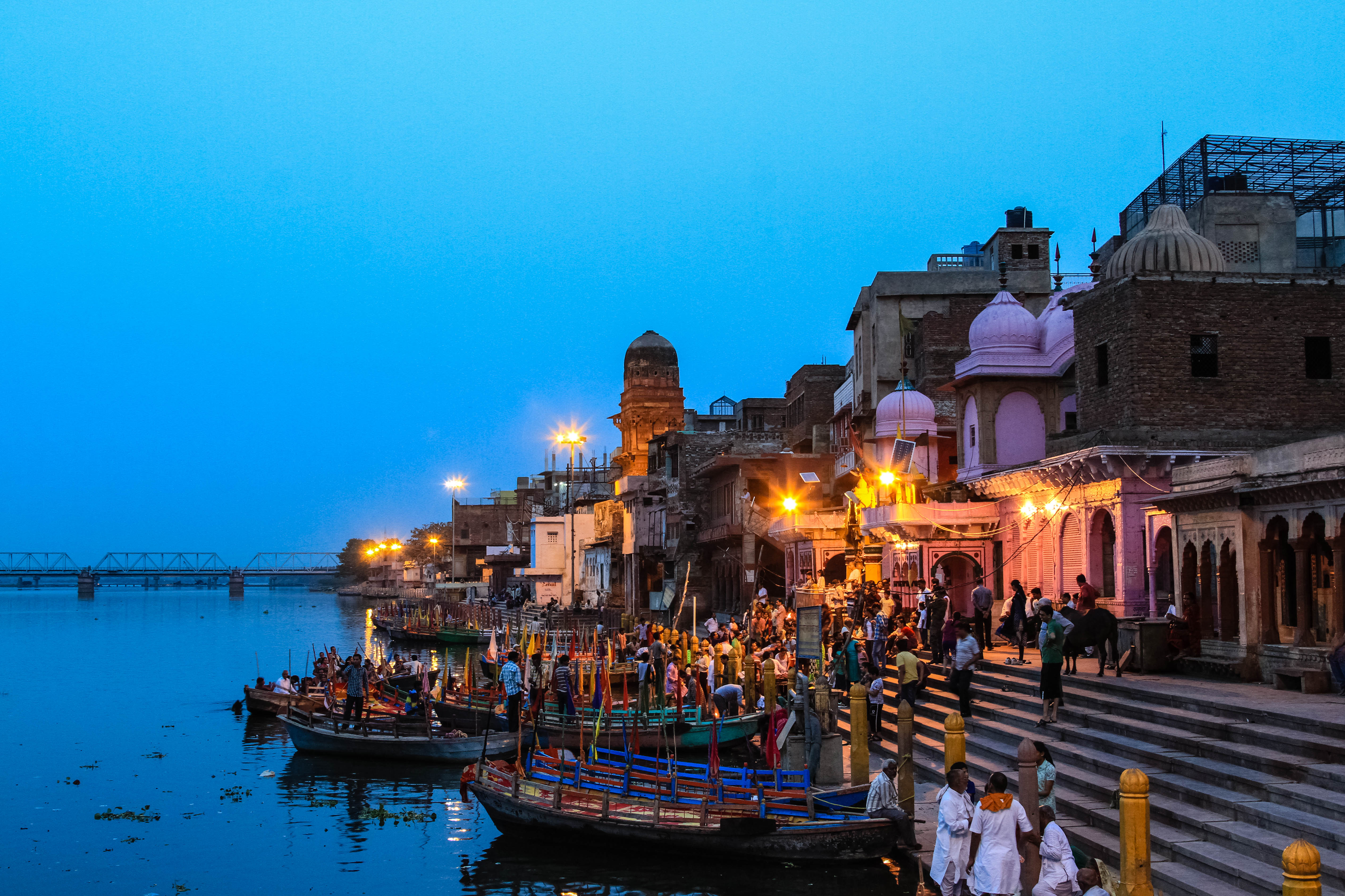
Photo: Umang108, CC BY-SA 4.0, via Wikimedia Commons
Mathura is an ancient city in Uttar Pradesh, India, located 162 kilometers southeast of Delhi along the banks of the Yamuna River. With a population of 441,894 as of the 2011 census, this bustling religious center sits at what was once the junction of major ancient caravan routes. The city is dominated by the Krishna Janmasthan Temple Complex, built over the site traditionally believed to be Krishna's birthplace. Visitors today see a vibrant pilgrimage destination where ancient ghats descend to the sacred river, surrounded by numerous temples and ashrams that have drawn devotees for millennia.
Timeline
Mathura established as capital of the Surasena kingdom under King Kamsa
Mathura becomes major center for Buddhist and Jain art during Indo-Greek and Kushana periods
Mahatma Gandhi investigates the Shanti Devi reincarnation case in Mathura
Mathura selected for Heritage City Development scheme by Government of India
What the Show Claims
- ›Mathura was the town where Shanti Devi's claimed previous-life family lived, serving as evidence for reincarnationS09E06S12E13
- ›The young Delhi girl accurately described Mathura, her former husband, and family members she had allegedly never metS09E06S12E13
- ›Mahatma Gandhi personally investigated the case in 1936 and declared himself satisfied with her claimsS09E06S12E13
Theorist Takes
“There's the interesting case of Shanti Devi in India. She was born in 1926, and at the age of four she began telling her parents that she was the reincarnation of this other woman from another town called Mathura.”
From the Transcripts
“Mathura is a small village over 100 miles away from Shanti's hometown of Delhi.”
What Archaeology Says
Archaeological evidence reveals Mathura's significance as one of India's most ancient continuously inhabited cities, with layers of occupation spanning over two millennia. The city served as a major artistic center during the Kushana period, producing distinctive red sandstone sculptures that influenced Buddhist and Hindu art across northern India. Excavations have uncovered coins, sculptures, and architectural fragments that demonstrate Mathura's role as a cosmopolitan trading hub where Greek, Persian, and Indian cultural influences merged.
The Kesava Deo Temple complex, built over what tradition identifies as Krishna's birthplace, represents centuries of continuous religious devotion and architectural evolution. Archaeological investigations suggest the site has been sacred since ancient times, with successive temples built and rebuilt over the original location. The current complex incorporates elements from different historical periods, creating a layered archaeological record that reflects the city's enduring spiritual significance.
While Mathura's religious importance is well-documented through historical texts and archaeological finds, the Shanti Devi reincarnation case from 1926 represents a different kind of investigation altogether. This case, which drew Mahatma Gandhi's personal attention, involved detailed verification of a young girl's claimed memories of a previous life in Mathura, including specific knowledge of local geography, family members, and personal details that researchers found difficult to explain through conventional means.
What remains genuinely intriguing about Mathura is how its ancient sacred geography continues to resonate in modern times, whether through traditional pilgrimage or through unusual cases like Shanti Devi's that challenge conventional understanding of memory and consciousness. The intersection of documented history, religious tradition, and unexplained phenomena makes Mathura a unique location where multiple layers of mystery converge around questions of identity, memory, and spiritual continuity.
Mysteries & Fun Facts
Mathura is one of the Sapta Puri, seven cities considered capable of granting moksha (liberation) in Hindu tradition
The city is located just 15 kilometers from Vrindavan, another major Krishna pilgrimage site
Mathura was historically positioned at the junction of important ancient caravan routes connecting northern and western India
The Shanti Devi case became one of the most thoroughly documented reincarnation investigations of the 20th century
Planning a Visit
Mathura is easily accessible by road and rail from Delhi, with regular train connections and bus services. The city welcomes visitors year-round, though pilgrims should be prepared for crowds during major festivals like Krishna Janmashtami. The main temple complexes and ghats along the Yamuna River are generally open to visitors, with local guides available to explain the site's religious and historical significance.
Delhi, approximately 162 kilometers northwest
October through March offers the most comfortable weather for exploring Mathura's outdoor sites and temples. Avoid the intense summer heat of April through June, though the monsoon months of July through September can provide a spiritually atmospheric experience despite occasional heavy rains.
Related Sites
Featured In2 episodes
Historical data sourced from Wikipedia