Constantinople (siege site, 1453)
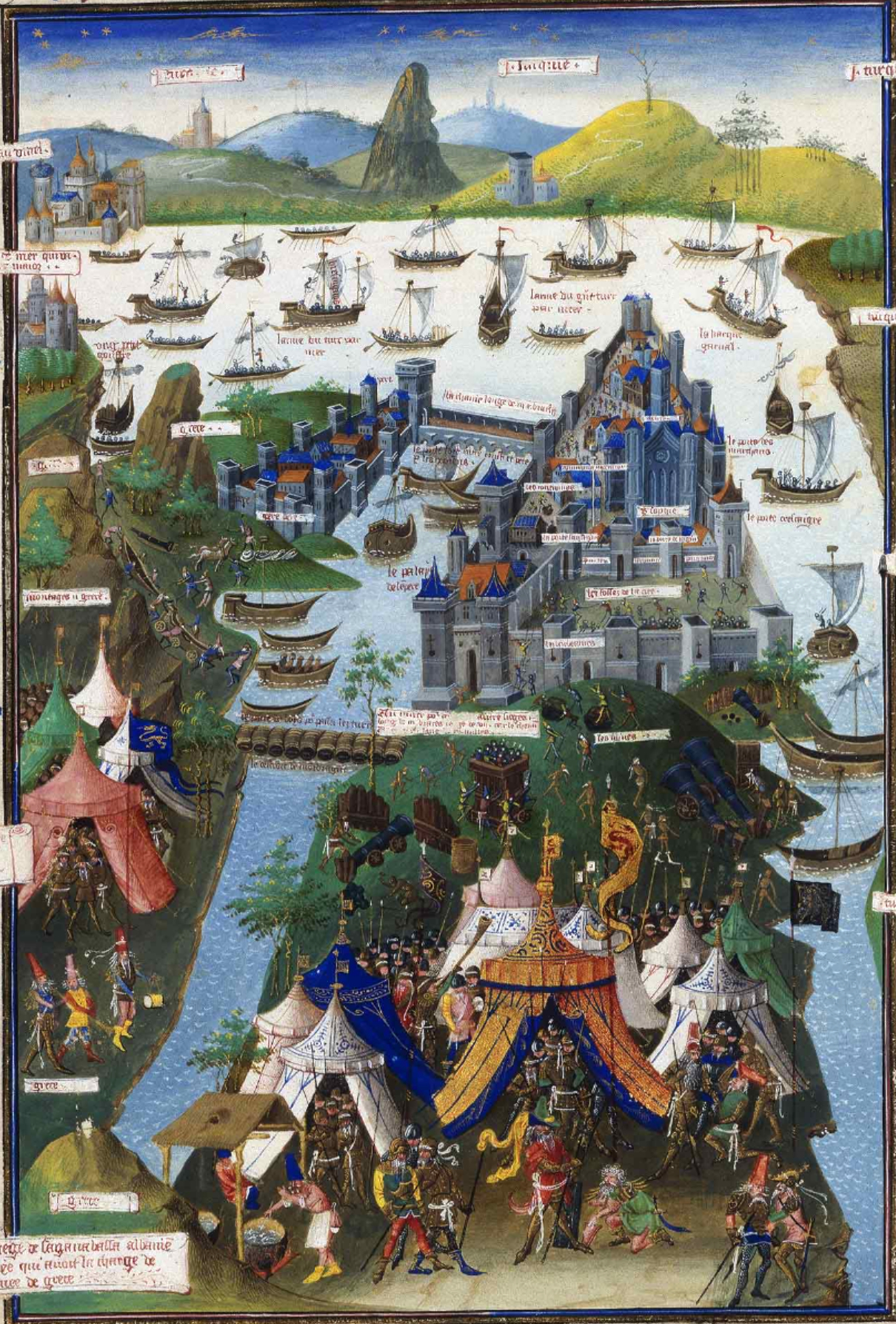
Photo: Unknown, Public domain, via Wikimedia Commons
Constantinople, modern-day Istanbul, was the capital of the Byzantine Empire for over 1,000 years before falling to Ottoman forces in 1453. The historic city spans approximately 2,800 square kilometers across the Bosphorus strait, connecting Europe and Asia. Today, visitors can explore the remnants of the massive Theodosian Walls that protected the city, stretching roughly 6.5 kilometers from the Sea of Marmara to the Golden Horn. The siege site encompasses the entire historic peninsula, including the Hagia Sophia, Topkapi Palace, and the ancient Hippodrome. The fall of Constantinople marked not only the end of the Byzantine Empire but also the conclusion of the medieval period in European history. Some theorists have pointed to contemporary accounts of fiery phenomena observed during the 1453 siege as potential evidence of extraterrestrial intervention, suggesting Renaissance figures like Leonardo da Vinci may have documented such encounters. However, historians and archaeologists note that siege accounts from this period frequently employed dramatic and metaphorical language to describe conventional warfare elements—including fire-based weapons, gunpowder explosions, and atmospheric optical effects—which were extraordinary and awe-inspiring to witnesses of that era. The documented accounts remain consistent with the military technology and natural phenomena known to have been present during the Ottoman conquest.
Timeline
Constantine I establishes Constantinople as the new capital of the Roman Empire
Fourth Crusade temporarily conquers Constantinople, weakening Byzantine defenses
Ottoman Sultan Mehmed II successfully besieges and captures Constantinople, ending the Byzantine Empire
What the Show Claims
- ›Soldier accounts describe fire descending from the sky during the 1453 siege, interpreted as potential UFO activity that Renaissance figures like Leonardo da Vinci may have been aware ofS04E08
From the Transcripts
“During the siege of Constantinople in 1453, soldiers reported that a fire descended on them from the sky.”
What Archaeology Says
Archaeological evidence from the 1453 siege reveals the devastating impact of Ottoman cannon technology on Constantinople's ancient defenses. Excavations along the Theodosian Walls have uncovered cannonballs, damaged stone blocks, and evidence of desperate Byzantine repair attempts during the final siege. The walls themselves, originally constructed in the 5th century, show multiple layers of reconstruction and reinforcement over the centuries.
Historical chronicles from both Byzantine and Ottoman sources document the siege in remarkable detail, including accounts of unusual atmospheric phenomena. Contemporary witnesses such as Niccolò Barbaro and Laonikos Chalkokondyles recorded strange lights and fire-like appearances in the sky during the final assault. These accounts have been interpreted by historians as descriptions of Greek fire, early cannon explosions, or atmospheric disturbances caused by the massive bombardment.
Modern historians generally attribute the reported aerial phenomena to the psychological stress of siege warfare, early gunpowder weapons creating unfamiliar visual effects, or natural atmospheric conditions. The use of Greek fire by Byzantine defenders and the innovative cannon technology employed by the Ottomans would have created spectacular and previously unseen battlefield effects. Archaeological analysis of siege damage supports the historical accounts of intensive bombardment that would have produced significant smoke, fire, and debris in the atmosphere.
What remains genuinely intriguing is the consistency of witness accounts describing aerial phenomena across multiple independent sources. While mainstream archaeology focuses on conventional siege warfare, the detailed nature of these eyewitness testimonies continues to generate scholarly discussion about what exactly the defenders and attackers observed during those final, chaotic days of May 1453.
Mysteries & Fun Facts
The Ottoman cannons used in the siege were among the largest ever constructed at the time, with some reportedly measuring over 8 meters in length
Constantine XI, the last Byzantine Emperor, died fighting on the walls during the final assault and his body was never definitively identified
The siege lasted 53 days, from April 6 to May 29, 1453
Mehmed II was only 21 years old when he successfully conquered the city that had resisted Ottoman attacks for decades
Planning a Visit
The historic areas of Istanbul related to the 1453 siege are generally accessible to visitors, with major sites like the Hagia Sophia, Topkapi Palace, and sections of the Theodosian Walls open for exploration. Many siege-related locations are within walking distance in Istanbul's historic peninsula, designated as a UNESCO World Heritage Site. Guided tours focusing on Byzantine and Ottoman history are readily available from local operators.
Istanbul, Turkey (the site is located within the modern city)
Spring (April-May) and fall (September-October) offer the most comfortable weather for exploring the extensive outdoor siege sites and city walls. Summer can be crowded and hot, while winter provides fewer crowds but potentially challenging weather for outdoor exploration.