Cusco
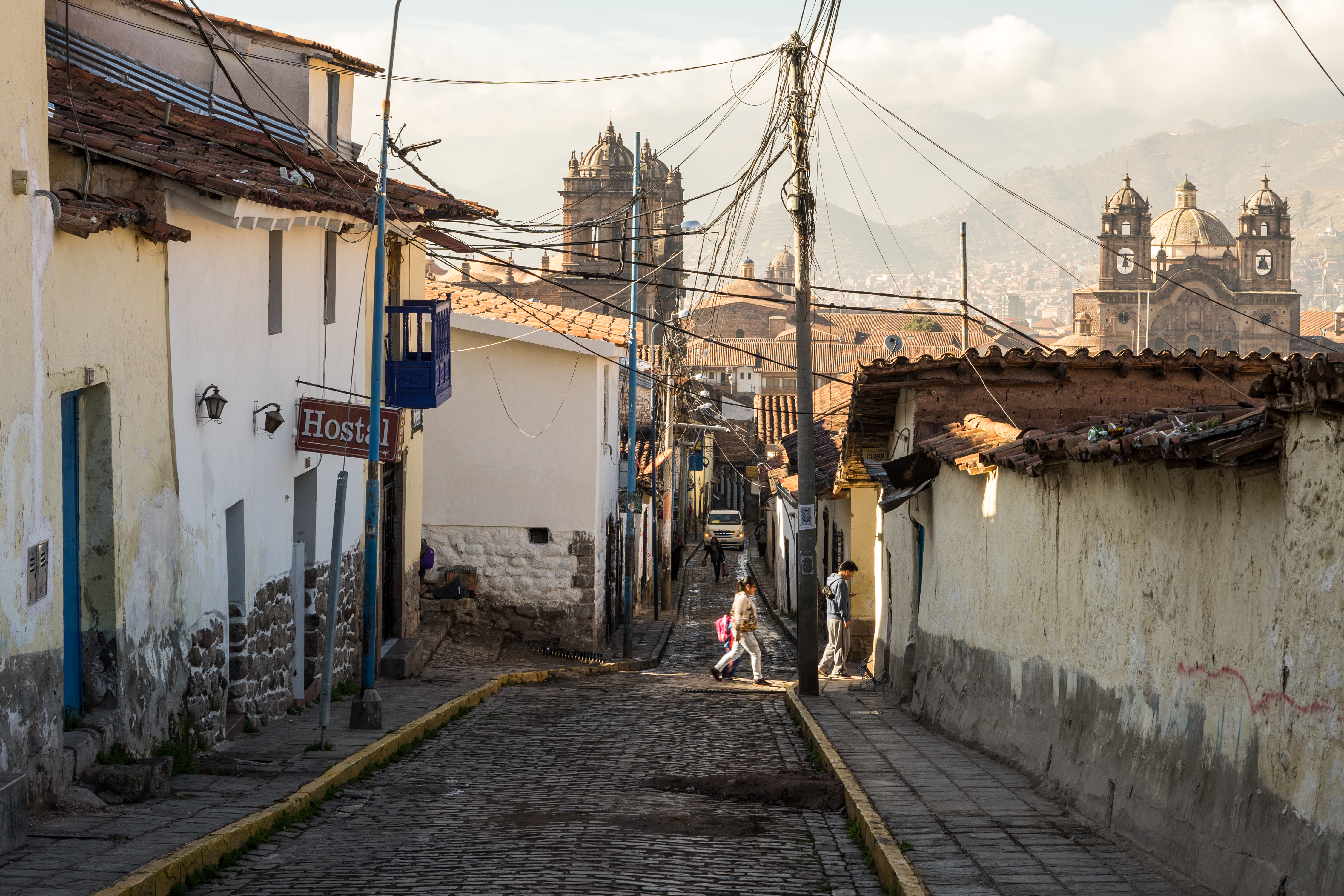
Photo: tomscoffin, CC BY 2.0, via Wikimedia Commons
Cusco stands at approximately 11,200 feet elevation in southeastern Peru's Andes, serving as a living museum where Spanish colonial buildings rest directly atop masterfully crafted Inca stone foundations. The city stretches along the Huatanay River valley, with its historic center preserving remarkable examples of precisely fitted megalithic stonework that has withstood centuries of earthquakes. Today's visitors walk streets where massive Inca walls, some blocks weighing several tons, form the foundations of colonial churches and modern shops. With a current population of 428,450, Cusco remains Peru's seventh-largest city and serves as the gateway for over 2 million annual visitors exploring nearby archaeological sites. The Constitution of Peru officially designates Cusco as the nation's Historical Capital, recognizing its enduring significance beyond its ancient role as the heart of the largest pre-Columbian empire in the Americas.
Timeline
Cusco founded as capital of the Inca Empire
Spanish conquistadors under Francisco Pizarro capture the city
Spanish officially reestablish Cusco on March 23, constructing colonial buildings over Inca foundations
UNESCO declares Cusco a World Heritage Site with the title 'City of Cusco'
What the Show Claims
- ›Cusco and surrounding monuments like Sacsayhuamán may have been built by a pre-Inca race directed by the god ViracochaS02E08
- ›Viracocha described as a tall, pale, white-haired being who descended from the sky, potentially an extraterrestrialS02E08
What Archaeology Says
Archaeological investigations in Cusco have revealed a complex layered history, with Spanish colonial structures built directly over sophisticated Inca foundations. Excavations throughout the historic center consistently uncover evidence of the remarkable Inca construction techniques, including their signature ashlar masonry where massive stone blocks fit together without mortar. The precision of this stonework, combined with its earthquake-resistant properties, continues to fascinate researchers studying pre-Columbian engineering.
Scholars have documented how the Incas transformed Cusco from a regional center into the capital of Tawantinsuyu, their empire spanning much of western South America. The city's layout followed a deliberate plan, with the central plaza (now Plaza de Armas) serving as the ceremonial heart where major roads to the four corners of the empire originated. Archaeological evidence supports Spanish chroniclers' accounts that Cusco was divided into upper (Hanan) and lower (Hurin) sections, reflecting Inca social and religious organization.
The scientific consensus attributes Cusco's construction to Inca engineering and labor organization, developed over centuries of cultural evolution in the Andes. Researchers have identified clear technological progression from earlier Andean cultures to the sophisticated techniques displayed in Cusco's finest examples. However, questions remain about specific construction methods, particularly how the Incas quarried, transported, and precisely fitted the largest stone blocks without iron tools or wheeled vehicles.
What continues to challenge archaeologists is understanding the full extent of pre-Inca occupation at the site. While the Incas clearly built the structures visible today, evidence suggests earlier cultures may have occupied the valley. The relationship between these earlier peoples and the later Inca achievements remains an active area of research, with ongoing excavations continuing to reveal new insights about this remarkable urban center.
Mysteries & Fun Facts
The name Cusco derives from the Quechua word 'Qosqo' meaning 'navel,' as the Incas considered it the center of their world
Many of Cusco's streets follow the exact same layout established by the Incas over 500 years ago
The city serves as the starting point for most journeys to Machu Picchu, one of the New Seven Wonders of the World
Cusco's cathedral houses what is believed to be the oldest Christian painting in the Americas
Planning a Visit
Cusco is easily accessible by air through Alejandro Velasco Astete International Airport, with the historic center walkable once visitors acclimatize to the high altitude. The city offers extensive tourist infrastructure including guided tours of Inca walls and colonial architecture, with many sites concentrated around the central Plaza de Armas. Visitors should plan extra time for altitude adjustment, as the 11,200-foot elevation can cause discomfort for those coming from sea level.
Cusco itself is the major regional center, with Lima approximately 660 miles northwest.
The dry season from May through September offers the clearest weather and most comfortable conditions for exploring, though this is also peak tourist season. The shoulder seasons of April and October provide good weather with fewer crowds.
Related Sites
Featured In1 episodes
Historical data sourced from Wikipedia