Fort Sumter, Charleston Harbor, South Carolina
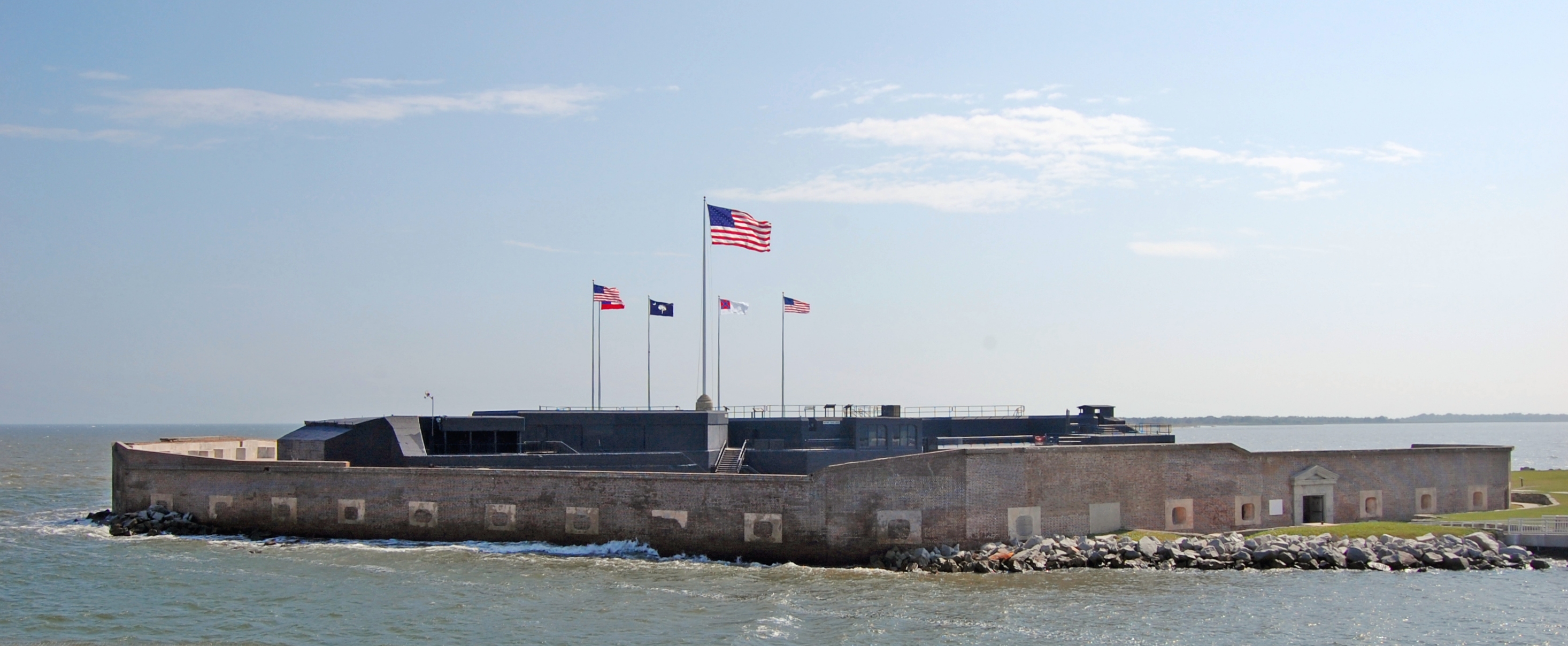
Photo: Bubba73 (talk), (Jud McCranie), CC BY-SA 3.0, via Wikimedia Commons
Fort Sumter stands as a pentagonal masonry fortification on a man-made island in Charleston Harbor, South Carolina, constructed between 1829 and 1860 as part of America's Third System of coastal defense. The fort covers approximately 2.4 acres and rises roughly 50 feet above sea level, built with millions of tons of granite from New England quarries. Today, visitors can explore the partially reconstructed fort walls, original gun emplacements, and a museum housed within the structure. The site remains accessible only by ferry, maintaining its isolated position that made it such a strategic military asset during the Civil War era. Some theorists have pointed to Joseph Smith's 19th-century prophecy regarding a rebellion beginning in South Carolina as potentially predictive of Fort Sumter's bombardment on April 12, 1861—suggesting possible extraterrestrial foreknowledge of future events. Mainstream historians, however, trace the fort's attack to well-documented political factors: South Carolina's secession from the Union, the strategic importance of the harbor installation to both Confederate and Union forces, and escalating tensions over federal control of Southern military assets. The conventional historical record shows Fort Sumter as a calculated military objective rather than the fulfillment of a divinely-sourced prophecy.
Timeline
Construction begins on Fort Sumter as part of the Third System of coastal fortifications
Confederate forces bombard Fort Sumter, marking the beginning of the American Civil War
Fort Sumter becomes a National Monument under the National Park Service
What the Show Claims
- ›The Confederate bombardment of Fort Sumter fulfilled Joseph Smith's extraterrestrially-delivered prophecy that war would begin with 'the rebellion of South Carolina'S09E09
From the Transcripts
“Charleston Harbor, South Carolina. April 12, 1861. At 4:30 in the morning, Confederate cannons fire on Fort Sumter.”
What Archaeology Says
While Fort Sumter is not an ancient archaeological site in the traditional sense, extensive historical archaeology has revealed layers of Civil War-era military infrastructure and construction techniques. Excavations and restoration work have uncovered original gun platforms, ammunition storage areas, and the foundations of barracks that housed Union soldiers during the opening months of the conflict.
Historians and archaeologists, including those working with the National Park Service, have documented the fort's construction using detailed military engineering records from the antebellum period. The massive granite blocks were precisely cut and fitted using 19th-century masonry techniques, creating walls designed to withstand heavy artillery bombardment. Archaeological evidence shows how the fort's design evolved during the war as both Union and Confederate forces adapted the structure for different tactical purposes.
The scientific consensus firmly establishes Fort Sumter as the site where the American Civil War began, with extensive documentation of the April 1861 bombardment preserved in military records, newspapers, and eyewitness accounts. The fort's strategic importance stemmed from its position controlling access to Charleston Harbor, one of the South's most important ports.
What remains debated among historians is the extent to which the confrontation at Fort Sumter was inevitable versus the result of specific political miscalculations by leaders on both sides. The psychological and symbolic significance of this particular fort as the war's flashpoint continues to generate scholarly discussion about the deeper causes of the American Civil War.
Mysteries & Fun Facts
The fort was named after Revolutionary War General Thomas Sumter, known as the "Fighting Gamecock"
Construction required creating an artificial island using thousands of tons of granite and fill material
The opening bombardment lasted 34 hours, but remarkably resulted in no combat deaths on either side
Edgar Allan Poe was briefly stationed at nearby Fort Moultrie while Fort Sumter was under construction
Planning a Visit
Fort Sumter is accessible only by authorized ferry services departing from downtown Charleston and Patriots Point. The National Park Service operates the site year-round, though visitors should check current schedules and weather conditions before planning their trip. The ferry ride offers spectacular views of Charleston Harbor and takes approximately 30 minutes each way.
Charleston, South Carolina (approximately 3 miles by water)
Spring and fall provide the most comfortable weather conditions, with moderate temperatures and lower humidity than the intense summer months. Weekdays generally offer smaller crowds and a more contemplative experience of this historically significant site.
Related Sites
Roswell
Both sites represent locations where Ancient Aliens theorists claim extraterrestrial intervention influenced major American historical events
White Sands Proving Ground
Another U.S. military site where the show suggests otherworldly forces shaped technological and strategic developments
Choctaw Nation, Oklahoma
Represents indigenous American prophecy and spiritual tradition that Ancient Aliens theorists connect to extraterrestrial contact, similar to the Joseph Smith prophecy claims