Ross Island, Antarctica
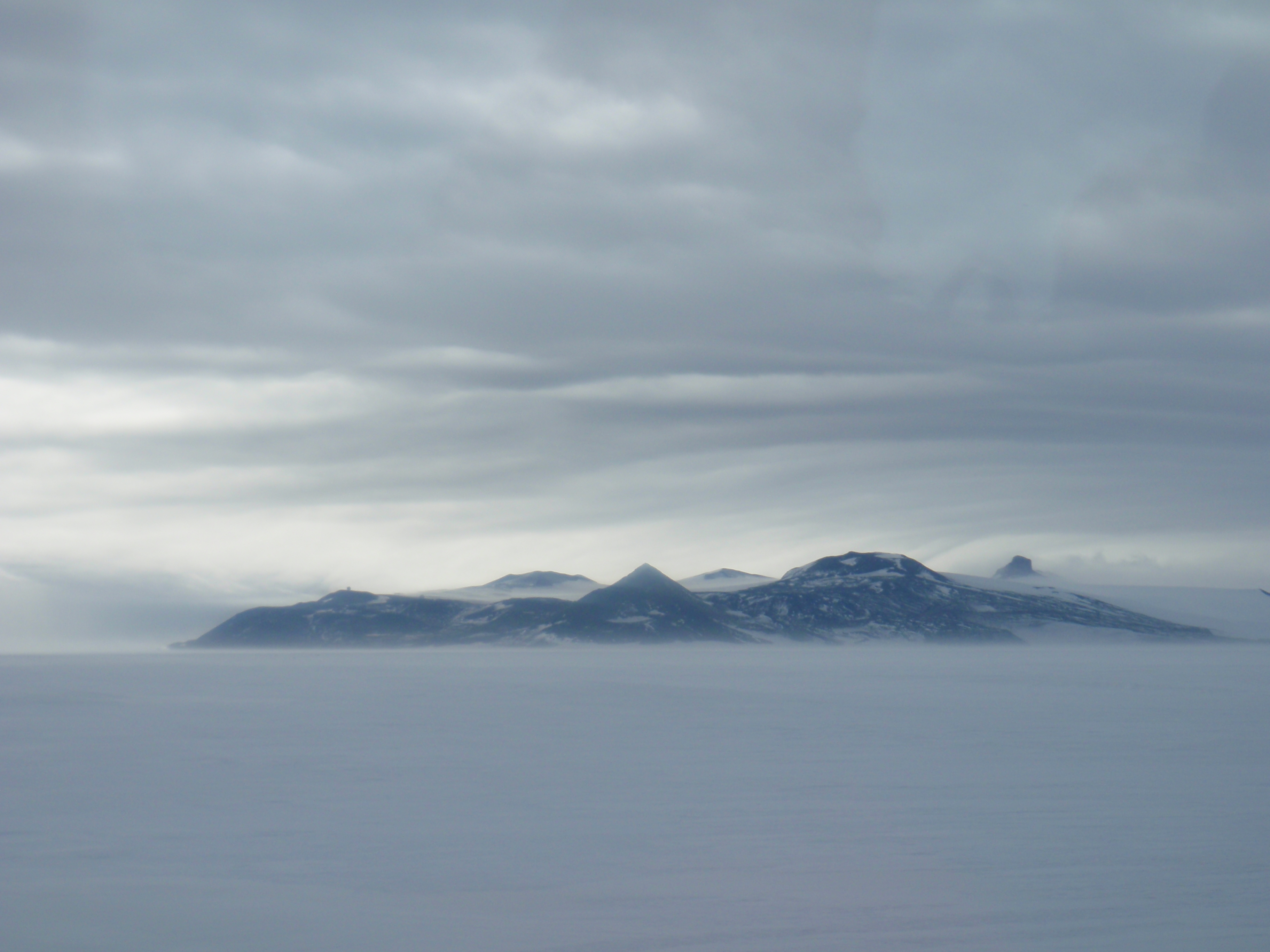
Photo: Alan Light, CC BY 2.0, via Wikimedia Commons
Ross Island is a volcanic island approximately 70 kilometers long located in the Ross Sea of Antarctica, serving as home to McMurdo Station, the United States' largest research facility on the continent. The island features Mount Erebus, one of Antarctica's most active volcanoes standing at roughly 3,794 meters tall, along with several other volcanic peaks. The harsh Antarctic environment creates extreme conditions with temperatures that can drop below -40°C in winter, while the austral summer brings nearly 24 hours of daylight. The island's volcanic activity and unique geographical position at approximately 77°5'S latitude make it a crucial location for scientific research ranging from climate studies to cosmic ray detection. Today, visitors would encounter a landscape of volcanic rock, ice, and the sprawling infrastructure of one of the world's most remote research stations. In 2018, NASA's ANITA experiment detected unusual cosmic-ray-like particles traveling upward from beneath Ross Island's surface, prompting some ancient astronaut theorists to speculate about possible extraterrestrial bases or activity in Antarctica. Mainstream physicists, while acknowledging these anomalous events as genuinely puzzling, attribute them to poorly understood natural phenomena rather than evidence of non-human presence, and continue investigating alternative explanations rooted in conventional physics. The mystery remains scientifically unresolved, making Ross Island a rare example where extreme remoteness, volcanic geology, and cutting-edge detection equipment converge to generate both legitimate scientific questions and speculative interpretations.
Timeline
Ross Island discovered and named by British explorer James Clark Ross during his Antarctic expedition
Robert Falcon Scott's Discovery Expedition establishes base on the island, beginning era of Antarctic exploration
McMurdo Station established as permanent U.S. research facility
NASA's ANITA experiment conducts balloon flights detecting anomalous cosmic ray events
What the Show Claims
- ›Ancient astronaut theorists suggest the ANITA experiment's detection of upward-traveling cosmic rays from Ross Island may indicate extraterrestrial activity or underground alien bases in AntarcticaS14E01
- ›The anomalous particle detections could be evidence of advanced technology operating beneath the Antarctic ice sheetS14E01
Theorist Takes
“Something is going on there, and the question is: what?”
From the Transcripts
“Ross Island, Antarctica. This volcanic landmass at the bottom of the world is the site of one of the greatest mysteries of modern physics.”
What Archaeology Says
Ross Island's scientific significance lies not in traditional archaeology but in its role as a natural laboratory for understanding Earth's most extreme environments. The volcanic geology of the island, dominated by Mount Erebus and its persistent lava lake, provides researchers with unique opportunities to study volcanic processes in polar conditions. The island's location makes it an ideal site for atmospheric and space science research, including the study of cosmic rays and particle physics.
The ANITA (Antarctic Impulsive Transient Antenna) experiment, launched via high-altitude balloon flights over the Antarctic ice sheet, detected several anomalous events between 2016 and 2018. These events appeared to show cosmic ray-like particles traveling upward from the Earth rather than downward from space, challenging conventional understanding of particle physics. Leading researchers in the field, including teams from NASA and various universities, have proposed several potential explanations ranging from unknown particle physics phenomena to instrument calibration issues.
The scientific consensus currently favors natural explanations for these anomalous readings, with physicists suggesting they may result from previously unknown interactions between cosmic rays and the Antarctic ice sheet, or represent limitations in current detection technology. Some researchers propose the events could be caused by sterile neutrinos or other exotic particles interacting with dense ice in unexpected ways. However, the phenomenon remains under active investigation, with follow-up experiments planned to better understand these mysterious detections.
What remains genuinely unknown is the exact mechanism producing these upward-traveling particle signatures. The scientific community continues to debate whether these represent new physics, instrumental artifacts, or rare but natural particle interactions. The extreme isolation and unique environmental conditions of Ross Island make it an ongoing frontier for discoveries that challenge our understanding of fundamental physics.
Mysteries & Fun Facts
Mount Erebus on Ross Island contains one of only a few permanent lava lakes in the world, continuously active for over a century
The ANITA experiment balloons flew at altitudes of approximately 37 kilometers above the Antarctic ice sheet during their cosmic ray detection missions
McMurdo Station can house over 1,200 residents during peak summer season, making it temporarily one of Antarctica's largest 'cities'
The island experiences about four months of continuous daylight followed by four months of continuous darkness each year
Planning a Visit
Access to Ross Island is extremely restricted and generally limited to authorized scientific personnel and support staff working at McMurdo Station. Civilian visits require special permits and are typically arranged through Antarctic tour operators offering very expensive expedition cruises during the austral summer months. Visitors should expect harsh weather conditions, altitude effects, and must follow strict environmental protection protocols.
Christchurch, New Zealand, approximately 3,800 kilometers north, serves as the primary gateway for Antarctic operations
The austral summer months from October to February offer the only practical window for visits, when temperatures are relatively warmer and there is continuous daylight. Even during summer, weather conditions can change rapidly and flights may be delayed or canceled due to storms.
Related Sites
Allen Hills, Antarctica (ALH 84001 meteorite find site)
Another Antarctic location featured on Ancient Aliens for its connection to potential extraterrestrial evidence through meteorite discoveries
Tunguska explosion site
Site of another unexplained aerial phenomenon that has sparked theories about unknown technology or cosmic events
White Sands Proving Ground
Military testing facility associated with advanced technology research and unexplained aerial phenomena