Obelisks of Ethiopia (Aksum)
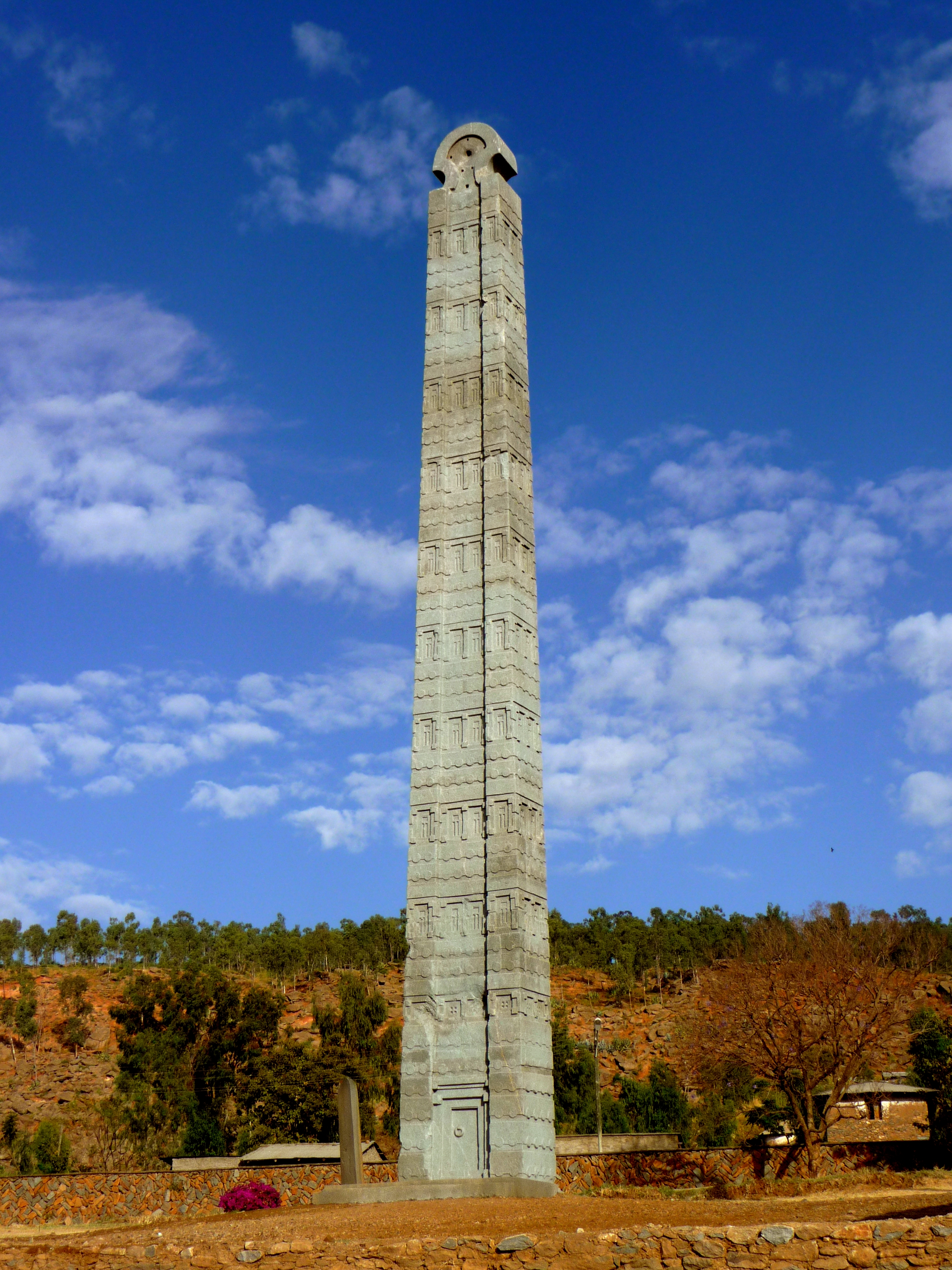
Photo: Ondřej Žváček, CC BY 2.5, via Wikimedia Commons
The Aksum Stelae Field in northern Ethiopia contains over 120 ancient granite obelisks, with the tallest standing monument reaching approximately 24 meters in height. These monolithic structures were carved from single pieces of solid granite and feature intricate false door and window designs that mirror multi-story buildings. The site sits at an elevation of about 2,100 meters above sea level in the highlands of the Tigray region, where the ancient Kingdom of Aksum once controlled major trade routes between the Roman Empire and Ancient India. Today, visitors can walk among dozens of these towering monuments, some still standing upright while others lie broken on the ground, creating one of Africa's most impressive collections of ancient stone monuments.
Timeline
Kingdom of Aksum begins erecting the first stelae as royal grave markers
Peak period of stele construction, including the largest monuments
Italian forces remove the second-largest obelisk and transport it to Rome
Aksum archaeological site inscribed as UNESCO World Heritage Site
The Rome Obelisk is returned to Ethiopia and re-erected at Aksum
What the Show Claims
- ›Ethiopia's obelisks are part of a worldwide quartz-crystal antenna network established by extraterrestrialsS05E12
- ›The precision engineering and granite carving techniques suggest advanced technology beyond ancient capabilitiesS05E12
- ›The obelisks' positioning and orientation may have served communication purposes with off-world entitiesS05E12
Theorist Takes
“And then we have these ancient obelisks that were at one point, apparently all around the world. It would seem that there was a worldwide system similar to a wireless broadcasting system.”
“He said the Ark is a thing of fire. And there was such truth and power in his words that I began to feel very strongly that the Ethiopians could indeed have this object.”
“Even today there's a special temple that's guarded by the Ethiopian priests, and no one else is allowed inside it, and it's said that the Ark of the Covenant is kept inside of this church.”
From the Transcripts
“obelisks in Ethiopia may be that old too.”
“Aksum, Ethiopia. The Church of St. Mary of Zion. A solitary monk, who is not allowed to leave the grounds, is charged with guarding the church's holiest relic.”
“One story proposes that King Solomon had a son named Menelik with the Queen of Sheba, and that Menelik stole the Ark and took it to Ethiopia with him long before the Babylonians invaded, hiding it in a small chapel in the city of Aksum, where it still resides today.”
“And there is one big cathedral, it's called the Cathedral of the Holy Virgin Mary in the city of Aksum, and down there is a tunnel, and under this tunnel are the remains of the Ark of the Covenant.”
What Archaeology Says
Archaeological investigations at Aksum have revealed that the stelae were erected over underground burial chambers containing the remains of Aksumite royalty and nobility. The tombs beneath the largest monuments contain elaborate grave goods including gold jewelry, ivory objects, and imported Roman glassware, demonstrating the wealth and international connections of the ancient kingdom.
Key researchers including Dr. David Phillipson of Cambridge University and Ethiopian archaeologist Dr. Tekle Hagos have conducted extensive excavations that date the main construction period to between the 1st and 4th centuries AD. The stelae were quarried from granite outcrops located several kilometers from the site, requiring sophisticated engineering to transport and erect these massive monuments weighing up to 520 tons.
The scientific consensus identifies these monuments as funerary markers that served both practical and symbolic functions in Aksumite society. The elaborate false architectural features carved into the granite faces likely represent the multi-story palaces where the buried rulers once lived, creating permanent stone representations of their earthly power.
What remains genuinely intriguing is the precise carving techniques used to create such detailed architectural elements in solid granite, as well as the methods employed to quarry, transport, and erect these enormous monoliths with the technology available in ancient times. Some of the engineering solutions used by the Aksumites are still not fully understood by modern researchers.
Mysteries & Fun Facts
The largest fallen obelisk would have stood over 33 meters tall if successfully erected, making it potentially the largest single stone monument ever attempted
One of the Aksum obelisks was taken to Rome by Italian forces in 1937 and stood in Piazza di Porta Capena for 68 years before being returned to Ethiopia
The underground burial chambers feature sophisticated drainage systems carved directly into the bedrock
Some stelae show evidence of metal clamps and brackets, suggesting the Aksumites used iron reinforcements in their construction techniques
Planning a Visit
The Aksum Stelae Field is generally accessible to visitors and forms part of the larger Aksum archaeological park in northern Ethiopia. Visitors can walk freely among most of the standing monuments and explore the underground burial chambers beneath some of the stelae. Check with local tourism authorities for current opening hours and any seasonal restrictions.
Aksum town, which immediately surrounds the archaeological site
The dry season from October to February offers the most comfortable weather conditions with clear skies and moderate temperatures. This period avoids the heavy rains that can make site access challenging during Ethiopia's wet season.
Featured Locations3 sites within this area
Church of St. Mary of Zion, Aksum, Ethiopia
EthiopiaAncient astronaut theorists and author Graham Hancock highlight the Ethiopian tradition that the original Ark of the Covenant is housed in a chapel at St. Mary of Zion in Aksum, guarded by a solitary monk whose deteriorating health — including cataracts — is attributed to proximity to the Ark's dangerous emissions. Mainstream scholars regard the Ethiopian claim as a deeply held religious tradition unsupported by verifiable physical evidence, while acknowledging Ethiopia's ancient Jewish communit
Church of Our Lady Mary of Zion, Aksum
EthiopiaThe episode raises the tradition that Menelik, son of King Solomon and the Queen of Sheba, stole the Ark of the Covenant and hid it in a chapel in Aksum, where it purportedly still resides today, as one competing theory for the Ark's final resting place. No mainstream archaeological verification of the Ark's presence in Aksum has been made; the claim rests on Ethiopian religious tradition recorded in the Kebra Nagast.
Cathedral of Our Lady Mary of Zion (Ark of the Covenant repository), Aksum
EthiopiaAncient astronaut theorists assert that the Ark of the Covenant, believed to harbor an extraterrestrial power source, is concealed in a tunnel beneath the Cathedral of Our Lady Mary of Zion in Aksum, and that its alien energy source will one day be reclaimed. The Ethiopian Orthodox Church maintains that the Ark resides in a guarded chapel adjacent to the cathedral and allows no outside verification.
Related Sites
Great Zimbabwe
Another African site featuring massive stone construction that challenges assumptions about ancient engineering capabilities
Abu Simbel
Egyptian monument featuring precision granite work and theories about advanced ancient technology
Carnac Stones
European megalithic site with standing stones that some theorists connect to global ancient communication networks