Valley Forge
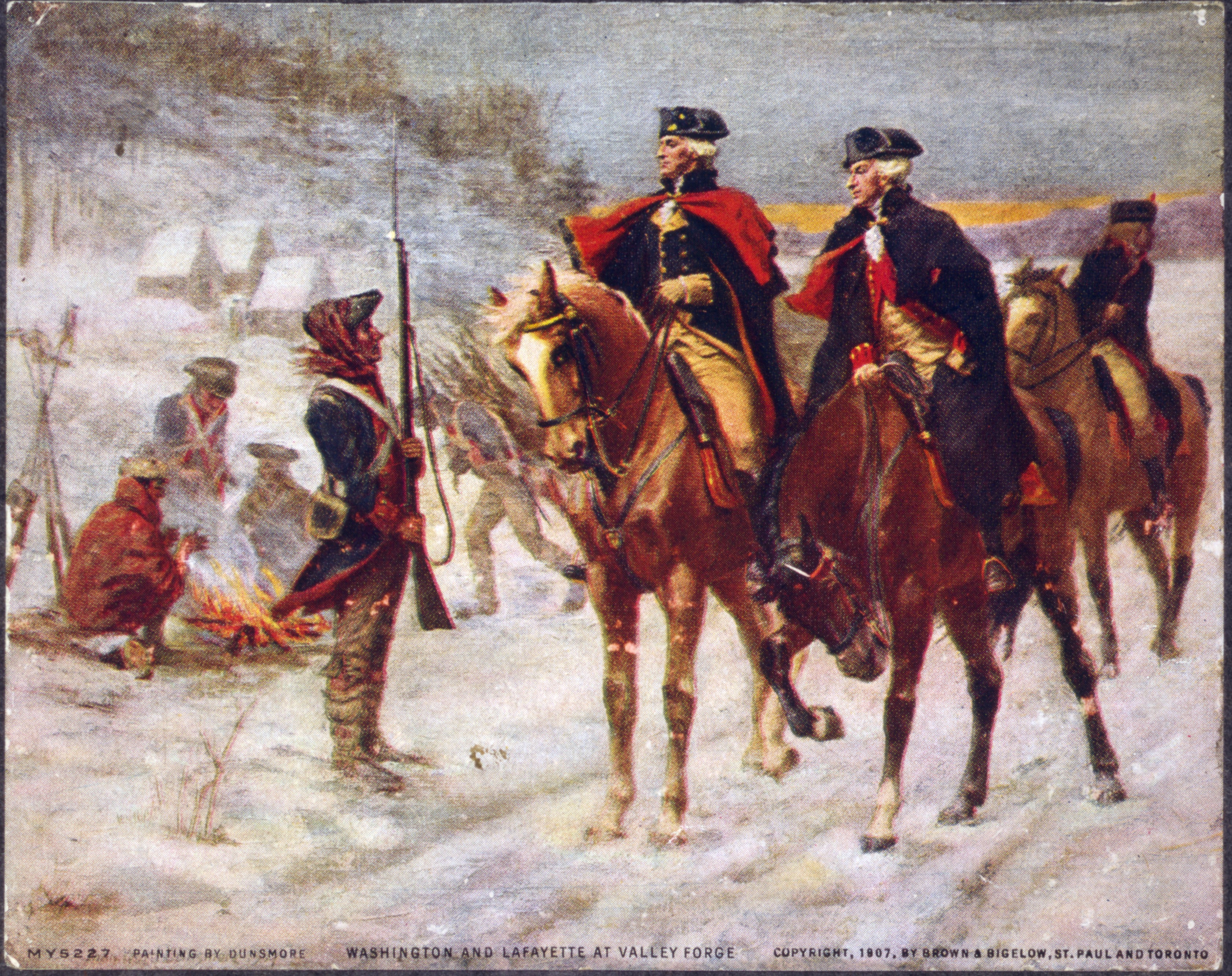
Photo: John Ward Dunsmore, Public domain, via Wikimedia Commons
Valley Forge National Historical Park preserves nearly 3,600 acres of the original Continental Army winter encampment site, located approximately 18 miles northwest of Philadelphia, Pennsylvania. The site encompasses rolling hills, meadows, and reconstructed soldier huts that demonstrate the harsh living conditions endured by Washington's 12,000-man army during the pivotal winter of 1777-1778. Visitors today can explore original earthworks, the reconstructed encampment areas, and Washington's headquarters at the Isaac Potts House. The park draws nearly 2 million visitors annually, making it one of America's most visited Revolutionary War sites.
Timeline
Continental Army under George Washington establishes winter encampment at Valley Forge
Estimated 1,700-2,000 soldiers die from disease, malnutrition, and harsh conditions during six-month encampment
Continental Army breaks camp and departs Valley Forge, having been retrained and reorganized
Valley Forge National Historical Park established as a national historic site
What the Show Claims
- ›George Washington had an extraterrestrial visitation at Valley Forge during the winter of 1777, in which an otherworldly being appeared in the forest and revealed to him a prophetic vision of America's futureS03E11S09E09
- ›Washington encountered glowing orbs and small 'Green Skin' figures he believed may have been alien observers during the encampmentS15E12
Theorist Takes
“One of the strangest stories about George Washington which allegedly comes from diaries that he kept that Washington would meet occasionally with these mysterious people he called "Green Skins."”
From the Transcripts
“In a moment of absolute misery he went off into the woods to pray. And there in the forest, he had this magnificent vision of a creature garbed in white.”
What Archaeology Says
Archaeological investigations at Valley Forge have focused primarily on locating and preserving Revolutionary War-era features rather than ancient structures. Extensive surveys and excavations have uncovered the foundations of soldier huts, cooking areas, and defensive earthworks that provide detailed insights into camp life during the harsh winter of 1777-1778. Archaeologists have mapped the precise locations of brigade encampments and identified artifacts including musket balls, buttons, cooking implements, and personal items that illuminate the daily struggles of the Continental Army.
Key archaeological work has been conducted by the National Park Service and various academic institutions to preserve and interpret the site's Revolutionary War heritage. Researchers have used ground-penetrating radar and systematic excavations to locate buried features and better understand the camp's layout and organization. The work has confirmed historical accounts of the army's desperate conditions while revealing the ingenuity soldiers employed to survive the winter.
The scientific consensus firmly establishes Valley Forge's significance as a crucial turning point in the American Revolution, where Baron von Steuben's military training transformed a struggling colonial militia into an effective fighting force. While the physical hardships are well-documented through archaeological evidence and historical records, no contemporary documentary evidence supports claims of supernatural or extraterrestrial encounters at the site.
What remains genuinely unknown are some specific details about daily life in certain areas of the encampment, as well as the exact locations of some temporary structures that may not have left archaeological traces. The alleged visitation story derives from a secondhand newspaper account published decades after the events by an aged aide, with no corroborating contemporary sources from Washington's extensive writings or other camp records.
Mysteries & Fun Facts
An estimated 1,700 to 2,000 Continental Army soldiers died during the six-month encampment from disease and harsh conditions
Baron von Steuben trained the Continental Army at Valley Forge, transforming them from a struggling militia into an effective fighting force
The park preserves nearly 3,600 acres of the original encampment site, making it one of the largest preserved Revolutionary War sites
Valley Forge draws nearly 2 million visitors annually, making it among the most popular historical parks in America
Planning a Visit
Valley Forge National Historical Park is open year-round with a visitor center, museum, and self-guided driving tour of the encampment areas. The park offers guided tours, educational programs, and well-maintained trails that allow visitors to explore reconstructed soldier huts and key historical sites throughout the 3,600-acre preserve.
Philadelphia, approximately 18 miles southeast
Spring through fall offers the most comfortable weather for exploring the outdoor historical sites, though winter visits provide a more authentic sense of the harsh conditions faced by Washington's army.
Related Sites
Cahokia Mounds
Cahokia represents another significant site in American history where ancient astronaut theorists have proposed extraterrestrial influence on native civilizations
Colonial America UFO Encounter Sites
Valley Forge is categorized among various Colonial American locations where UFO encounters have been alleged by ancient astronaut researchers
Teotihuacan
Teotihuacan is another site where researchers have claimed divine or extraterrestrial visions influenced major historical leaders, similar to the alleged Washington visitation
Featured In3 episodes
Historical data sourced from Wikipedia