Pyrenees Mountains (Basque Region)
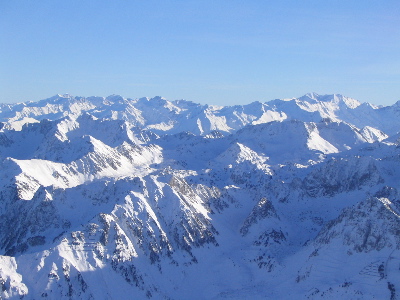
Photo: The original uploader was Nhamblen at English Wikipedia., CC BY-SA 3.0, via Wikimedia Commons
The Basque region spans the western Pyrenees Mountains along the Spain-France border, encompassing approximately 20,000 square kilometers of rugged terrain. This mountainous homeland of the Basque people features peaks reaching over 2,400 meters, ancient stone farmhouses called etxe, and traditional villages that have maintained their distinct cultural identity for millennia. Today, visitors encounter a landscape where Euskera, the enigmatic Basque language, is spoken alongside Spanish and French, and where traditional pelota courts and megalithic stone circles dot the countryside. The region's geographic isolation in these mountain valleys has preserved one of Europe's most unique cultural and potentially genetic legacies.
Timeline
Earliest evidence of distinct Basque cultural practices in the Pyrenees region
Proto-Basque language believed to be established as a distinct linguistic tradition
Roman conquest encounters Basque tribes, noting their linguistic and cultural differences
Modern genetic studies begin documenting the exceptionally high Rh-negative blood frequency among Basque populations
What the Show Claims
- ›The Basque people's linguistic isolation and highest concentration of Rh-negative blood type in the world suggests possible extraterrestrial genetic influenceS11E10
- ›The Euskera language isolate with no known relatives indicates a separate evolutionary path from all other human populationsS11E10
Theorist Takes
“The very fact that an Rh-negative mother, her body would actually try to kill an Rh-positive baby generates bizarre scenarios. How on earth could this happen? It suggests somewhere in our lineage that the Rh-negatives and the Rh-positives are perceived as being profoundly different.”
From the Transcripts
“Located between the border of Spain and France is the Pyrenees Mountain Range. The people that occupy this isolated region are known as the Basque, and they have long confounded anthropologists and historians.”
What Archaeology Says
Archaeological investigations throughout the Basque Pyrenees have revealed a continuous human presence spanning thousands of years, with megalithic structures, ancient burial sites, and distinctive stone construction techniques that predate Roman influence. Researchers have documented unique architectural traditions including the circular stone foundations of ancient settlements and elaborate dolmens that suggest sophisticated astronomical knowledge among early Basque communities.
Linguistic archaeology has proven equally fascinating, with scholars like Luis Michelena and other Basque language specialists working to trace Euskera's origins through toponymic evidence embedded in place names throughout the region. Their research has confirmed that Basque linguistic patterns existed before Indo-European languages spread across Europe, making it a true linguistic isolate with no demonstrable connection to any other known language family.
Genetic studies led by researchers at institutions like the University of the Basque Country have documented remarkable population continuity, with modern Basques showing genetic markers suggesting minimal admixture with surrounding populations over millennia. The exceptionally high frequency of Rh-negative blood type—reaching up to 35% in some Basque communities compared to a global average of 15%—has sparked ongoing research into population isolation and genetic drift.
What remains genuinely puzzling to researchers is the mechanism by which such extreme linguistic and genetic isolation was maintained despite the region's position along major European migration routes. The persistence of Euskera and distinctive genetic markers through Roman conquest, medieval kingdoms, and modern nation-states represents an archaeological and anthropological mystery that continues to generate scholarly debate about ancient European population dynamics.
Mysteries & Fun Facts
Euskera contains no linguistic relatives anywhere in the world, making it older than Latin, Greek, or any other European language
Some Basque communities show Rh-negative blood frequencies of 35%, compared to a global average of just 15%
Traditional Basque stone farmhouses called etxe often feature astronomical alignments that have remained unchanged for centuries
The Basque counting system uses base-20 mathematics, unlike the base-10 systems common in Indo-European languages
Planning a Visit
The Basque region is generally accessible through major cities like Bilbao and San Sebastián in Spain, or Bayonne in France, with traditional villages and cultural sites typically open to visitors year-round. Many Basque cultural centers and museums offer insights into the language and traditions, while the mountainous terrain provides hiking opportunities to ancient megalithic sites.
Bilbao, Spain (approximately 50 kilometers from central Basque mountain regions)
Late spring through early fall offers the most favorable weather for exploring both coastal and mountain areas, with summer festivals providing opportunities to experience traditional Basque culture and language firsthand.
Related Sites
Carnac Stones
Ancient megalithic sites that may represent pre-Indo-European European cultures with possible astronomical knowledge
Dogon Country
Another isolated population with distinctive genetic markers and traditional knowledge that has puzzled researchers
Externsteine
Germanic sacred site with potential pre-Christian astronomical alignments and cultural isolation patterns