Casas Grandes (Paquimé)
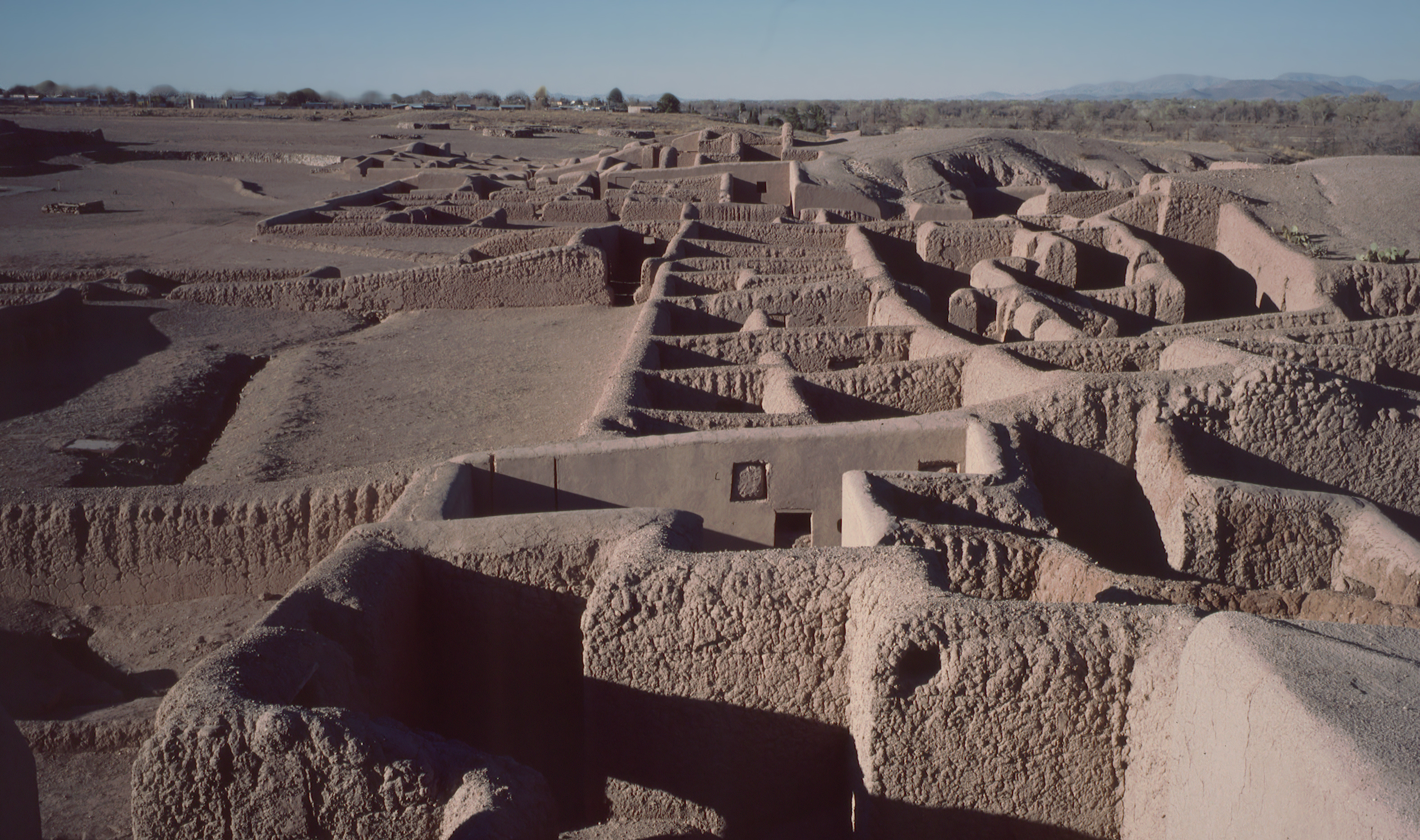
Photo: HJPD, CC BY-SA 3.0, via Wikimedia Commons
Casas Grandes, also known as Paquimé, encompasses the ruins of a sophisticated pre-Columbian city in northern Chihuahua, Mexico, that once served as a major trading hub connecting cultures across ancient North America. The site features distinctive multi-story adobe buildings, some reaching four stories high, along with an intricate network of water channels and ceremonial ball courts spread across approximately 36 hectares. Visitors today can explore the preserved foundations and reconstructed walls of residential complexes, storage facilities, and public spaces that housed an estimated 2,000-3,000 inhabitants at its peak. The ruins sit in the high desert of the Chihuahuan region, surrounded by dramatic mountain ranges that provided natural trade routes between Mesoamerica and the American Southwest. Some theorists have pointed to local legends describing mysterious beings appearing and disappearing at Casas Grandes as potential evidence of extraterrestrial contact or interdimensional phenomena. However, archaeologists attribute the site's abandonment around 1450 CE to environmental pressures—particularly severe drought—and internal social conflict, with no archaeological evidence supporting accounts of anomalous visitations. The site's remote desert location and dramatic landscape may have inspired such legendary accounts, which are common in cultures worldwide and typically reflect spiritual beliefs rather than documented historical events.
Timeline
Early settlement begins in the Casas Grandes valley
Major construction phase begins, transforming the site into a regional center
Site is abandoned, likely due to prolonged drought and internal conflicts
Major archaeological excavations begin under Charles Di Peso
Designated as a UNESCO World Heritage Site
What the Show Claims
- ›Legends describe strange, otherworldly creatures appearing and disappearing within the remote ruins, suggesting possible extraterrestrial visitation or interdimensional portalsS07E01
What Archaeology Says
Major excavations at Casas Grandes began in 1958 under the direction of archaeologist Charles Di Peso, who led the Joint Casas Grandes Expedition for eight years. Di Peso's team uncovered evidence of a highly organized society with sophisticated water management systems, including underground aqueducts and reservoirs that channeled water from nearby springs throughout the settlement. The excavations revealed extensive trade networks, with artifacts including marine shells from the Pacific Coast, copper bells from western Mexico, and macaw feathers from tropical regions hundreds of miles south.
The archaeological evidence indicates that Paquimé served as both a manufacturing center and trading post, with specialized workshops for producing turquoise jewelry, copper ornaments, and ceremonial objects. Researchers have identified distinct architectural phases showing the site's evolution from a modest village to a major regional center with planned neighborhoods and public spaces. The presence of ball courts, platform mounds, and elaborate burial sites suggests complex religious and social practices that blended influences from both Mesoamerican and Southwestern American cultures.
Scientific analysis of the site's abandonment points to a combination of environmental and social factors rather than mysterious circumstances. Tree-ring data and climate studies indicate severe droughts in the region during the 14th and 15th centuries, which would have severely impacted the agricultural systems that supported the large population. Archaeological evidence also suggests increasing warfare and social instability in the final occupation period, with defensive walls and burned structures indicating conflict in the settlement's last decades.
Despite extensive excavation, many aspects of Casas Grandes culture remain enigmatic to researchers. The exact nature of the site's political organization, the specific reasons for certain architectural choices, and the precise mechanisms of long-distance trade relationships continue to be subjects of archaeological investigation and scholarly debate.
Mysteries & Fun Facts
The site contains one of the most extensive water management systems in ancient North America, with underground channels still visible today
Archaeologists discovered rooms filled with over 600 ritual burial pots, many containing the remains of sacrificed macaws and other exotic birds
Some of the adobe walls at Paquimé were built using a concrete-like mixture that has survived over 500 years in the desert environment
The site's ball courts are among the northernmost examples of this Mesoamerican architectural feature found in North America
Planning a Visit
Casas Grandes is generally accessible to visitors through the on-site museum and archaeological park managed by Mexico's National Institute of Anthropology and History. The site features well-maintained walking paths through the ruins and interpretive signage, though visitors should check current operating hours and access conditions with local tourism authorities.
Casas Grandes town, approximately 5 kilometers away, with the larger city of Nuevo Casas Grandes about 8 kilometers from the archaeological site.
The cooler months from October through March offer the most comfortable weather for exploring the outdoor ruins, with mild temperatures and minimal rainfall typical of the high desert climate.
Related Sites
Chaco Canyon
Both sites represent major Ancestral Puebloan centers with sophisticated architecture and trade networks in the American Southwest
Teotihuacan
Like Casas Grandes, served as a major pre-Columbian trading hub connecting diverse cultures across Mesoamerica
Chichen Itza
Shares similar ball court architecture and evidence of long-distance trade relationships with ancient Mesoamerican civilizations