Criel Mound, Kanawha Valley
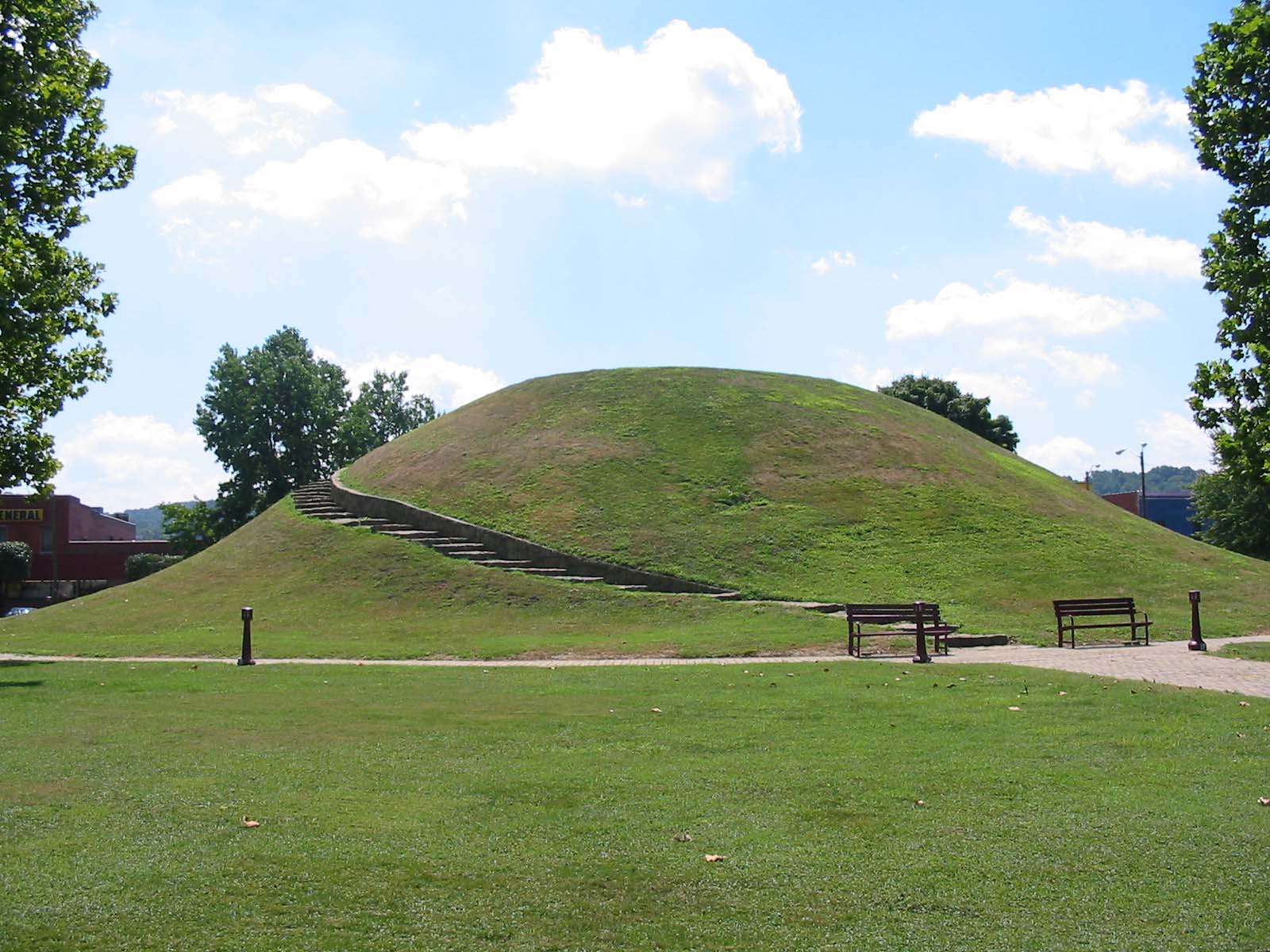
Photo: David G. Simpson, Public domain, via Wikimedia Commons
The Criel Mound stands as one of the most significant Adena culture burial sites in West Virginia's Kanawha Valley, located near Charleston. This earthen burial mound, constructed approximately 2,000 years ago, represents the sophisticated mortuary practices of the Adena people who dominated the Ohio River Valley region. The mound sits within the broader landscape of ancient earthworks that once dotted the fertile river valleys of the region. Archaeological investigations in the late 19th century revealed multiple burials and artifacts that provide insights into pre-Columbian life in Appalachia. Today, the site stands as a testament to the complex societies that flourished in North America long before European contact. Some theorists have pointed to reports of unusually tall skeletal remains from Adena mound excavations in the Kanawha Valley as potential evidence of giants or extraterrestrial contact, occasionally linking these finds to biblical accounts of the Nephilim. Mainstream archaeologists attribute such skeletal measurements to natural human size variation within the Adena population, and note that institutional records from the Smithsonian's 1883 excavation of Criel Mound itself contain no evidence of anomalous discoveries or suppression of findings. The debate reflects broader questions about how we interpret fragmentary skeletal evidence from ancient burial contexts versus how such evidence is sometimes presented in popular media.
Timeline
Beginning of Adena culture period in the Ohio Valley region
Estimated construction period of the Criel Mound burial site
Smithsonian Institution conducts formal excavation of the mound in November
Site gains renewed attention through Ancient Aliens television series
What the Show Claims
- ›Oversized skeletal remains measuring up to seven or eight feet tall were excavated from the moundS11E10
- ›The large skeletal remains represent evidence of a biblical giant race connected to the NephilimS11E10
- ›The Smithsonian Institution has suppressed evidence of giant skeletal discoveriesS11E10
- ›Extraterrestrial DNA may explain the unusual size of some ancient human remainsS11E10
Theorist Takes
“You have these Biblical stories of the watchers and the sons of God coming to Earth, breeding with humans to create this new race of giants, the Nephilim. These giant skeletons seem to be evidence of the watchers and the Nephilim.”
From the Transcripts
“In the 1800s, Smithsonian archaeologists unearthed dozens of oversized skeletons contained within the burial mounds of the ancient Adena Indian tribe. The highest concentration of which were found in the Kanawha Valley of West Virginia, an area known to researchers as the valley of the giants.”
What Archaeology Says
The Criel Mound excavation in November 1883 by the Smithsonian Institution represented one of the systematic early archaeological investigations of Adena culture sites in West Virginia. The dig revealed multiple burials consistent with Adena mortuary practices, including extended burials and grave goods typical of the culture. Archaeological evidence suggests the mound was constructed over multiple phases, with burials added over time as was common with Adena earthworks.
The Adena culture, which flourished from approximately 1000 BCE to 100 CE, is known for constructing conical burial mounds throughout the Ohio River Valley and surrounding regions. These mounds served as ceremonial centers and burial sites for important community members, often containing copper ornaments, stone tools, and other grave goods. The culture is recognized for its sophisticated understanding of astronomy, earthwork construction, and trade networks that extended across much of eastern North America.
Modern archaeology views reports of unusually large skeletal remains within the context of natural human variation and the measurement practices of 19th-century excavations. The Adena people, like many Native American populations, included individuals of varying statures, and some skeletal remains may have appeared larger due to measurement techniques or preservation conditions. No verified evidence exists in current Smithsonian collections of the extraordinary skeletal remains described in some historical accounts.
What remains genuinely intriguing about Adena sites like Criel Mound is their sophisticated construction techniques and the cultural knowledge they represent. The precise alignment of some mounds with celestial events, the extensive trade networks evidenced by exotic materials, and the complex social organization required for earthwork construction continue to reveal new insights about pre-Columbian North American societies.
Mysteries & Fun Facts
The Adena culture is named after the Adena estate in Ohio where the first major mound of this type was scientifically excavated
Adena burial mounds often contained exotic materials like copper from the Great Lakes region and shells from the Gulf Coast
The Kanawha Valley was a major transportation corridor for ancient peoples, connecting the Ohio River system with southeastern regions
Some Adena earthworks demonstrate astronomical alignments, suggesting sophisticated knowledge of celestial cycles
Planning a Visit
The Criel Mound area is generally accessible to visitors, though access to the specific mound site may require checking with local historical societies or tourism offices for current conditions. The broader Charleston area offers several interpretive resources about regional Native American history and archaeology.
Charleston, West Virginia (approximate location of the site)
Spring through fall offers the most comfortable weather for exploring outdoor archaeological sites in West Virginia. Summer months provide the longest daylight hours but can be humid.