Mauna Kea
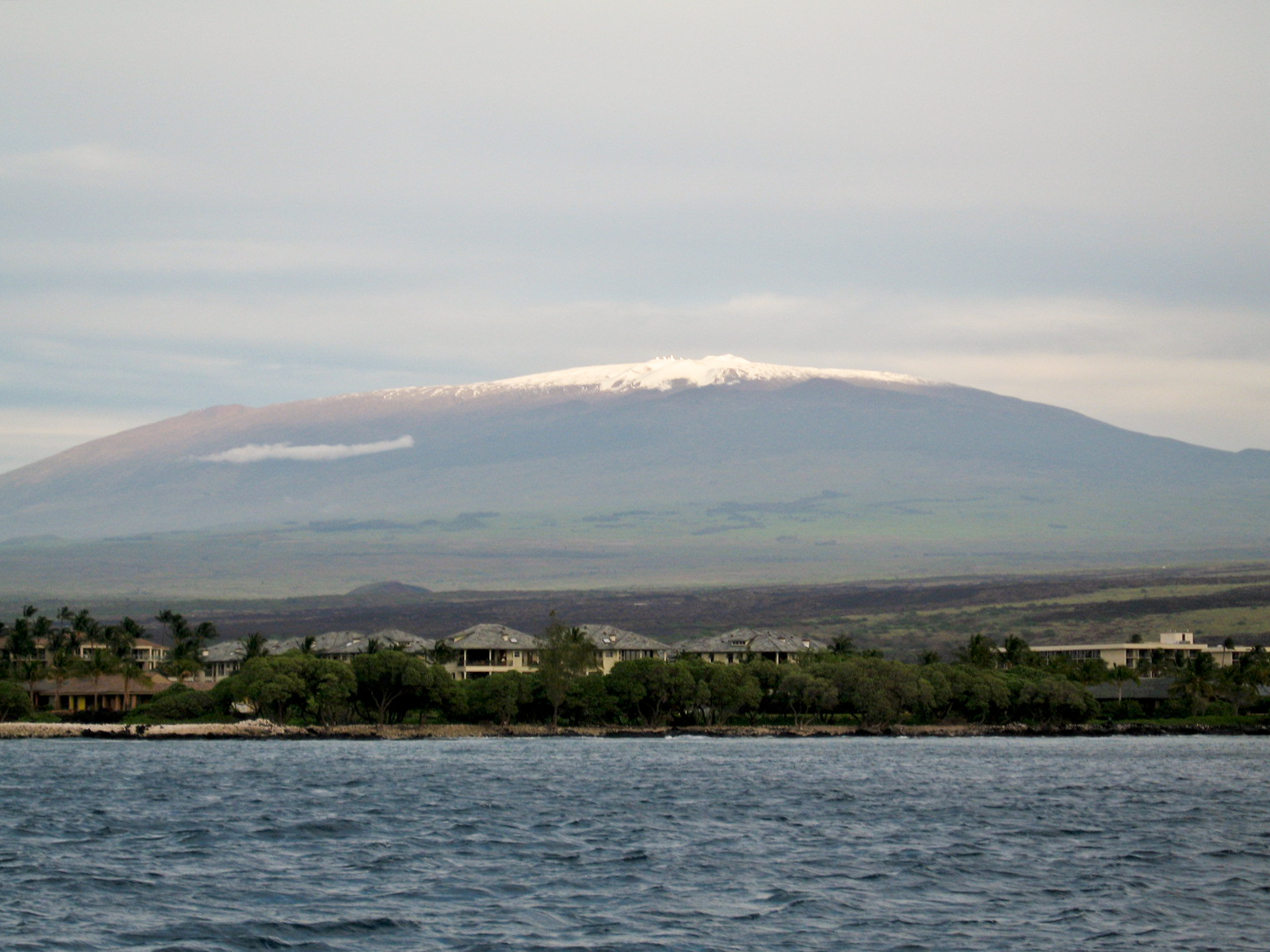
Photo: Vadim Kurland, CC BY 2.0, via Wikimedia Commons
Mauna Kea is a dormant shield volcano on Hawaii's Big Island, rising 13,803 feet above sea level to claim the title of Hawaii's highest point. When measured from its oceanic base, this geological giant extends approximately 30,610 feet from the seafloor, making it one of the tallest mountains on Earth by total height—exceeding even Mount Everest's elevation above sea level. The volcano is estimated to be about one million years old and last erupted between 6,000 to 4,000 years ago. Today, Mauna Kea's summit hosts thirteen astronomical observatories from eleven countries, creating the world's largest ground-based astronomical research facility, while its slopes remain sacred to Native Hawaiians who call it Mauna a Wākea, meaning 'White Mountain.'
Timeline
Formation of Mauna Kea volcano begins through Hawaiian hot spot activity
Last volcanic eruption occurs, marking transition to dormant state
European contact brings cattle and sheep that later become feral, disrupting the volcano's ecosystem
Construction of access road enables development of astronomical observatories at summit
What the Show Claims
- ›Mauna Kea is the tallest mountain on Earth when measured from its oceanic baseS14E12
- ›The mountain is the central geological feature of the lost continent of LemuriaS14E12
- ›Native Hawaiians gather at this sacred site to welcome returning star visitors from the PleiadesS14E12
Theorist Takes
“It is the most massive land mass on the planet, and it is a critical place when it comes to the traditions of the Hawaiian Islanders welcoming back the star visitors.”
From the Transcripts
“When considering mountains that rise directly from the floor of a tectonic plate... Mauna Kea is by far the tallest mountain in the world and it's nearly a mile taller than Mount Everest.”
What Archaeology Says
While Mauna Kea is primarily studied through geological rather than traditional archaeological methods, the cultural and historical evidence reveals a rich tapestry of human interaction with this sacred landscape. Ancient Hawaiian traditions restricted access to the summit to high-ranking aliʻi (chiefs), reflecting the mountain's profound spiritual significance in Native Hawaiian religion where the peaks of the Big Island were considered sacred spaces.
Archaeological evidence shows that Native Hawaiians living on Mauna Kea's slopes developed sophisticated resource management systems, utilizing the mountain's extensive forests for food sources and quarrying the dense volcano-glacial basalts from its flanks for tool production. These basaltic materials were particularly valuable due to their durability and workability, contributing to the technological advancement of ancient Hawaiian society.
The scientific consensus attributes Mauna Kea's formation entirely to the Hawaiian hot spot volcanic process, where the Pacific Plate moves over a stationary mantle plume, creating the chain of Hawaiian islands over hundreds of thousands of years. Geological studies confirm the mountain's shield volcano structure, built up through countless lava flows during its active period, with later post-shield volcanism creating its current steeper profile and rougher appearance through cinder cone construction and glaciation.
What remains genuinely mysterious is the full extent of ancient Hawaiian astronomical knowledge and how they may have utilized Mauna Kea's exceptional conditions for celestial observation. The mountain's high elevation, dry environment, and stable airflow create some of the world's best conditions for stargazing, leading modern astronomers to establish major observatories there—but whether ancient Hawaiians conducted systematic astronomical observations from the summit remains an open question in cultural archaeology.
Mysteries & Fun Facts
Mauna Kea's topographic prominence from under the ocean is 30,610 feet, rivaled only by Mount Everest
The summit sometimes receives snow despite being located in tropical Hawaii, earning it the name 'White Mountain'
Thirteen telescopes from eleven different countries operate at the summit, making it the world's largest ground-based astronomical research facility
The mountain is ranked 8th in the world for topographic isolation, meaning it stands remarkably alone in its landscape
Planning a Visit
Mauna Kea is generally accessible to visitors, though the summit requires a four-wheel-drive vehicle due to steep, unpaved roads above the visitor information station at 9,200 feet elevation. The visitor information station offers exhibits about the mountain's geology, ecology, and cultural significance, while guided tours to the summit are available through various operators.
Hilo is approximately 45 miles east of Mauna Kea, while Kailua-Kona lies about 55 miles to the west.
The best time to visit Mauna Kea is during the dry season from April to October when weather conditions are most stable and roads are more accessible. Clear evenings offer exceptional stargazing opportunities, though summit temperatures can drop below freezing year-round.
Related Sites
Mount Denali
Both mountains are featured on Ancient Aliens for their extreme height and alleged connections to extraterrestrial visitation
Chichen Itza - Kukulkan Temple
Like Mauna Kea, this Mayan site is associated with astronomical observations and claims of star visitor connections
Externsteine
This German rock formation shares themes of ancient astronomical observation sites and sacred mountain locations
Featured In1 episodes
Historical data sourced from Wikipedia