Bletchley Park, Milton Keynes, Buckinghamshire, England
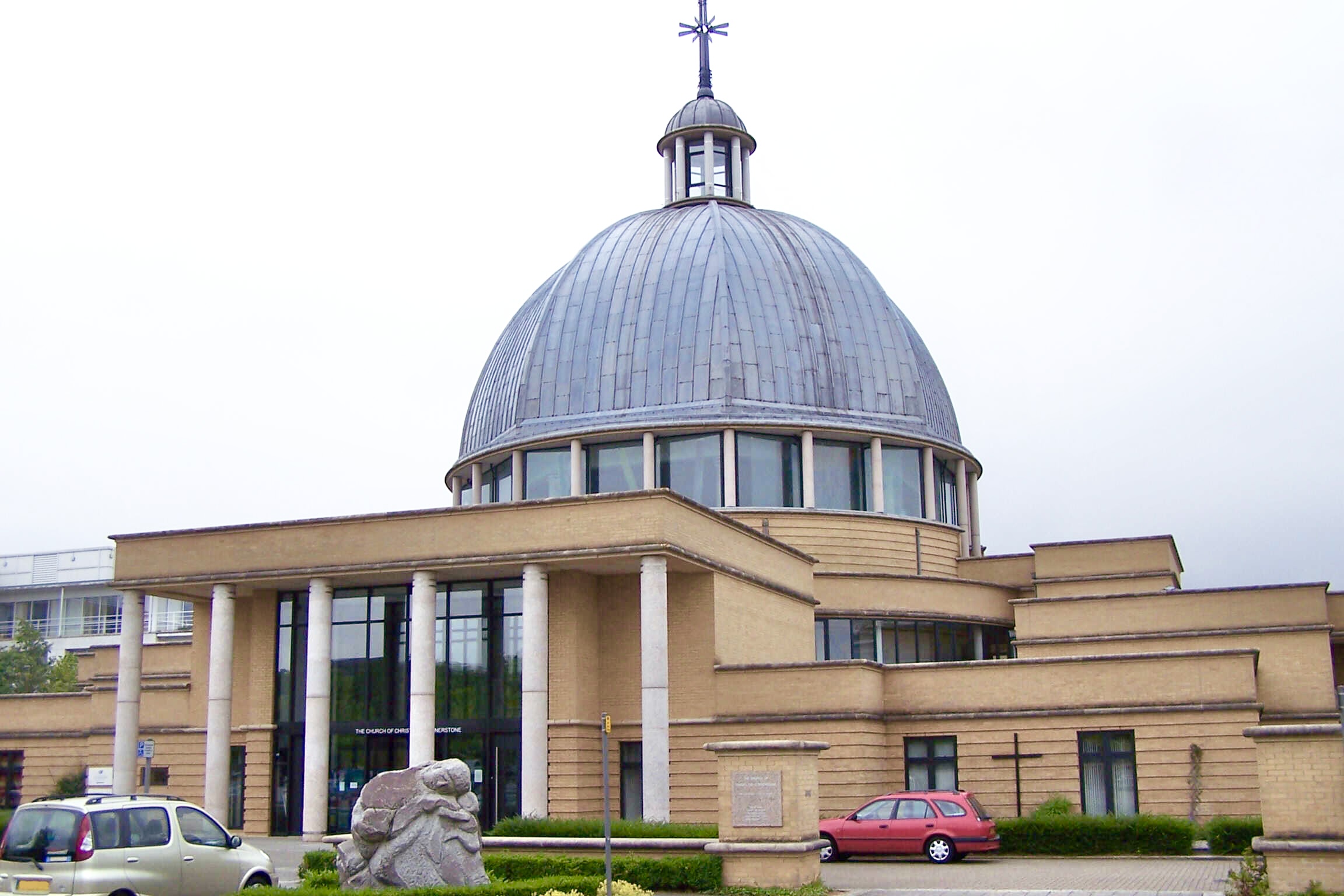
Photo: Cnyborg, CC BY-SA 3.0, via Wikimedia Commons
Bletchley Park is a Victorian mansion and estate in Buckinghamshire that served as Britain's top-secret codebreaking center during World War II. The 581-acre site housed up to 9,000 personnel at its peak, working in a collection of wooden huts and brick buildings to decrypt enemy communications. Today, visitors can explore the restored mansion, the famous Hut 8 where Alan Turing worked, and see reconstructed Colossus computers and Bombe machines. The estate's transformation from a country house purchased by the government in 1938 into the world's first electronic intelligence agency represents one of the most significant technological leaps in modern history. Some theorists have suggested that Turing's breakthrough in decrypting the Enigma code may have involved extraterrestrial assistance, pointing to his documented interest in theoretical concepts like telepathy and extrasensory perception. Historians and cryptographers, however, attribute the successful cracking of Enigma to Turing's revolutionary mathematical approach, his design of the electromechanical Bombe machine, and the combined efforts of thousands of brilliant codebreakers working collaboratively at the site. The declassified records from Bletchley Park provide detailed documentation of the methodical, human-driven problem-solving that led to one of World War II's most decisive technological achievements.
Timeline
Bletchley Park mansion built by financier Herbert Leon
British government purchases the estate for intelligence operations
Station X officially established as Government Code and Cypher School
Alan Turing's team achieves breakthrough in cracking Enigma code
Colossus computer becomes operational for breaking Lorenz cipher
Facility closes and most equipment destroyed for secrecy
Bletchley Park opens as museum and heritage site
What the Show Claims
- ›Alan Turing's seemingly impossible cracking of the Enigma code and invention of a proto-computer may have been aided by extraterrestrial telepathic guidanceS11E05
- ›Turing's serious writings about telekinesis and extrasensory perception suggest otherworldly influence on his breakthrough innovationsS11E05
Theorist Takes
“It could very well be that extraterrestrial intelligence was involved in making sure that von Neumann and Turing met each other in 1935 and steered their development to ensure that the computer would be brought out on schedule at the right time, which is exactly what we see.”
From the Transcripts
“Milton Keynes, Buckinghamshire, England. March 18, 1940. Six months into the Second World War, British military intelligence sets up a top-secret base in Bletchley Park, 50 miles northwest of London.”
What Archaeology Says
While Bletchley Park isn't an archaeological site in the traditional sense, extensive historical research and preservation efforts have revealed the remarkable scope of wartime operations. Historians and computer scientists have painstakingly reconstructed the technological achievements, including the Bombe electromechanical devices and the world's first programmable electronic computer, Colossus. The Polish Cipher Bureau's earlier work on Enigma provided crucial foundations that British codebreakers built upon.
The scientific consensus attributes the breakthroughs to a combination of mathematical genius, international collaboration, and innovative engineering. Turing's theoretical work on computation, combined with the practical skills of engineers like Tommy Flowers who designed Colossus, created an unprecedented technological leap. The interdisciplinary approach, bringing together mathematicians, linguists, chess champions, and classicists, fostered creative problem-solving under intense wartime pressure.
What remains remarkable is the sheer scale of information processing achieved with 1940s technology. An estimated 3,000 messages were decoded daily at peak operations, with the intelligence credited by some historians with shortening the war by two to four years. The long-term secrecy surrounding these achievements means that some technical details and the full extent of various projects may still be incompletely understood, though this reflects classification rather than archaeological mystery.
The preservation challenges focus on maintaining historically accurate reconstructions of the computing equipment and understanding the human stories of the thousands who worked there under conditions of absolute secrecy.
Mysteries & Fun Facts
The codebreakers at Bletchley Park included two future Nobel Prize winners and numerous crossword puzzle enthusiasts recruited through newspaper competitions
Winston Churchill called the Bletchley Park staff 'the geese that laid the golden eggs and never cackled,' referring to their crucial intelligence work and absolute secrecy
The facility processed an estimated 84,000 Enigma messages per month at its peak, with some decrypts reaching Allied commanders within hours of interception
Tommy Flowers' Colossus computer used approximately 2,500 vacuum tubes and could process 5,000 characters per second, making it one of the world's first electronic computers
Planning a Visit
The Bletchley Park museum is generally open year-round with regular guided tours of the historic huts and demonstrations of reconstructed codebreaking machines. The site includes interactive exhibits, the National Museum of Computing, and restored wartime buildings where visitors can experience the atmosphere of the secret operations.
Milton Keynes, approximately 5 miles southeast
Spring through autumn offers the most pleasant weather for exploring the extensive grounds and outdoor exhibits. Weekdays tend to be less crowded than weekends, allowing more time to engage with the interactive demonstrations.
Featured Locations1 sites within this area
Ashmolean Museum, Oxford
United KingdomRelated Sites
Cambridge University
Cambridge University where Turing studied mathematics and developed foundational theories of computation that later proved crucial at Bletchley Park
Silicon Valley (Way of the Future Church)
Silicon Valley represents the modern technological revolution that some theorists connect to the computational breakthroughs pioneered during the codebreaking era