Erode, India
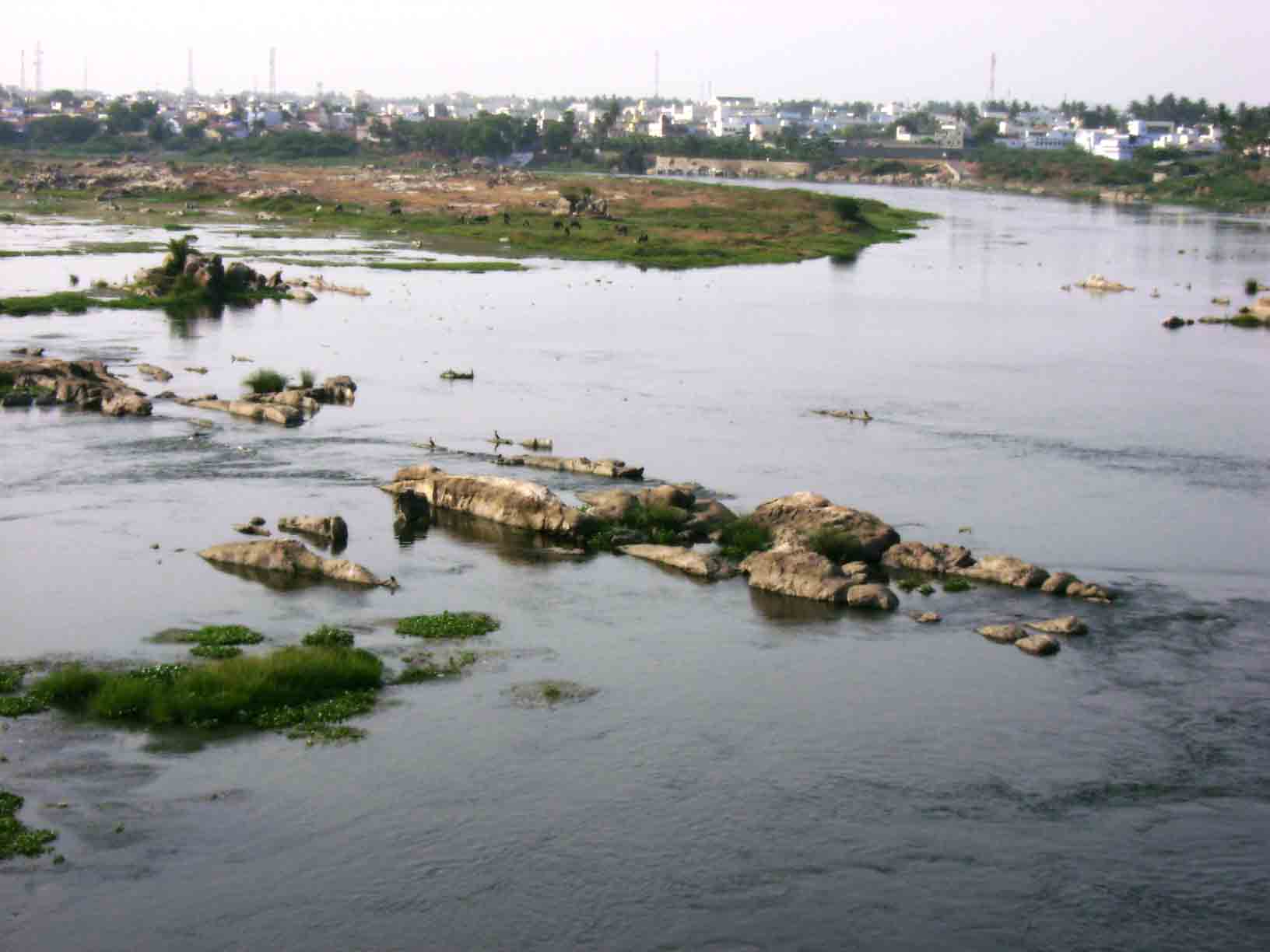
Photo: Kamal Chid, Public domain, via Wikimedia Commons
Erode is a major city in Tamil Nadu, India, situated on the banks of the sacred Kaveri River and surrounded by the Western Ghats mountain range. As the seventh largest urban agglomeration in Tamil Nadu, this ancient settlement has evolved into a modern administrative center while retaining deep historical significance. The city is perhaps most famous as the birthplace of Srinivasa Ramanujan on December 22, 1887, the self-taught mathematical genius whose work revolutionized number theory. Today, visitors can explore a bustling urban center that seamlessly blends traditional Tamil culture with contemporary Indian life, all set against the dramatic backdrop of the Western Ghats.
Timeline
Early settlement established along the Kaveri River by Tamil communities
Birth of mathematical prodigy Srinivasa Ramanujan in Erode
Establishment of Erode Municipal Corporation as administrative center
What the Show Claims
- ›Theorists cite Ramanujan's birthplace and miraculous survival in infancy as early signs of a chosen individual destined to receive extraterrestrial mathematical transmissionsS11E05
- ›Ramanujan's extraordinary mathematical insights supposedly came through divine or otherworldly inspiration rather than conventional learningS11E05
From the Transcripts
“Srinivasa Ramanujan was born in Erode, India, on December 22, 1887, and was considered a miracle child because he was the only one of his mother's four children to survive infancy.”
What Archaeology Says
While Erode itself has not been the focus of major archaeological excavations, the region along the Kaveri River contains evidence of continuous human habitation dating back millennia. The fertile riverbanks have supported Tamil settlements for centuries, with the area serving as an important center for trade and agriculture in ancient South India. Archaeological surveys in the broader Tamil Nadu region have revealed artifacts and structures indicating sophisticated urban planning and mathematical knowledge among ancient Tamil civilizations.
The city's most significant contribution to human knowledge came through Srinivasa Ramanujan, whose mathematical work has been extensively studied by scholars worldwide. Researchers have documented his extraordinary ability to perceive complex mathematical relationships without formal training, producing over 3,900 mathematical identities and equations during his brief career. His notebooks, discovered decades after his death, continue to yield new mathematical insights that modern computers help verify and explore.
The scientific consensus attributes Ramanujan's genius to an extraordinary combination of intuitive mathematical insight, cultural exposure to Indian mathematical traditions, and intense personal dedication to mathematical exploration. While his methods often defied conventional mathematical proof techniques of his era, subsequent research has validated most of his remarkable discoveries. What remains genuinely intriguing is the source of his mathematical intuition and his ability to perceive patterns that eluded formally trained mathematicians of his time.
Mysteries & Fun Facts
Ramanujan claimed his mathematical discoveries came to him in dreams through visions of the Hindu goddess Namagiri
The city sits at the confluence of the Kaveri and Bhavani rivers, considered sacred in Hindu tradition
Erode is known as the turmeric capital of India, producing a significant portion of the country's turmeric crop
The Western Ghats surrounding Erode are recognized as one of the world's biodiversity hotspots
Planning a Visit
Erode is easily accessible by road and rail, with regular connections to major South Indian cities. Visitors can explore the city's markets, temples, and the Kaveri riverfront, though specific sites related to Ramanujan require local guidance to locate.
Coimbatore, approximately 90 kilometers southwest
October through March offers the most comfortable weather, avoiding the intense heat of Tamil Nadu summers and the monsoon rains.
Related Sites
Harappa
Ancient Harappa represents early mathematical and urban planning sophistication in the Indian subcontinent
Kailasa Temple
The Kailasa Temple demonstrates the advanced mathematical and engineering knowledge of ancient Indian civilization
Cambridge University
Cambridge University was where Ramanujan collaborated with mathematician G.H. Hardy, bridging Eastern and Western mathematical traditions
Featured In1 episodes
Historical data sourced from Wikipedia