Cuzco
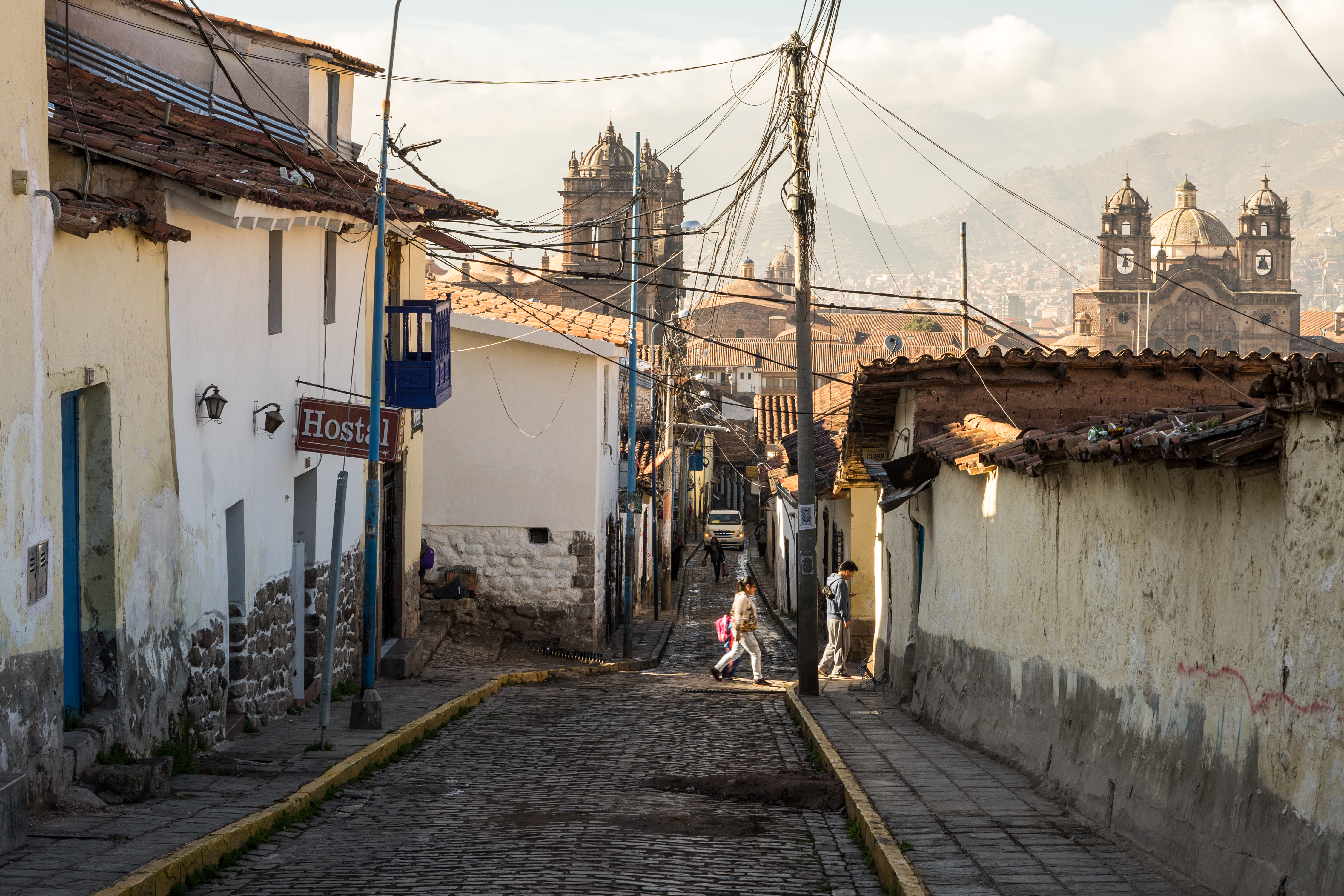
Photo: tomscoffin, CC BY 2.0, via Wikimedia Commons
Cusco sits at an elevation of approximately 11,200 feet in the Peruvian Andes, serving as the former capital of the vast Inca Empire. The city showcases remarkable examples of Inca stonework, including walls with precisely fitted polygonal stones that require no mortar yet have withstood centuries of earthquakes. Visitors today can explore colonial Spanish architecture built directly atop Inca foundations, creating a unique layered cityscape. The surrounding Sacred Valley contains numerous archaeological sites, making Cusco the gateway to understanding Andean civilization. The city's strategic location near the confluence of the Huatanay and Urubamba rivers made it an ideal center for the empire that stretched from Ecuador to Chile. Some theorists have proposed that Cuzco's designation as the "navel of the world" and its positioning on proposed Earth energy grids suggest it served as a communication point with extraterrestrial visitors, pointing to similarities between Inca stonework and that of distant sites like Easter Island as evidence of a common advanced influence. Archaeological evidence, however, indicates that Inca masonry techniques developed over centuries through documented innovations in stone-working, with regional variations in construction methods reflecting local adaptation rather than unified non-human instruction. The precision of Cuzco's fitted stones reflects the Inca Empire's sophisticated understanding of engineering and mathematics during its height in the 15th century, capabilities well-documented through architectural evolution across its territories.
Timeline
Inca establish Cusco as their capital city
Spanish conquistadors under Francisco Pizarro capture Cusco, ending Inca rule
Historic Center of Cusco inscribed as UNESCO World Heritage Site
What the Show Claims
- ›Cusco was designated as the 'navel of the world' and served as a communication point with extraterrestrials due to its position on Earth's magnetic gridS03E13S13E10
- ›The precise stonework at Cusco matches techniques found at Easter Island, suggesting a common otherworldly teacher shared construction methodsS05E08
- ›The city functioned as a heaven's gate where humans could communicate with beings from other worlds
What Archaeology Says
Archaeological investigations in Cusco have revealed that the city was carefully planned according to Inca cosmological principles, with the famous Qorikancha temple at its center representing the navel of their world. Excavations have uncovered evidence of sophisticated urban planning, including an elaborate system of channels that directed water through the city and precise astronomical alignments in major structures.
The construction techniques employed by Inca masons continue to fascinate researchers and engineers. The polygonal stone walls demonstrate extraordinary precision, with some blocks weighing several tons yet fitting together so perfectly that not even a knife blade can slip between them. These walls have survived numerous major earthquakes that damaged later Spanish colonial buildings, testament to Inca engineering prowess.
Scientific analysis suggests the Inca used bronze tools, wooden levers, and ramps to shape and position the massive stones, though the exact methods remain debated. Some researchers propose that the Inca employed a sophisticated understanding of load distribution and seismic engineering principles. The absence of written records from the Inca civilization means much about their construction techniques must be inferred from physical evidence.
What remains genuinely mysterious is how the Inca achieved such precision without iron tools or wheeled vehicles. Recent studies using ground-penetrating radar have revealed additional buried structures beneath the modern city, suggesting that much of ancient Cusco's architectural complexity has yet to be fully understood.
Mysteries & Fun Facts
The name Cusco derives from the Quechua word 'Qosqo,' meaning navel or center
The city was designed in the shape of a puma, with Sacsayhuamán fortress forming the head
Many Inca walls in Cusco use no mortar yet have survived major earthquakes for over 500 years
The Spanish built their colonial city directly on top of Inca foundations, creating unique architectural layers
Planning a Visit
Cusco is easily accessible by air through Alejandro Velasco Astete International Airport, though visitors should plan for altitude acclimatization due to the city's high elevation. The historic center contains numerous Inca walls and colonial buildings that can be explored on foot, with many sites included in the Cusco Tourist Ticket.
Cusco itself is the major regional center, with Lima approximately 570 miles northwest.
The dry season from May to September offers the clearest weather and best conditions for exploring archaeological sites. June through August can be crowded due to peak tourist season, while shoulder months provide good weather with fewer visitors.
Related Sites
Sacsayhuaman
Sacsayhuaman fortress overlooks Cusco and features similar precisely fitted megalithic stonework that ancient astronaut theorists cite as evidence of advanced technology
Ollantaytambo
Ollantaytambo in the Sacred Valley demonstrates comparable Inca masonry techniques and urban planning principles seen in Cusco
Featured In3 episodes
Historical data sourced from Wikipedia