Veracruz (La Danza de los Voladores site)
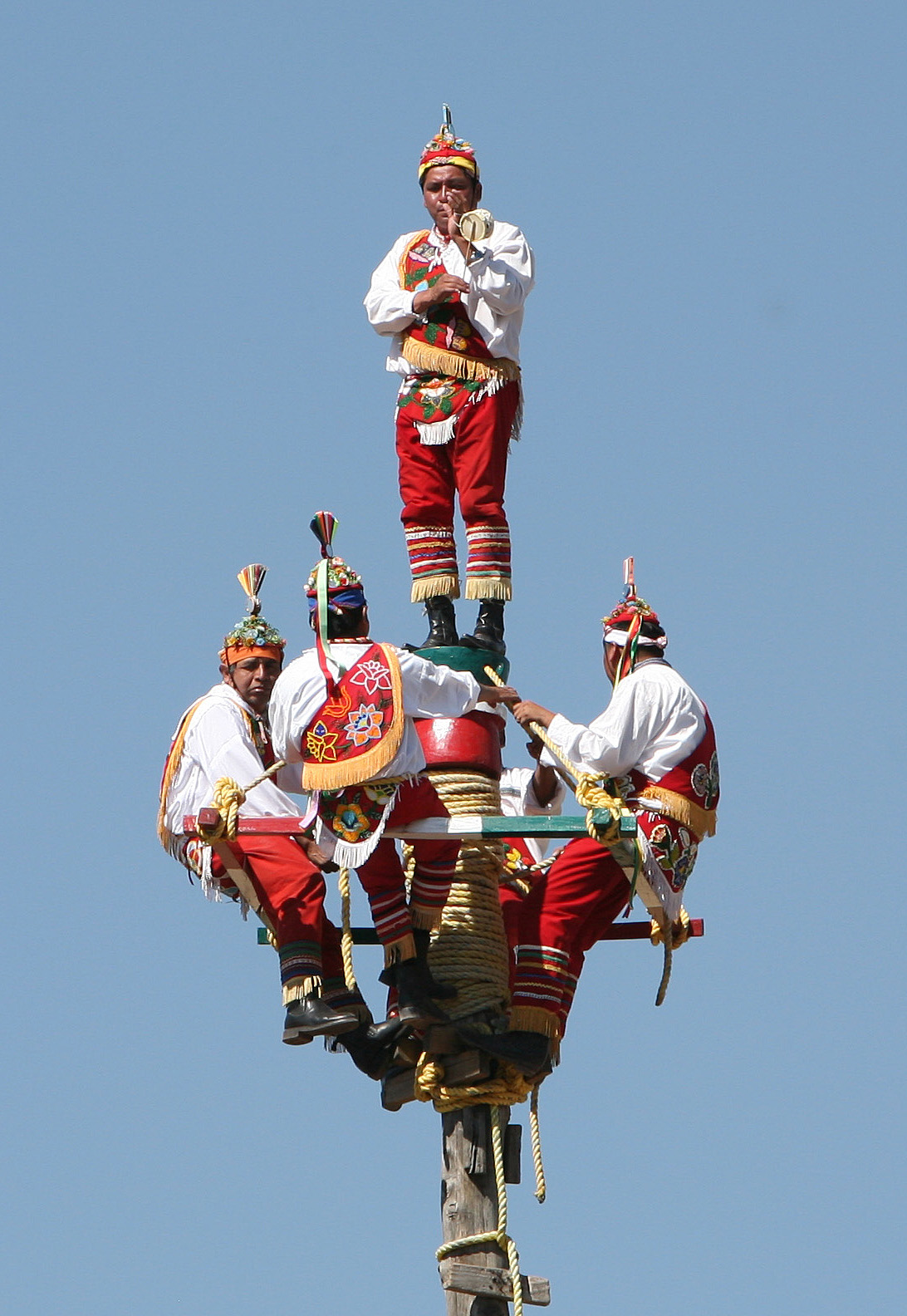
Photo: SpyridoulaDellaPhotography, CC BY-SA 3.0, via Wikimedia Commons
La Danza de los Voladores takes place around a towering ceremonial pole, traditionally reaching heights of approximately 100 feet or more, erected in the central plazas of Totonac communities throughout Veracruz state. The ritual involves five participants: four "voladores" (flyers) who launch themselves from a small platform at the pole's summit, spinning earthward while suspended by ropes, and a fifth performer who dances and plays flute atop the platform. The ceremony unfolds in Papantla and surrounding villages, where the ancient practice continues as both spiritual observance and cultural preservation. This living tradition represents one of Mesoamerica's most visually striking ceremonial performances, drawing visitors to witness what UNESCO recognizes as humanity's intangible cultural heritage.
Timeline
Traditional origin of the Voladores ceremony according to Totonac oral history, created as a plea to the gods to end severe drought
Spanish conquistadors first encounter and document the Voladores ritual in Totonac territories
UNESCO inscribes La Danza de los Voladores as Masterpiece of Oral and Intangible Heritage of Humanity
What the Show Claims
- ›The Voladores ritual is a living reenactment of an ancient close encounter with alien visitors, specifically mimicking extraterrestrials descending from aircraft in spiraling circlesS08E01
- ›The ceremony replicates alien spacecraft landing patterns observed on Peruvian mountaintops around 500 A.D.S08E01
Theorist Takes
“What we have here with the Voladores is 100% living mythology. Something that describes and illustrates... in front of our living eye... the descent of the gods from a long time ago.”
From the Transcripts
“The Totanac people who practice this ceremony today claim it is a dance that was invented 500 years ago as a plea to the gods to end a severe drought.”
What Archaeology Says
The Voladores tradition exists primarily in the realm of ethnographic study rather than archaeological excavation, as it represents a continuous cultural practice rather than buried artifacts. Anthropologists and cultural researchers have documented the ceremony's variations across different Totonac communities, noting regional differences in pole construction, costume design, and accompanying musical elements. The ritual's geographic distribution extends beyond Veracruz into neighboring states, with each community maintaining specific protocols passed down through generations of ceremonial leaders.
Scholars generally interpret the Voladores as an agricultural fertility ceremony, with the four flyers representing the cardinal directions and their spiraling descent symbolizing the cosmic cycles essential to successful harvests. The mathematical precision of the ritual—each flyer traditionally completes thirteen revolutions during descent, totaling fifty-two circles that correspond to the Mesoamerican calendar cycle—suggests sophisticated astronomical knowledge embedded in the performance. Researchers have documented how pole selection, construction techniques, and ceremonial timing align with seasonal agricultural cycles.
The ceremony's preservation faces modern challenges as urbanization and cultural change affect traditional communities. Contemporary practitioners work to maintain authentic elements while adapting to tourism pressures and safety regulations. What remains genuinely mysterious is the ritual's exact antiquity—while oral traditions place its origins around five centuries ago, some elements may echo much older Mesoamerican ceremonial practices whose archaeological traces have yet to be definitively identified.
The integration of pre-Columbian spiritual beliefs with Catholic imagery in modern performances reflects the complex cultural synthesis that characterizes much of Mesoamerican tradition. This blending makes it difficult for researchers to determine which aspects represent original indigenous practice versus colonial-era adaptations.
Mysteries & Fun Facts
Each volador traditionally completes exactly thirteen revolutions during descent, creating a total of fifty-two circles that match the sacred Mesoamerican calendar cycle
The ceremonial pole must be cut from a specific type of tree and transported to the village using traditional methods without modern machinery
The central dancer atop the pole plays a three-hole flute while performing, representing the voice of the gods calling for rain
Modern safety regulations now require backup ropes and padding, adaptations that ceremonial leaders carefully balance with traditional authenticity
Planning a Visit
The Voladores ceremony can be witnessed in Papantla's central plaza and surrounding Totonac villages, with performances generally occurring during local festivals and tourist seasons. Visitors should check with local tourism offices for ceremony schedules, as performances depend on weather conditions and community celebrations. The ritual typically takes place in open plazas where spectators can observe from ground level.
Papantla, Veracruz, located in the heart of Totonac territory approximately 250 kilometers northeast of Mexico City
March through November offers the most favorable weather conditions for outdoor ceremonies, with the spring equinox period in Papantla featuring particularly significant performances. Avoid the rainy season from June to September when ceremonies may be cancelled due to safety concerns.
Related Sites
Teotihuacan
Teotihuacan represents another major Mesoamerican ceremonial center where ancient rituals may have involved symbolic flights or ascensions to communicate with divine forces
Chichen Itza - Kukulkan Temple
The Kukulkan Temple at Chichen Itza features architectural elements that create the illusion of a serpent descending during equinox ceremonies, paralleling the Voladores' symbolic descent
Chavín de Huántar
Chavín de Huántar's complex acoustic properties and ceremonial practices suggest sophisticated ritual traditions that may share common roots with Mesoamerican flying ceremonies