Qurikancha, Cuzco
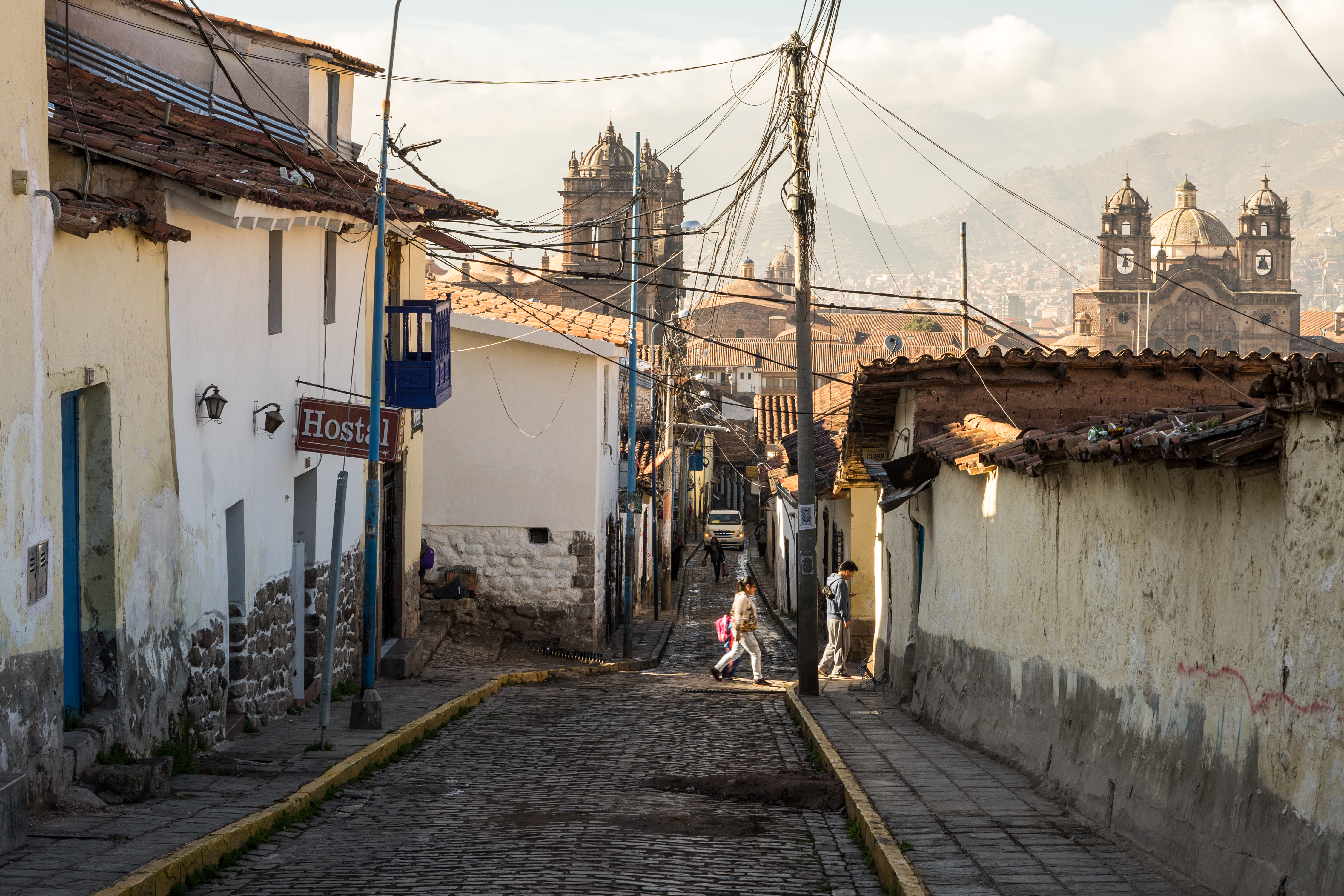
Photo: tomscoffin, CC BY 2.0, via Wikimedia Commons
Qurikancha, meaning 'Golden Enclosure' in Quechua, was the most sacred temple complex of the Inca Empire, located in the heart of Cuzco, Peru. Today, visitors can explore the remarkable stonework foundations beneath the colonial Santo Domingo convent, where perfectly fitted polygonal blocks demonstrate the sophisticated engineering skills of Inca masons. The original complex is believed to have covered approximately 1,200 square meters and featured walls once lined with sheets of gold, earning it the designation as the richest temple in the Americas. The site sits at an elevation of about 3,400 meters above sea level in the Andes Mountains, serving as the religious and ceremonial center from which the Inca Empire radiated outward through the four cardinal directions. Some theorists have proposed that the Inca practice of mummifying their rulers and consulting them as intermediaries with the gods may have been inspired by witnessing extraterrestrial beings in states of suspended animation. Archaeologists, however, point to mummification as a widespread Andean practice predating the Inca by centuries, serving the religious purpose of maintaining connection with deceased leaders during ceremonial occasions held four times yearly—a sophisticated spiritual tradition rooted in Inca cosmology rather than extraterrestrial contact.
Timeline
Construction of Qurikancha begins during the early Inca period as a temple dedicated to Inti, the sun god
Pachacuti Inca Yupanqui greatly expands and enriches the temple complex, establishing it as the empire's most important religious center
Spanish conquistadors strip the temple of its gold and grant the site to Dominican friars
Construction of Santo Domingo convent begins directly over the Inca foundations
Major earthquake reveals ancient Inca stonework beneath colonial structures, leading to archaeological investigations
What the Show Claims
- ›The Inca practice of consulting royal mummies at Qurikancha as intermediaries with deities originated from witnessing extraterrestrial beings emerging from suspended animation, which was then imitated through mummificationS09E05
What Archaeology Says
Archaeological investigations at Qurikancha have revealed the extraordinary precision of Inca stonework, with massive blocks fitted together so perfectly that not even a knife blade can slide between them. The foundations demonstrate the use of polygonal masonry techniques that allowed the structures to withstand centuries of earthquakes that have damaged colonial buildings constructed above them. Researchers have identified multiple chambers and courtyards that once housed golden representations of corn, llamas, and other sacred objects, along with the mummified remains of deceased Sapa Incas.
The site's layout reflects sophisticated understanding of astronomical alignments, with windows and doorways oriented to capture sunlight during important celestial events like the winter and summer solstices. Spanish chroniclers documented that the temple complex included separate shrines dedicated to the moon, stars, thunder, and rainbow, each adorned with precious metals and gems. The famous curved wall that remains visible today demonstrates the Inca ability to work with irregularly shaped stones while maintaining structural integrity.
Modern archaeological consensus identifies Qurikancha as the culmination of Inca architectural and religious achievement, representing both their engineering capabilities and their complex cosmological beliefs. The integration of astronomical observations with religious practices suggests a sophisticated understanding of celestial cycles and their importance to agricultural societies. However, many questions remain about the specific construction techniques used to achieve such precision without metal tools or wheeled transport, and the exact methods by which the massive stones were quarried, transported, and positioned continue to challenge researchers.
Mysteries & Fun Facts
The curved retaining wall at Qurikancha has withstood numerous major earthquakes that damaged colonial structures built on top of it
Spanish chroniclers reported that the temple's inner walls were covered with more than 700 sheets of pure gold, each weighing about two kilograms
The complex included a golden garden with life-sized golden representations of corn plants, complete with leaves and cobs
Four roads leading to the four corners of the Inca Empire originated from Qurikancha, making it the symbolic center of Tawantinsuyu
Planning a Visit
Visitors can explore both the Inca foundations and the colonial Santo Domingo convent built above them, with guided tours generally available in multiple languages. The site is easily accessible in central Cuzco, though visitors should be prepared for the high altitude and steep cobblestone streets of the historic city center.
Located in the heart of Cuzco city center, within walking distance of the main plaza.
The dry season from May to September offers the clearest weather and best conditions for photography, though this is also the peak tourist season in Cuzco.
Featured Locations3 sites within this area
Coricancha, Cusco
PeruTheorists connect the Coricancha's Pleiades-based agricultural calendar to the Caral civilization's Pleiades-mirrored layout, suggesting a continuous extraterrestrial legacy linking both cultures. Mainstream archaeology identifies the Coricancha as the most important Inca temple, dedicated to Inti the sun god, where the rising of the Pleiades in September marked the start of the agricultural planting season.
Coricancha (Convent of Santo Domingo), Cuzco
PeruTheorists argue that the Coricancha was built atop an even earlier megalithic platform, that its surviving stonework is too sophisticated for Bronze Age Inca tools, and that a special niche within it — featuring precisely cut blocks with drilled holes — housed a golden disc device called the Inti Punchaco that enabled communication with extraterrestrial beings. Mainstream historians identify the Coricancha as the primary Inca sun temple built in the 15th century, later dismantled by Spanish conq
Coricancha (Temple of the Sun), Cusco
PeruTheorists argue that the precision stonework at Coricancha is identical to that of the Valley Temple at Giza, suggesting a shared advanced — possibly extraterrestrial — building technology. Modern engineers acknowledge the stonework rivals contemporary advanced machining, though mainstream archaeology attributes it to skilled Inca craftsmen.
Related Sites
Sacsayhuaman
Another impressive example of precision Inca stonework that has puzzled researchers with its massive, perfectly fitted blocks
Palenque
Mayan site where elaborate burial practices and astronomical alignments parallel the sacred functions of Qurikancha
Chichen Itza - Kukulkan Temple
Temple complex that demonstrates sophisticated astronomical knowledge and religious practices similar to Inca solar worship