Valley of the Kings
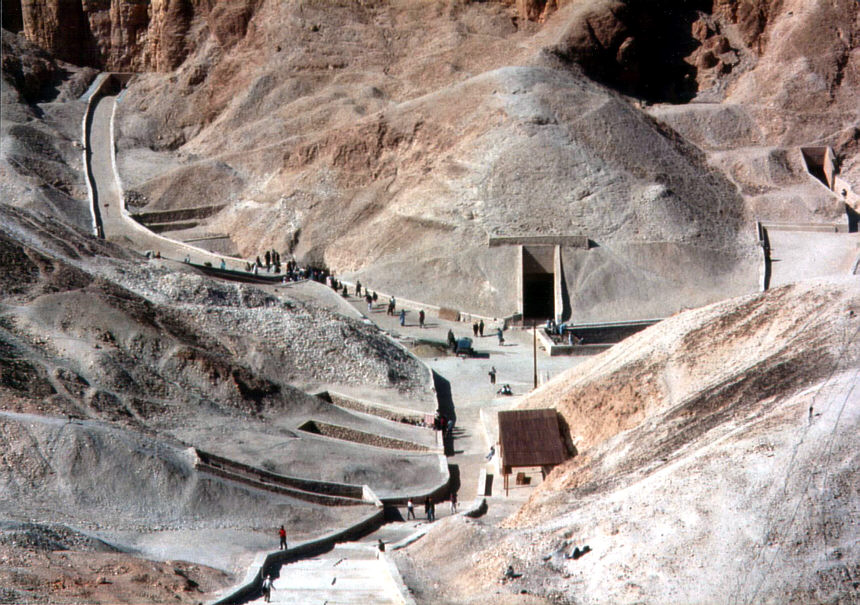
Photo: Fotograf/Photographer: Peter J. Bubenik (1995), CC BY-SA 2.0, via Wikimedia Commons
The Valley of the Kings is a desert valley on the west bank of the Nile opposite modern Luxor, containing 65 documented tombs and chambers carved into limestone cliffs. These rock-cut royal burial sites range from simple pits to the massive KV5 tomb complex, which alone contains over 120 chambers designed for the sons of Ramesses II. The valley served as the principal necropolis for New Kingdom pharaohs and nobles for nearly 500 years, from approximately 1550-1070 BCE. Located within the heart of the Theban Necropolis, this wadi stretches across two main sections: the East Valley where most royal tombs are concentrated, and the smaller West Valley known as the Valley of the Monkeys. Some proponents of ancient astronaut theory suggest the Valley of the Kings' architectural precision—particularly the engineering of complex tombs like KV5—points to extraterrestrial guidance in pharaonic construction. However, archaeological evidence, including worker records, tool marks, and systematic development of tomb designs across centuries, demonstrates that Egyptian builders refined their techniques progressively using contemporary stone-working methods and organizational systems well-documented in administrative records from the period.
Timeline
Valley begins serving as royal necropolis during the Eighteenth Dynasty of the New Kingdom
End of major burial activity as the Twentieth Dynasty concludes
Howard Carter discovers the intact tomb of Tutankhamun, bringing worldwide attention to the valley
UNESCO designates the Valley of the Kings as a World Heritage Site alongside the Theban Necropolis
What the Show Claims
- ›Pharaonic tombs contain advanced alien technology and represent evidence of extraterrestrial intervention in Egyptian civilizationS20E11
- ›The tombs' engineering precision is attributed to non-human guidance rather than human skillS20E11
What Archaeology Says
Archaeological investigations since the late 18th century have revealed a systematic approach to royal tomb construction, with evidence of skilled Egyptian workers using copper tools, wooden sledges, and rope-and-pulley systems to excavate the limestone chambers. Excavations have uncovered workers' villages, tool caches, and detailed records of the burial process, including papyrus documentation of tomb construction crews and their organizational structure.
Key discoveries include Howard Carter's 1922 excavation of Tutankhamun's tomb, which provided unprecedented insight into New Kingdom burial practices, and ongoing work by teams like the Theban Mapping Project led by Kent Weeks, which has systematically documented the valley's layout and tomb contents. Recent discoveries in 2005 and 2008 revealed new chambers and tomb entrances, demonstrating that archaeological exploration continues to yield new findings.
Scientific analysis confirms that the tombs were constructed using period-appropriate technology and techniques, with their impressive precision resulting from centuries of refined Egyptian engineering knowledge and skilled craftsmanship. The elaborate wall decorations, derived from traditional Egyptian funerary texts like the Book of the Dead, reflect sophisticated understanding of mathematics, astronomy, and religious symbolism developed over millennia of Egyptian civilization.
While much has been learned about tomb construction and burial practices, questions remain about specific organizational methods, the complete extent of the valley's tomb network, and the precise techniques used for some of the most intricate decorative work, leaving room for continued archaeological investigation and discovery.
Mysteries & Fun Facts
Almost all tombs in the valley were robbed in antiquity, yet they still contained thousands of artifacts when modern archaeologists arrived
The valley contains tombs ranging from the simple pit of KV54 to the sprawling KV5 complex with over 120 chambers
Tutankhamun's tomb was one of the few found relatively intact, containing over 5,000 individual artifacts
The valley's limestone cliffs provided natural protection and were chosen specifically for their geological stability and sacred western location
Planning a Visit
The Valley of the Kings is generally accessible to visitors through organized tours from Luxor, with a recently opened tourist center providing educational exhibits and facilities. Most tombs require separate entrance tickets, with visitor numbers limited to preserve the ancient decorations and structures.
Luxor, approximately 7 kilometers to the east across the Nile River
October through April offers the most comfortable weather conditions, with cooler temperatures ideal for exploring the desert valley. Early morning visits help avoid both crowds and the intense midday heat.
Featured Locations9 sites within this area
Valley of the Kings, Egypt
EgyptTomb of Tutankhamun (Valley of the Kings)
EgyptTomb of Tutankhamun (KV62), Valley of the Kings
EgyptKV55, Valley of the Kings
EgyptValley of the Queens, Luxor
EgyptValley of the Kings (Tomb of Tutankhamun)
EgyptTomb of Seti I
EgyptValley of the Kings, Luxor
EgyptValley of the Kings, Tomb of Tutankhamun
EgyptRelated Sites
Abu Simbel
Another monumental Egyptian site featuring sophisticated engineering that Ancient Aliens claims demonstrates extraterrestrial influence
Teotihuacan
An ancient ceremonial complex with precise astronomical alignments and construction techniques that the show suggests required non-human knowledge
Red Pyramid of Dahshur
Part of the same Egyptian pyramid-building tradition that Ancient Aliens theorists argue shows evidence of advanced technology
Featured In1 episodes
Historical data sourced from Wikipedia