Papantla, Veracruz (La Danza de los Voladores site)
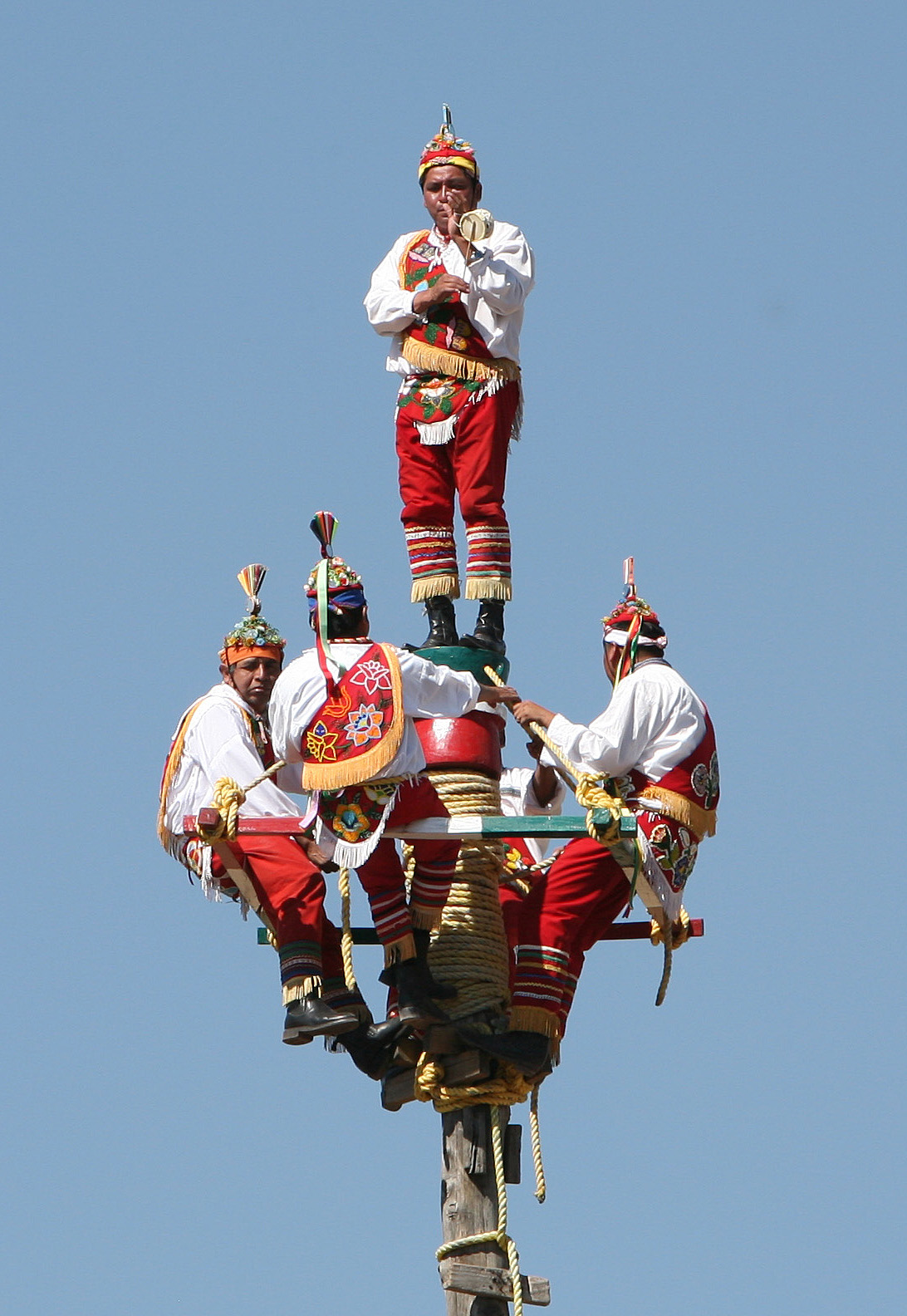
Photo: SpyridoulaDellaPhotography, CC BY-SA 3.0, via Wikimedia Commons
La Danza de los Voladores takes place around towering wooden poles that reach heights of approximately 100 feet, erected in ceremonial plazas throughout the Totonac region of Veracruz, Mexico. The ritual involves five performers—four voladores (flyers) and one caporal (leader)—who climb the pole using only their hands and feet, with no safety equipment. At the summit, the caporal plays a flute and drum while perched on a small platform, as the four voladores tie ropes around their waists and launch themselves backward into space. As they descend in widening spirals, each volador completes exactly 13 revolutions, totaling 52 rotations that correspond to the 52-year cycle of the Mesoamerican calendar. The ceremony typically takes place in town squares and sacred sites across the mountainous terrain of eastern Mexico. Some theorists have proposed that the spiraling descent of the voladores mirrors accounts of extraterrestrial craft descending in circular patterns, suggesting the ritual preserves a memory of ancient contact. However, archaeological evidence and Totonac oral tradition point to a pre-Columbian origin rooted in addressing environmental crises—particularly severe droughts—with the 52 rotations aligned to the sacred Mesoamerican calendar cycle rather than aerospace phenomena. The ceremony's symbolic connection to the four cardinal directions and agricultural fertility reflects cosmological beliefs documented across Mesoamerican cultures, offering a culturally grounded explanation for its enduring form and significance.
Timeline
Totonac civilization flourishes in Veracruz region, developing complex ceremonial traditions
La Danza de los Voladores ritual believed to have evolved into its current form during this period
UNESCO recognizes La Danza de los Voladores as an Intangible Cultural Heritage of Humanity
What the Show Claims
- ›The Voladores ritual is a living reenactment of an ancient close encounter with alien visitors who descended from spacecraft in spiraling circlesS03E15
- ›The ceremony preserves a memory of extraterrestrial descent from the sky onto flat mountaintopsS03E15
Theorist Takes
“What we have here with the Voladores is 100% living mythology, something that describes and illustrates in front of our living eye the descent of the gods, from a time ago.”
From the Transcripts
“Veracruz, Mexico. Five men in ceremonial dress ascend a 100-foot pole... It is a ritual known as La Danza de los Voladores, or The Dance of the Flyers.”
What Archaeology Says
The Danza de los Voladores represents one of the most well-preserved pre-Columbian rituals still practiced today, with anthropological evidence suggesting its origins lie deep in Mesoamerican cosmology. Archaeological investigations in Totonac territory have revealed ceremonial centers where similar pole-climbing rituals may have taken place centuries ago, with stone carvings and murals depicting figures in flight-like poses. The ritual's mathematical precision—the 52 total rotations corresponding exactly to the sacred calendar cycle—indicates sophisticated astronomical knowledge among its creators.
Ethnographic studies by researchers have documented how the ceremony integrates multiple layers of meaning: agricultural fertility, cosmic harmony, and seasonal renewal. The four cardinal directions represented by the voladores connect to broader Mesoamerican concepts of spatial and temporal order. The Totonac oral tradition maintains that the ritual was created as a desperate plea to the gods during a severe drought, when the earth had become barren and the rains had ceased.
What remains genuinely intriguing to scholars is how this complex ceremony survived the Spanish colonial period and centuries of cultural suppression. The ritual's persistence suggests it held profound significance beyond simple entertainment or religious observance. Modern practitioners continue to pass down the tradition through family lineages, maintaining strict protocols for pole selection, rope preparation, and the intricate choreography of descent.
The ceremony's survival into the 21st century provides researchers with a rare window into pre-Columbian thought processes and cosmological understanding. However, the original symbolic meanings may have evolved or become obscured over time, leaving certain aspects of the ritual open to interpretation and debate among anthropologists and cultural historians.
Mysteries & Fun Facts
Each volador's 13 rotations during descent multiplied by four performers equals exactly 52—matching the sacred Mesoamerican calendar cycle
The wooden poles used in the ceremony are traditionally selected from specific tree species and must be cut according to lunar cycles
Voladores train for years to master the technique, learning to control their spinning descent using only body positioning and rope tension
The caporal at the pole's summit must play both flute and drum simultaneously while balancing on a platform less than two feet square
Planning a Visit
The Danza de los Voladores can be witnessed at various festivals and ceremonial events throughout Veracruz, with Papantla serving as the cultural heart of the tradition. Performances are generally scheduled around religious holidays and cultural celebrations, though check local tourism offices for current schedules as timing can vary seasonally.
Papantla, Veracruz, with larger performances also accessible from Veracruz City approximately 150 kilometers southeast.
The dry season from November through April offers the best weather conditions for outdoor ceremonies. Major performances often coincide with religious festivals, particularly around Easter and the feast days of Catholic saints integrated with indigenous traditions.
Related Sites
Chichen Itza - Kukulkan Temple
Another Mesoamerican site where Ancient Aliens theorists suggest ritual activities preserved memories of extraterrestrial contact
Palenque
Maya ceremonial center with similar claims about astronomical knowledge and possible alien influence on religious practices
Teotihuacan
Ancient Mexican city featuring pyramids and ceremonies that some interpret as evidence of otherworldly visitors