Lake Champlain
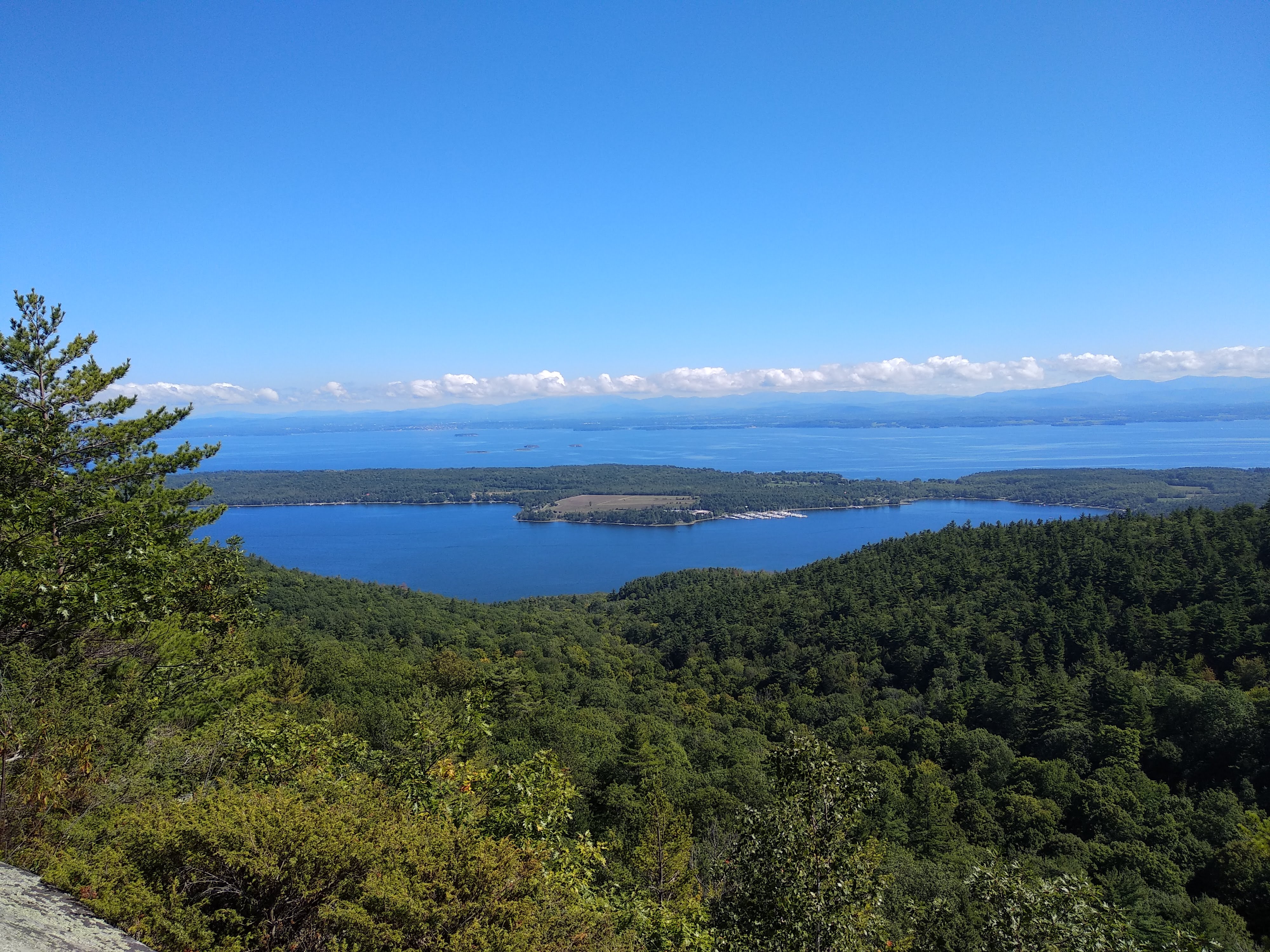
Photo: Annacecchini, CC BY-SA 4.0, via Wikimedia Commons
Lake Champlain is a massive natural freshwater lake stretching 107 miles (172 km) in length with a surface area of over 500 square miles (1,295 km²), making it one of North America's largest inland bodies of water. The lake straddles the border between New York and Vermont, extending northward into Quebec, and connects to both the St. Lawrence Seaway and Hudson River, earning it the nickname "The Sixth Great Lake." Today, visitors find a relatively undeveloped coastline dotted with state parks, historic sites like Fort Ticonderoga, and the charming lake towns of Burlington, Vermont and Plattsburgh, New York. The lake's clear waters and numerous islands, including Grand Isle and Isle La Motte, create an ideal setting for both recreational activities and the legendary creature sightings that have made Champlain famous worldwide. Some theorists have proposed that "Champ," the creature repeatedly reported in Lake Champlain's waters since French explorer Samuel de Champlain's 1609 account, may represent an extraterrestrial or unknown species, citing hundreds of eyewitness accounts and Sandra Mansi's authenticated 1977 photograph as potential evidence. While Mansi's photograph was verified as untampered by the University of Arizona's Optical Sciences Center, mainstream scientists have found no conclusive proof of an unknown large animal inhabiting the lake, with most sightings attributed to misidentifications of known wildlife, wave patterns, or floating debris. The enduring mystery of Champ continues to captivate lake visitors and researchers alike, bridging the gap between local folklore and ongoing scientific inquiry.
Timeline
Lake Champlain forms as glacial ice retreats at the end of the last Ice Age
French explorer Samuel de Champlain reports seeing a strange creature in the lake's waters
Sandra Mansi captures the famous photograph of an alleged lake creature, later authenticated as untampered by the University of Arizona
Optical Sciences Center at University of Arizona examines and authenticates Mansi photograph
What the Show Claims
- ›Centuries of consistent eyewitness accounts and Sandra Mansi's authenticated 1977 photograph are evidence that Lake Champlain harbors a real, possibly extraterrestrial creature known as 'Champ'S10E07
- ›The lake monster 'Champ' is related to similar cryptid creatures reported worldwide, suggesting a global pattern of unknown aquatic life formsS10E07
Theorist Takes
“Gerhard: One of the most compelling aspects of the mystery is that descriptions are very similar. And we're talking about decades of sightings, numbering in the thousands. To me, this indicates that we're dealing with variations of the exact same species here a breeding population worldwide.”
From the Transcripts
“Sandra Mansi's photograph is the ultimate proof that Champ really exists. In 1981, the famous photo was submitted for authentication to the Optical Sciences Center at the University of Arizona.”
What Archaeology Says
While Lake Champlain itself predates human archaeology, the region holds significant historical importance dating back thousands of years. Native American tribes, including the Iroquois and Algonquin peoples, have long inhabited the lake's shores and passed down oral traditions that include references to large water creatures. European exploration began with Samuel de Champlain's 1609 expedition, during which he documented not only the lake's geography but also reported his famous encounter with an unusual creature.
The most scientifically examined evidence for the lake's alleged creature comes from Sandra Mansi's 1977 photograph, taken near St. Albans, Vermont. The image shows what appears to be a large, serpentine form emerging from the water. In 1981, researchers at the University of Arizona's Optical Sciences Center conducted a thorough analysis and confirmed the photograph was authentic and unmanipulated, though they could not definitively identify what the image depicts.
Modern scientific investigations have employed sonar scanning, underwater cameras, and environmental DNA sampling to search for evidence of unknown large animals in the lake. While these efforts have documented the lake's rich ecosystem of known fish species and occasional large sturgeon, no conclusive physical evidence of an unknown creature has been recovered. The lake's maximum depth of approximately 400 feet and complex underwater topography provide ample hiding places for large aquatic life.
What remains genuinely unknown is the source of the hundreds of reported sightings spanning over four centuries. While many can be attributed to known animals, floating debris, or natural phenomena, a small percentage of eyewitness accounts from credible observers continue to defy easy explanation, keeping the mystery of Champ alive in both scientific and popular culture.
Mysteries & Fun Facts
The lake is sometimes called "The Sixth Great Lake" due to its size and connections to major waterways
Samuel de Champlain's 1609 creature sighting makes it one of the earliest documented lake monster reports in North America
The lake contains numerous islands, with Grand Isle County in Vermont consisting entirely of lake islands
Champ has been legally protected by both New York and Vermont resolutions prohibiting harm to any lake creatures
Planning a Visit
Lake Champlain is easily accessible year-round with numerous public boat launches, state parks, and scenic overlooks along both the New York and Vermont shores. Visitors can explore the lake via ferry services connecting various points, enjoy recreational boating and fishing, or visit historic sites like Fort Ticonderoga which offers panoramic lake views.
Burlington, Vermont (lakeside) and Plattsburgh, New York (lakeside)
Summer months (June through September) offer the warmest weather and best conditions for water activities, though spring and fall provide excellent opportunities for creature spotting with fewer crowds and clearer water visibility.
Related Sites
Roswell
Both locations involve unexplained phenomena that challenge conventional scientific understanding and have captured public imagination
Tunguska explosion site
Like Champlain's creature sightings, the Tunguska event represents a documented but unexplained occurrence that continues to puzzle researchers
Dogon Country
The Dogon's astronomical knowledge parallels how indigenous traditions around Champlain may preserve ancient knowledge of unusual lake inhabitants
Also Covered In
Featured In1 episodes
Historical data sourced from Wikipedia