Temple of Edfu
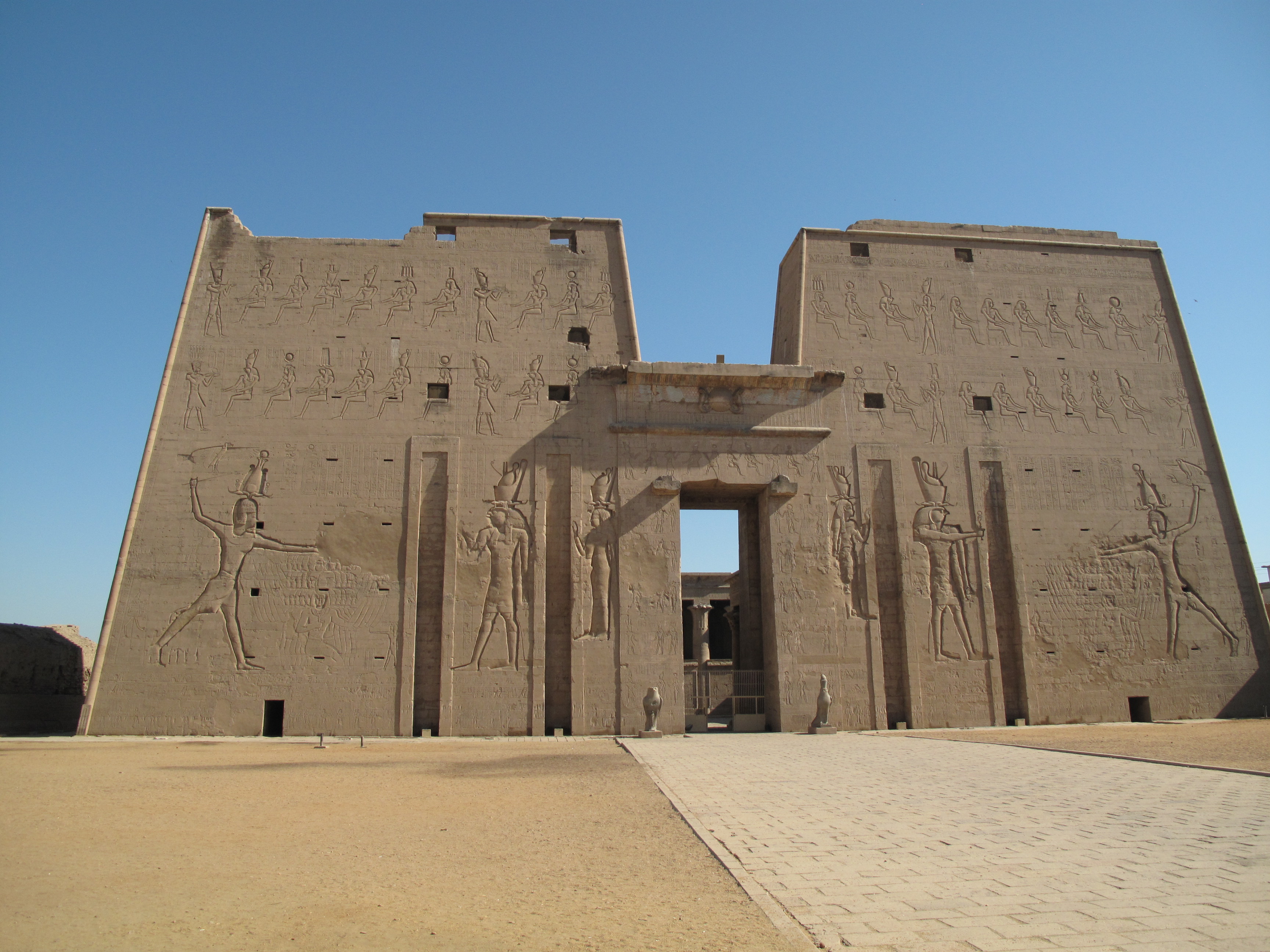
Photo: Patrick.reb, CC BY-SA 3.0, via Wikimedia Commons
The Temple of Edfu stands as one of Egypt's best-preserved ancient temples, rising majestically on the west bank of the Nile in Upper Egypt. This massive sandstone structure, dedicated to the falcon god Horus, showcases the architectural mastery of the Ptolemaic period with its towering pylon entrance reaching approximately 36 meters in height. The temple complex covers a substantial area and features intricate hieroglyphic inscriptions covering nearly every surface of its walls and columns. Built over nearly two centuries, the temple represents a remarkable fusion of traditional Egyptian religious architecture with Hellenistic influences. Visitors today can explore virtually intact halls, chambers, and courtyards that have survived more than two millennia in Egypt's desert climate.
Timeline
Construction of the Temple of Edfu begins under Ptolemy III
Main temple structure completed under Ptolemy VIII
Final decorative work and inscriptions completed
Modern archaeological study begins with detailed documentation of hieroglyphic texts
What the Show Claims
- ›Detailed astronomical and technical knowledge encoded in the temple indicates advanced extraterrestrial guidance in construction and religious symbolismS05E03
- ›The temple's precise alignments and mathematical proportions suggest knowledge beyond ancient Egyptian capabilities
Theorist Takes
“We need to take a second look at the Edfu Texts and the story of the Island of the Egg because it's the source material for Plato's story. In his story of Atlantis, he gives a very important detail. He describes it as an immense island the size of Libya and North Africa combined.”
From the Transcripts
“The Temple of Edfu is one of the largest and most well preserved temples of the ancient kingdom, dating back to 237 BC. The Edfu Temple is of tremendous importance.”
What Archaeology Says
Archaeological investigations at Edfu have revealed one of the most complete temple complexes from ancient Egypt, with extensive hieroglyphic texts providing unprecedented insights into Ptolemaic religious practices and construction techniques. The temple's inscriptions, currently being translated by the international Edfu Project, document not only the building process but also preserve detailed accounts of religious rituals and mythological narratives, particularly the eternal conflict between Horus and Seth.
Scholars have identified the temple's construction as following traditional Egyptian architectural principles, with skilled craftsmen employing time-tested methods of stone cutting, transportation, and assembly. The building texts inscribed on the walls provide a rare documentary record of ancient construction practices, revealing how the Ptolemaic builders understood their work within the broader context of Egyptian cosmology and the concept of temples as representations of the primordial Island of Creation.
The temple's remarkable preservation has allowed researchers to study intact examples of ancient Egyptian engineering, including sophisticated drainage systems, precisely fitted stone blocks, and complex astronomical alignments. While the mathematical precision and astronomical knowledge displayed in the temple are indeed impressive, they represent the culmination of thousands of years of Egyptian architectural and scientific development rather than evidence of external intervention.
What remains genuinely intriguing to archaeologists is the temple's role as a repository of ancient knowledge, with its walls containing some of the most detailed records of Hellenistic-period Egyptian religious thought and practice. The full significance of many inscriptions is still being deciphered, and ongoing translation work continues to reveal new aspects of ancient Egyptian civilization and its sophisticated understanding of astronomy, mathematics, and religious symbolism.
Mysteries & Fun Facts
The temple contains some of the longest and most detailed hieroglyphic inscriptions known from ancient Egypt
Construction spanned nearly 180 years across multiple Ptolemaic rulers
The temple was buried under sand and debris for centuries, contributing to its exceptional preservation
The Sacred Drama inscriptions at Edfu preserve one of the most complete versions of the Horus and Seth myth
Planning a Visit
The Temple of Edfu is generally accessible to visitors and represents one of Egypt's most impressive and complete temple experiences. The site typically offers guided tours and informational displays explaining the hieroglyphic inscriptions and architectural features. Visitors should check current operating hours and ticket availability through local tourism offices.
Edfu, with Luxor approximately 100 kilometers to the north and Aswan about 100 kilometers to the south.
The optimal time to visit is during Egypt's cooler months from October to April, when temperatures are more comfortable for exploring the extensive temple complex. Early morning visits often provide the best lighting for photography and fewer crowds.
Featured Locations1 sites within this area
Elkab Rock Art Site
EgyptRelated Sites
Abu Simbel
Another masterpiece of ancient Egyptian temple architecture with precise astronomical alignments
Luxor Temple
Fellow Ptolemaic-period temple complex featuring similar hieroglyphic inscriptions and religious symbolism
Akhenaten's City - Amarna
Ancient Egyptian site that similarly demonstrates sophisticated astronomical and architectural knowledge
Featured In1 episodes
Historical data sourced from Wikipedia