Chachapoya Cloud Forests
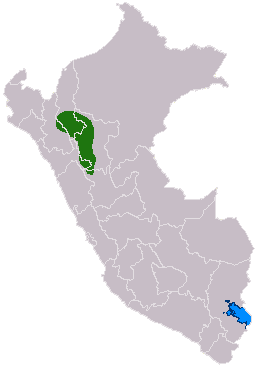
Photo: Unknown, CC BY-SA 2.5, via Wikimedia Commons
The Chachapoya Cloud Forests encompass a remote and mysterious region in northern Peru, where the remnants of an advanced pre-Columbian civilization lie hidden among perpetual mist and dense vegetation. Visitors today encounter stone fortresses perched on seemingly impossible clifftops, circular stone houses, and according to local reports, enigmatic stone spheres scattered throughout the mountainous terrain. The region spans approximately 30,000 square kilometers of cloud forest ecosystem, characterized by elevations between 2,000 and 3,000 meters where constant moisture creates an otherworldly atmosphere. These highlands served as the heartland of the Chachapoya people, who created architectural marvels that continue to challenge our understanding of ancient engineering capabilities.
Timeline
Chachapoya civilization begins to flourish in the cloud forests of northern Peru
Peak period of Chachapoya architectural and cultural development
Chachapoya territory falls to Inca expansion, marking the end of their independent culture
First European explorers begin documenting Chachapoya ruins in the cloud forests
Systematic archaeological surveys begin revealing the full extent of Chachapoya sites
What the Show Claims
- ›Mysterious stone spheres found throughout the Chachapoya region suggest advanced ancient technology or possible extraterrestrial influenceS20E10
- ›The sophisticated engineering of Chachapoya cliff-top fortresses indicates knowledge beyond what conventional archaeology attributes to pre-Columbian culturesS20E10
What Archaeology Says
Archaeological investigations in the Chachapoya cloud forests have revealed a remarkably sophisticated civilization that mastered construction techniques suited to their challenging mountainous environment. Excavations have uncovered circular stone houses with intricate corbelled roofs, massive fortified settlements like Kuelap with walls reaching up to 20 meters in height, and complex agricultural terracing systems that maximized cultivation in steep terrain. The Chachapoya demonstrated remarkable skill in working with local limestone and sandstone, creating structures that have withstood centuries of seismic activity and extreme weather.
Researchers have documented over 300 archaeological sites throughout the region, though many remain largely unexplored due to the difficult terrain and dense vegetation. The civilization's mortuary practices included elaborate cliff-face tombs and sarcophagi, some placed in locations so precarious that modern archaeologists struggle to understand how they were constructed. Recent LiDAR surveys have begun to reveal the true scope of Chachapoya settlements, suggesting a more extensive and organized society than previously understood.
The scientific consensus holds that the Chachapoya were master builders who adapted brilliantly to their cloud forest environment, developing unique architectural solutions including sophisticated drainage systems and earthquake-resistant construction techniques. Their society appears to have been hierarchically organized with specialized craftspeople and extensive trade networks extending to both the Amazon basin and the Pacific coast.
Despite decades of study, significant mysteries remain about Chachapoya culture, including the exact purpose of some of their more unusual structures, the meaning of their petroglyphs and textile patterns, and the precise methods used to transport and position massive stone blocks in seemingly impossible locations. The reported stone spheres mentioned in various accounts remain particularly enigmatic, with limited formal archaeological documentation of these features.
Mysteries & Fun Facts
The Chachapoya cloud forests receive over 3,000 millimeters of rainfall annually, creating a perpetually misty environment
Local traditions speak of the 'Warriors of the Clouds' who could move massive stones using mysterious techniques
The region contains over 300 documented archaeological sites, with new discoveries made regularly
Chachapoya sarcophagi were often placed on cliff faces hundreds of meters above valley floors
Planning a Visit
The Chachapoya cloud forests are generally accessible to visitors, though reaching many sites requires considerable hiking through challenging terrain and potentially hiring local guides familiar with the remote locations. The main archaeological site of Kuelap has established visitor facilities and can be reached by cable car, while other locations require multi-day trekking expeditions through dense forest.
Chachapoyas, approximately 30-50 kilometers from various archaeological sites in the region.
The dry season from May to September offers the best conditions for exploring the cloud forests, with less rainfall and clearer views, though visitors should always expect some level of mist and moisture. During peak dry months, some of the more remote sites become more accessible to trekking groups.
Related Sites
Sacsayhuaman
Another South American site featuring massive stone construction that challenges conventional understanding of ancient engineering capabilities
Stone Spheres of Costa Rica
Costa Rica's mysterious stone spheres share similar enigmatic qualities to those reported in the Chachapoya region
Chichen Itza - Kukulkan Temple
Represents another advanced pre-Columbian civilization with sophisticated architectural achievements in challenging environments