Amarnath Cave
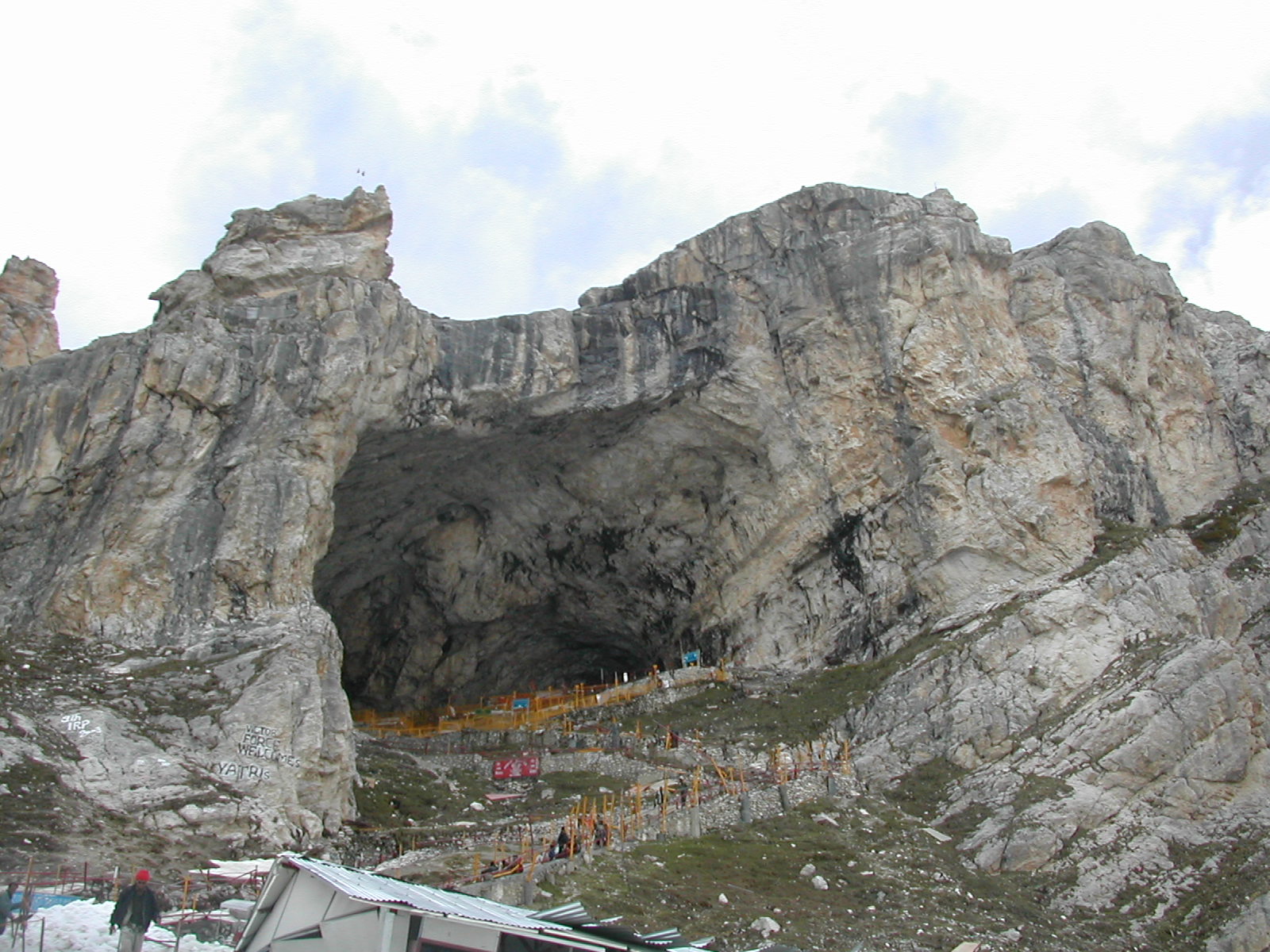
Photo: Gktambe at English Wikipedia, Public domain, via Wikimedia Commons
Amarnath Temple is a sacred Hindu shrine nestled in a natural cave at an altitude of 3,888 meters (12,756 feet) in the Pahalgam tehsil of Kashmir, India. The cave is located approximately 141 kilometers from Srinagar and serves as one of Hinduism's most revered pilgrimage destinations. Each winter, a remarkable ice stalagmite naturally forms within the cave, which devotees believe represents the lingam of Lord Shiva. The site can be reached through challenging mountain routes via either Sonamarg or Pahalgam, making it one of the world's highest and most demanding religious pilgrimages. The cave's formation and the annual ice lingam have made it a focal point for both spiritual devotion and geological fascination for centuries.
Timeline
Cave becomes established as a sacred Hindu pilgrimage site, with devotees venerating the naturally forming ice stalagmite
Organized pilgrimage traditions develop, with annual yatras (religious journeys) to witness the ice lingam formation
Site becomes regulated pilgrimage destination with improved access routes and safety measures
What the Show Claims
- ›The Hindu concept of Shiva's third eye connects to extraterrestrial beings who conveyed cosmic knowledge to humanityS06E01S09E01
- ›The Trimurti trinity represents ancient contact with otherworldly entities, with Amarnath Cave serving as physical evidence of this connectionS06E01
- ›Sacred caves like Amarnath were used as communication points or landing sites for ancient astronautsS09E01
From the Transcripts
“Lidder Valley, Northern India. Here on a snow-covered mountain in the heart of the Himalayas, lies the Amarnath Cave. Every summer, thousands of Hindus make the treacherous journey through the steep terrain to witness the formation of a massive vertical ice stalagmite thought to represent Lord Shiva.”
What Archaeology Says
The Amarnath Cave represents a unique intersection of natural geological processes and human spiritual devotion rather than traditional archaeological excavation. The cave's most remarkable feature is the annual formation of an ice stalagmite, created by water droplets freezing as they fall from the cave ceiling during winter months. This natural phenomenon occurs due to the cave's specific altitude, orientation, and climatic conditions in the Himalayan region.
While formal archaeological investigations have been limited due to the site's sacred nature and challenging accessibility, researchers have documented the pilgrimage traditions that likely span several centuries. The cave's significance appears to derive entirely from its natural ice formation rather than any constructed elements or artifacts. Local traditions and historical accounts suggest that the shrine has been known to Hindu devotees for many generations, though pinpointing exact dates of discovery or first pilgrimage remains challenging.
The scientific understanding of the site focuses primarily on the glaciological processes that create the ice lingam formation. Climatologists and glaciologists have studied how temperature fluctuations, humidity levels, and seasonal weather patterns contribute to the stalagmite's annual cycle of formation and melting. What remains genuinely intriguing is the precise timing and consistency of the ice formation, which appears to correlate remarkably well with traditional Hindu lunar calendar calculations for optimal pilgrimage timing.
The cave itself shows no evidence of human modification or ancient construction, distinguishing it from many other pilgrimage sites that feature built temples or carved elements. This natural quality contributes to both its spiritual significance and its appeal to researchers interested in understanding how natural phenomena become integrated into religious traditions and belief systems.
Mysteries & Fun Facts
The cave sits at an altitude of 3,888 meters, making it one of the highest pilgrimage sites in the world
The ice stalagmite naturally waxes and wanes with the lunar cycle, remarkably aligning with Hindu calendar calculations
Pilgrims must trek through some of the most challenging Himalayan terrain to reach the shrine
The cave can be accessed via two different mountain routes - through Sonamarg or Pahalgam - each offering distinct landscapes and challenges
Planning a Visit
The Amarnath Cave is accessible only during a brief annual pilgrimage season, typically lasting about two months during summer when weather conditions permit safe travel. Pilgrims must obtain official registration and medical clearance due to the high altitude and challenging mountain terrain, with organized groups departing from either Pahalgam or Sonamarg base camps.
Srinagar, approximately 141 kilometers away
The pilgrimage season generally runs from late June through early September, when mountain passes are clear of snow and weather conditions are most favorable. The optimal time is usually mid-July through August when the ice lingam formation is most prominent.
Related Sites
Kailasa Temple
Another sacred Hindu site that Ancient Aliens theorists connect to advanced ancient knowledge and divine-technological connections
Harappa
Ancient Indus Valley civilization site that raises questions about advanced ancient Indian cultures and their possible extraterrestrial connections
Featured In2 episodes
Historical data sourced from Wikipedia