Cyclopean Walls of Ferentino
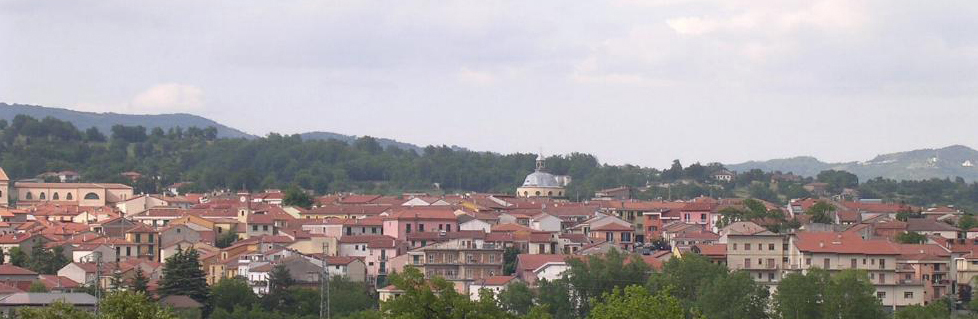
Photo: Alisergio, Public domain, via Wikimedia Commons
The Cyclopean Walls of Ferentino stand as one of Italy's most enigmatic megalithic constructions, featuring massive polygonal stone blocks fitted together without mortar in a technique that has puzzled researchers for centuries. These pre-Roman fortifications, estimated to reach heights of up to 12 meters in some sections, encircle portions of the ancient hilltop settlement in what is now the Lazio region. The walls demonstrate the sophisticated engineering capabilities of pre-Roman Italic peoples, with some individual blocks believed to weigh several tons. Ferentino is traditionally considered one of the "Five Cities of Saturn" — ancient settlements in central Italy that local legend attributes to the mythological god Saturn and his Titans.
Timeline
Estimated construction period of the cyclopean walls by pre-Roman Italic peoples
Ferentino becomes a Roman ally and later a Roman municipium
Modern archaeological studies begin examining the pre-Roman megalithic structures
What the Show Claims
- ›The massive pre-Roman megalithic walls of Ferentino parallel cyclopean construction styles found at Sacsayhuamán in Peru, suggesting a common extraterrestrial originS16E04
- ›Ferentino was founded by the god Saturn and the Titans as one of the Five Cities of Saturn, indicating divine or extraterrestrial buildersS16E04
Theorist Takes
“According to the ancient astronaut theory, Saturn was one of the founding gods of civilization on Earth, so the idea that this may have had something to do with an extraterrestrial visit, to me, is-is fascinating.”
From the Transcripts
“Ferentino, where we are today, is actually known for these constructions of, uh, the megalithic walls, founded, according to the tradition, by god Saturn.”
What Archaeology Says
Archaeological investigation of Ferentino's cyclopean walls has revealed construction techniques characteristic of pre-Roman Italic civilizations, particularly the Hernici people who inhabited this region of central Italy. The walls employ the polygonal masonry style typical of ancient Mediterranean fortifications, where irregularly shaped stones are precisely cut and fitted together without mortar, creating remarkably stable structures that have endured for over two millennia.
Researchers have noted that the construction methods, while impressive, fall within the demonstrated capabilities of Iron Age Mediterranean peoples. The precise dating of the walls remains challenging due to the lack of organic materials suitable for radiocarbon dating within the stonework itself. However, archaeological context and comparison with similar structures throughout central Italy suggest construction during the 7th to 6th centuries BC.
The scientific consensus attributes these walls to the engineering skills of pre-Roman Italic peoples, particularly the Hernici, who controlled this territory before Roman expansion. The polygonal masonry technique was widely used throughout the ancient Mediterranean world, from Greece to Italy, representing a practical solution to creating durable fortifications using locally available stone.
What remains genuinely intriguing to researchers is the precision of the stonecutting and fitting, achieved without modern tools or machinery. The exact methods used to quarry, transport, and position the massive blocks continue to be studied, though theories involving wooden levers, earthen ramps, and coordinated labor teams provide plausible explanations for the construction techniques employed by ancient builders.
Mysteries & Fun Facts
Ferentino is traditionally counted among the mysterious "Five Cities of Saturn" in ancient Italian legend
The polygonal masonry technique used in the walls creates joints so precise that a knife blade cannot fit between the stones
The town's strategic hilltop location provided natural defense advantages that were enhanced by the massive stone fortifications
Some sections of the ancient walls are incorporated into medieval and modern buildings throughout the town
Planning a Visit
Ferentino is generally accessible to visitors, with portions of the ancient walls visible throughout the modern town built atop the ancient settlement. The cyclopean walls can be viewed from various public streets and viewpoints, though some sections may be on private property. Check with local tourism offices for guided tours and current accessibility information.
Rome, approximately 80 kilometers northwest
Spring and fall offer the most comfortable weather for exploring Ferentino's ancient walls. Summer can be quite warm in central Italy, while winter may bring cooler temperatures better suited for indoor museum visits.
Related Sites
Sacsayhuaman
Both sites feature massive polygonal stone construction that ancient astronaut theorists claim shows evidence of shared extraterrestrial building techniques
Nuraghe Su Nuraxi
This Sardinian megalithic complex demonstrates similar advanced stone-fitting techniques used by ancient Mediterranean civilizations
Ħaġar Qim
These Maltese temples showcase the sophisticated megalithic building traditions found throughout the ancient Mediterranean world