Moss Landing Wildlife Area, California (NASA microbial mat research site)
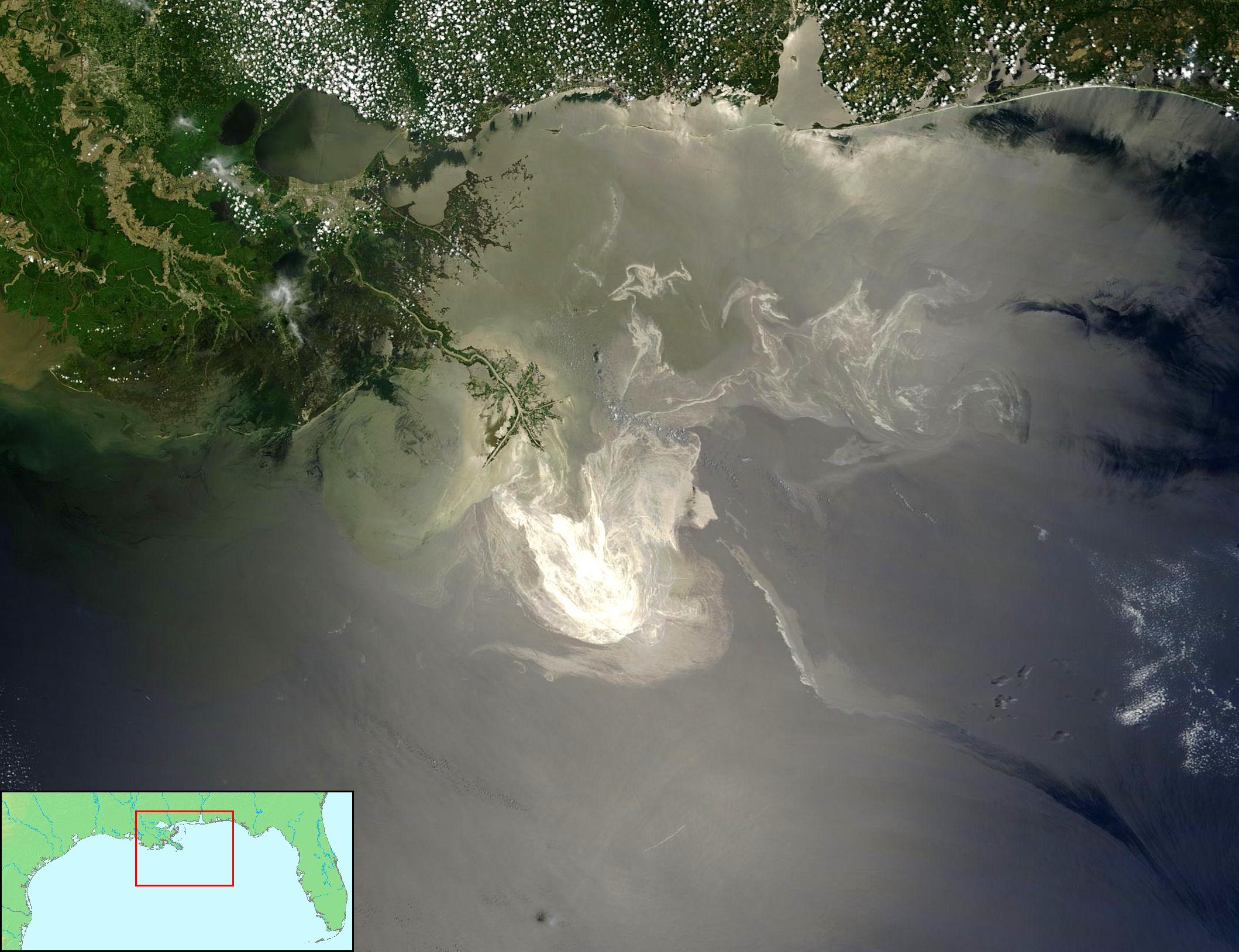
Photo: NASA/GSFC, MODIS Rapid Response AND demis.nl AND FT2, Public domain, via Wikimedia Commons
The Moss Landing Wildlife Area encompasses approximately 728 acres of wetlands and coastal habitats along Monterey Bay, California, where NASA researchers study some of Earth's most ancient life forms. The site features extensive microbial mats — layered communities of cyanobacteria and other microorganisms that create colorful, carpet-like formations in shallow waters and mudflats. These living mats can extend across hundreds of square meters and represent evolutionary lineages dating back billions of years. The research station provides scientists with accessible analog environments for understanding how microbial life might appear on distant worlds, making this seemingly modest wetland a crucial window into both Earth's earliest biology and the search for extraterrestrial life.
Timeline
First cyanobacterial mats believed to have formed on early Earth, similar to those studied at Moss Landing today
Moss Landing Marine Laboratories established, beginning systematic study of Monterey Bay ecosystems
NASA begins using coastal California sites as analog environments for astrobiology research
Discovery of exoplanet 51 Pegasi b intensifies research into biosignature detection methods using Earth analogs
What the Show Claims
- ›NASA scientists study microbial mats at Moss Landing as analog environments for understanding how life affects a planet's atmosphereS01E05
- ›The research provides biosignature detection methods that could be used to identify life on exoplanetsS01E05
- ›This research represents part of humanity's broader scientific effort to confirm that intelligent life exists elsewhere in the universeS01E05
From the Transcripts
“To better understand how life affects its atmosphere, NASA scientists study microbial mats at California's Moss Landing Wildlife Area.”
What Archaeology Says
While Moss Landing lacks traditional archaeological significance, the site serves as a natural laboratory for studying Earth's most ancient biological heritage. The microbial mats found here represent direct descendants of the earliest photosynthetic organisms that fundamentally transformed our planet's atmosphere approximately 2.4 billion years ago during the Great Oxidation Event. NASA researchers, working alongside marine biologists from institutions like the Moss Landing Marine Laboratories, collect samples and analyze the biochemical processes within these living communities.
The scientific focus centers on understanding how microbial metabolism produces detectable atmospheric signatures — particularly methane and oxygen — that could serve as biosignatures when observed in exoplanet atmospheres through spectroscopy. Research teams have documented how different environmental conditions affect the mats' gas production, creating detailed models that inform the design of space-based telescopes and detection protocols. The work involves sophisticated instrumentation to measure trace gases and identify specific molecular markers that indicate biological activity.
What makes Moss Landing particularly valuable for astrobiology research is its accessibility and the diversity of microbial communities present in relatively small areas. Unlike extreme environments in remote locations, researchers can conduct long-term studies and establish controlled experiments to test how various factors influence biosignature production. The site also allows for the development and testing of remote sensing technologies that may eventually be deployed on Mars or other potentially habitable worlds.
While the basic biology of microbial mats is well understood, significant questions remain about how these communities might evolve under different planetary conditions and what signatures would be most reliably detectable across interstellar distances. The ongoing research at Moss Landing continues to refine our understanding of life's most fundamental processes and their observable effects on planetary environments.
Mysteries & Fun Facts
The microbial mats at Moss Landing produce oxygen during the day through photosynthesis and release methane at night, creating daily atmospheric fluctuations detectable by sensitive instruments
Some microbial communities at the site can survive in conditions that would kill most other life forms, including high salinity and temperature extremes
The research conducted here directly informs the design of NASA's James Webb Space Telescope observations of potentially habitable exoplanets
Cyanobacteria similar to those found at Moss Landing are responsible for producing most of the oxygen in Earth's atmosphere over geological time
Planning a Visit
The Moss Landing Wildlife Area is generally accessible to visitors during daylight hours, though active research areas may have restricted access. The site features walking trails and observation points where visitors can view the wetlands and potentially observe the microbial mat formations, particularly during low tide periods.
Monterey, California (approximately 20 miles southeast)
Spring and fall offer the most favorable weather conditions and optimal wildlife viewing opportunities. Low tide periods provide the best chance to observe microbial mats and other intertidal life forms.
Featured Locations1 sites within this area
Loma Prieta Peak, Santa Cruz Mountains, California
United StatesRelated Sites
Allen Hills, Antarctica (ALH 84001 meteorite find site)
Both sites represent crucial locations in NASA's search for evidence of extraterrestrial life, with Allen Hills providing potential fossilized martian microbes while Moss Landing studies living Earth analogs
Big Ear Radio Telescope, Ohio State University
The radio telescope facility shares the same fundamental mission as Moss Landing's research — detecting signs of life beyond Earth, though through electromagnetic rather than biochemical signatures
White Sands Proving Ground
This historic aerospace testing facility represents humanity's technological efforts to explore space, complementing Moss Landing's biological research into what we might find on other worlds