What "Unexplained Structures" Got Right and Wrong
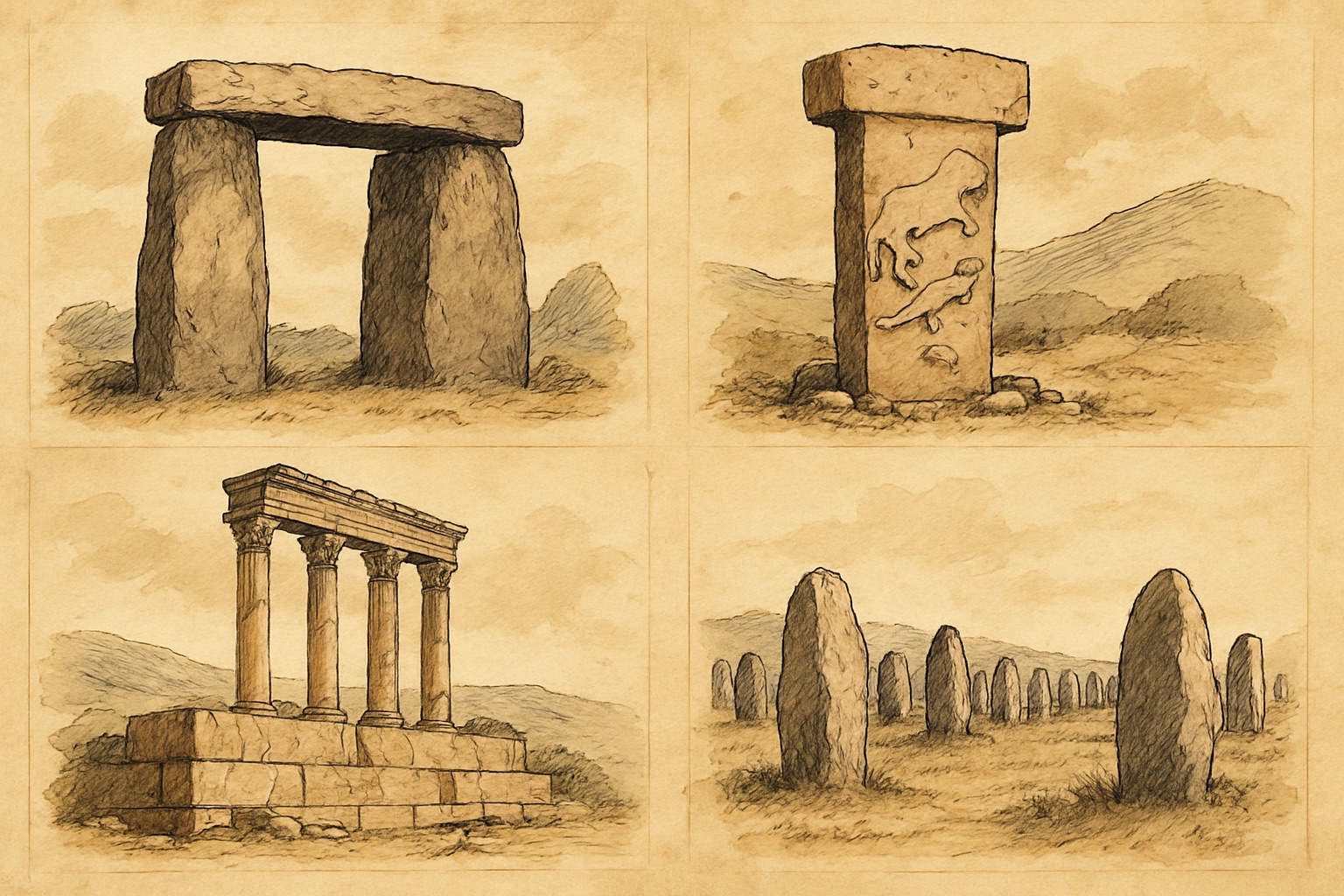
Season 2, Episode 8 of Ancient Aliens — "Unexplained Structures," aired December 16, 2010 — covers a lot of ground in 45 minutes. Four sites, multiple continents, one thesis: the ancient world left behind structures that defy conventional explanation, and the most parsimonious explanation involves visitors from elsewhere.
It's a well-crafted episode, and it picks its places well. These really are some of the strangest things human beings ever built, and the questions the show asks at each one are questions worth asking. Some of its answers reach further than the ground will bear them. But the instinct that brought the cameras here — that something about these sites doesn't sit easy — is sound. Let's go site by site, and see what survives a closer look. In a few cases, the closer you look, the stranger it gets.
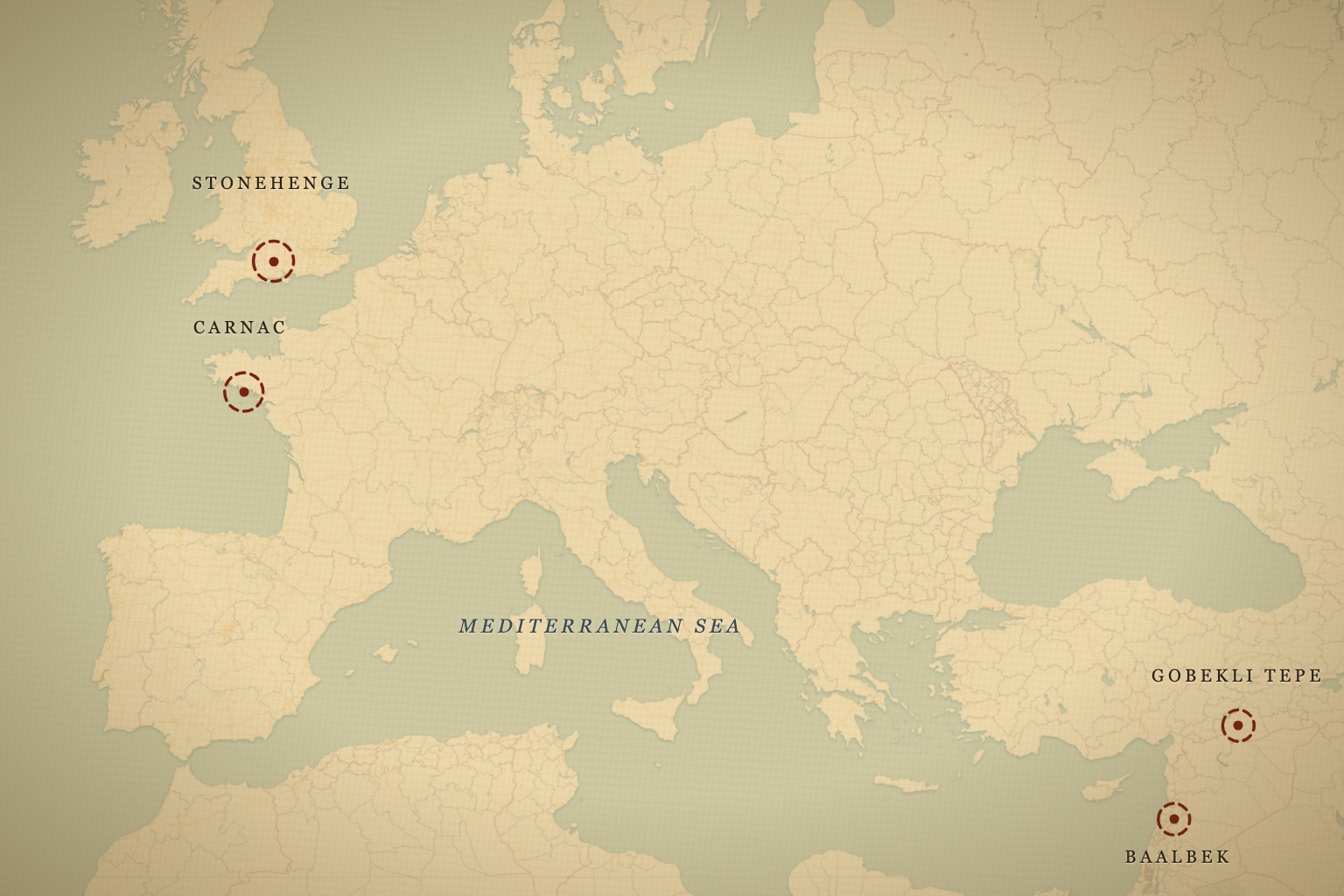
Stonehenge: The Claims
What the episode claimed: The show opens with Stonehenge and leads with the bluestones — that transporting 4-ton stones 150 miles from Wales to Salisbury Plain represents a logistical impossibility for Neolithic people. And the question has real teeth. Moving multi-ton stones across rough terrain and water crossings without metal tools, wheels, or draft animals is no small thing, and for a long time nobody could say how it was done. The monument's astronomical precision is real too: the summer solstice sunrise alignment is no accident, and it took sustained, patient watching of the sky to get it right.
What archaeology says: "Impossible" is the one word that hasn't held up. Experimental archaeology has repeatedly shown that human teams with ropes, rollers, sledges, and wooden frameworks can move stones of this size. A 2019 study pinned down the precise extraction sites in the Preseli Hills, showing exactly where the stone was taken from. A minority of researchers have even argued for glacial transport over part of the journey, though the archaeologists who identified the quarries hold to human transport throughout. So the wall the episode runs into — "no one could have done this" — turns out to have a door in it.
Verdict: The "how" loosens its grip the longer you look at it. But the "why" tightens. Why these stones, hauled 150 miles, when perfectly good building material lay close to hand? The trail leads back to the Welsh quarry sites themselves seeming to have already been sacred ground — the builders went the distance because the stones mattered, not because they were convenient. Sit with that for a moment: a people willing to drag the holy across half of Britain because the rock itself carried meaning. The episode wanted a mystery at Stonehenge. There is one. It's just buried in the human heart rather than the sky.
Göbekli Tepe: The Claims
What the episode claimed: The show frames Göbekli Tepe as evidence that civilization is far older than the standard timeline allows — hunter-gatherers in 9600 BC raising T-shaped limestone pillars weighing up to 50 tons. And on the bones of it, the show is right to be staggered. This is one of the most astonishing archaeological discoveries of the twentieth century. Göbekli Tepe predates Stonehenge by 6,500 years. It was built by people who, by everything we thought we knew, shouldn't have had the social organization or the motivation to build anything monumental at all. It genuinely forced a rethinking of how settlement, agriculture, and complex society fit together.
What archaeology says: The leap is from "older than we ever imagined" to "therefore aliens," and that's where the cable snaps. The site was found and excavated beginning in 1994 by German archaeologist Klaus Schmidt — no suppression, no cover-up, just decades of careful digging. The marks of human hands are all over it: unfinished pillars still lying in the quarry show the exact techniques, consistent with stone and antler tools. And here's the twist the show misses — the discovery that hunter-gatherers built this rewrote what we thought hunter-gatherers were capable of. The truth on the ground is wilder than the explanation beamed in from space.
Verdict: Resolve the "who" and the real riddle steps forward. Around 8000 BC, the whole thing was deliberately buried — not abandoned, not forgotten, but carefully, intentionally backfilled by the people who used it. They covered their own temple. Why a community would entomb the most ambitious structure they ever made is a question archaeology is still sitting inside, and it goes straight to something we may never fully recover: what these stones meant to the minds that raised them. The deepest mystery at Göbekli Tepe was never whether humans built it. It's what they were thinking when they did.
Baalbek: The Claims
What the episode claimed: The Trilithon gets extended treatment — three limestone blocks in the foundation of the Roman Temple of Jupiter, each weighing roughly 800 tons, with the show arguing that no Roman technology could have moved them and that the foundation predates Rome by millennia. The blocks themselves earn the awe. They dwarf, by a wide margin, anything else the Romans built anywhere in their empire. How they were moved is not a question you answer in a sentence. And the show is right that Roman construction elsewhere never reaches for stones remotely this size — which makes Baalbek a genuine outlier, a place that doesn't quite fit the pattern of its own builders.
What archaeology says: The "pre-Roman foundation" claim is the testable one, and it has been tested. The German Archaeological Institute has dug at Baalbek since 1898, with recent campaigns aimed squarely at this question. The evidence places the megalithic foundation stones within the Roman construction period, not before it. So the lost-civilization-beneath-Rome storyline thins out the more dirt gets moved.
Verdict: Grant the Romans their stones, and the question that's left is somehow heavier than the one the show asked. Why? Why here, at this scale, when the same engineers built so modestly everywhere else? The mainstream answer — a regional statement of imperial power at a major sacred site — is reasonable, and still doesn't quite reach the bottom of it. Something drove people to quarry, shape, and set 800-ton blocks no empire ever needed to move. That impulse, that reach past all practical limit, is real and it is unexplained at the level that matters. Baalbek's ambition outruns its usefulness, and the gap between the two is where the wonder lives.
The Carnac Stones: The Claims
What the episode claimed: The show reads the Carnac alignments in Brittany — over 3,000 standing stones in remarkably straight rows running for miles — as precision beyond Neolithic capability, possibly an alien navigation system or energy grid. And the awe is earned. Carnac is the largest megalithic complex in the world, and how Neolithic surveyors held those alignments true across 4 kilometers of uneven ground is a genuinely good question. The scale alone — a construction span reaching from perhaps 4500 to 2000 BC — implies an organization and a staying power that should stop anyone in their tracks.
What archaeology says: The precision, dazzling as it is, has an explanation that doesn't need the stars to come down. Neolithic surveyors had sighting poles, measuring cords, and the patience to watch astronomical events across long baselines. Experimental surveys find that the rows, while strikingly straight, carry small deviations — the fingerprint of human hands, not machine tolerance. And the "purpose unknown" line has aged: current research ties the alignments closely to seasonal astronomical events and, very likely, routes of ritual procession.
Verdict: Solve the surveying and you walk straight into the harder thing. This was built over more than two thousand years, by dozens of generations, raised by people who could not write a word of it down. How does a pre-literate society carry a single architectural and ritual intention across 80-plus generations — keep the line true not across a field, but across millennia? That's the puzzle archaeologists are still inside, and it is a deeper kind of strange than any energy grid. The miracle at Carnac isn't the geometry. It's the memory.
Overall Verdict
"Unexplained Structures" does the thing the best episodes of Ancient Aliens do: it walks you up to genuinely remarkable places and asks questions that real researchers lose sleep over. Where it overreaches is in treating "hard to explain with what we know today" as if it were "impossible for ancient humans" — and that leap, more than anything, sells short the people who actually raised these stones.
But give the show its due, because it earns it: it keeps pointing at the right places. The Neolithic builders of Britain, the pre-agricultural inhabitants of Anatolia, the Roman engineers of the Bekaa Valley, the Neolithic communities of Brittany — every one of them did something that should leave us a little awestruck, and none of them needed help from the sky for it to be astonishing. The episode goes looking for mystery and reaches past the human one to grab a cosmic substitute. The irony is that it didn't have to. The mysteries that remain at these four sites are real, and they're the harder kind — not how did they move the stone, but why did it matter so much; not who helped them, but how did a people without writing hold a single intention across two thousand years. Those questions don't have tidy answers yet. They may never. And that's exactly why these places keep their hold on us. Keep asking. The wonder was always pointed at us.
Track the 4 sites from this post on your map.
Free account · mark visited sites · build your bucket list.
Start tracking