What "The Mystery of Puma Punku" Got Right and Wrong
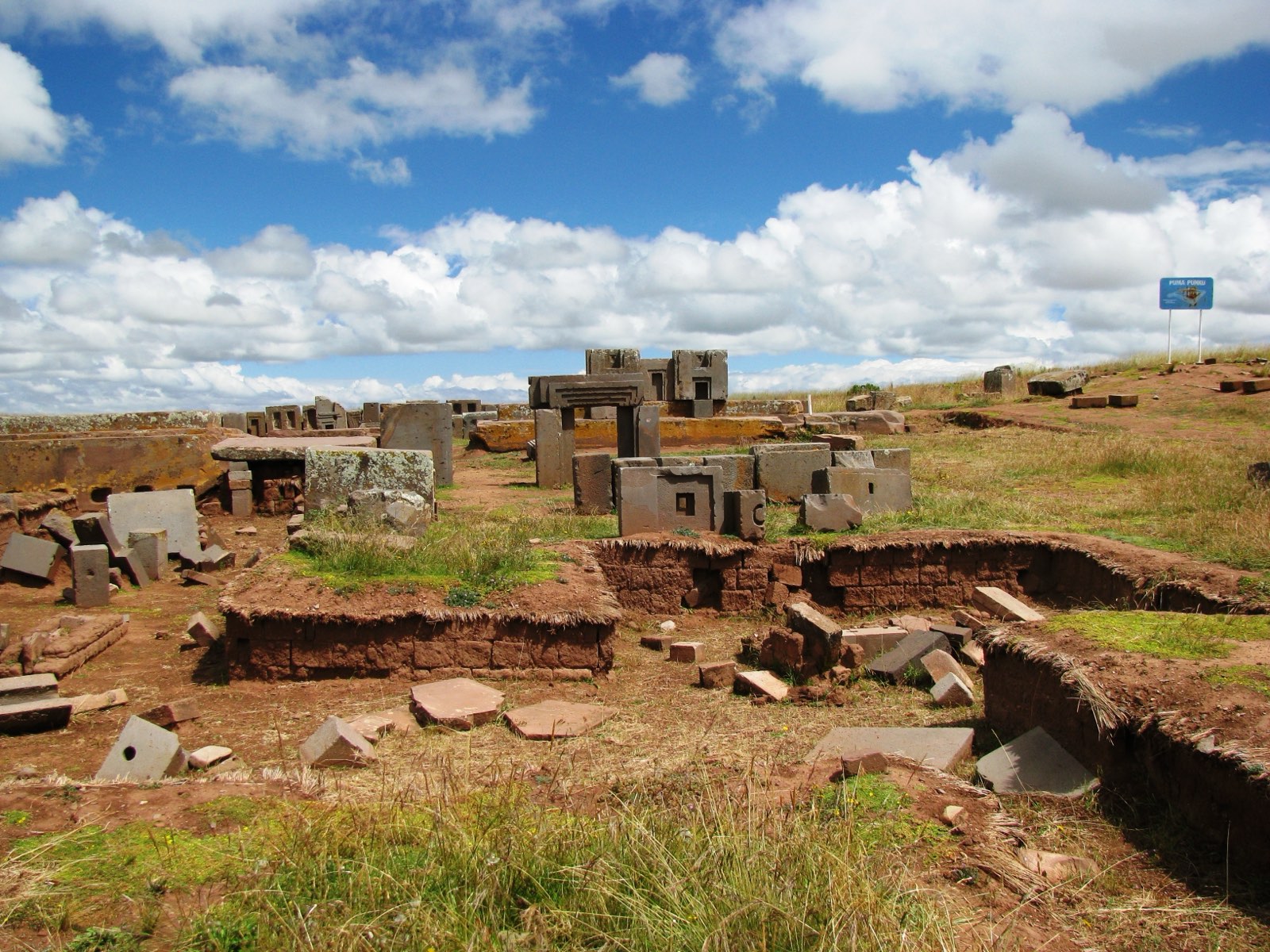
Season 4, Episode 6 — "The Mystery of Puma Punku," aired March 16, 2012 — is one of Ancient Aliens' most-referenced episodes and one its critics keep circling back to. It plants itself in front of the almost impossible stonework of Puma Punku and its sister site Tiwanaku on Bolivia's Altiplano, with Lake Titicaca and Ollantaytambo pulled in as witnesses.
It's worth sitting with, because it braids together two very different kinds of mystery: questions that have been chased down and answered, and questions that are still wide open after a century of looking. Pulling those apart doesn't shrink the sites. If anything, it makes them stranger.
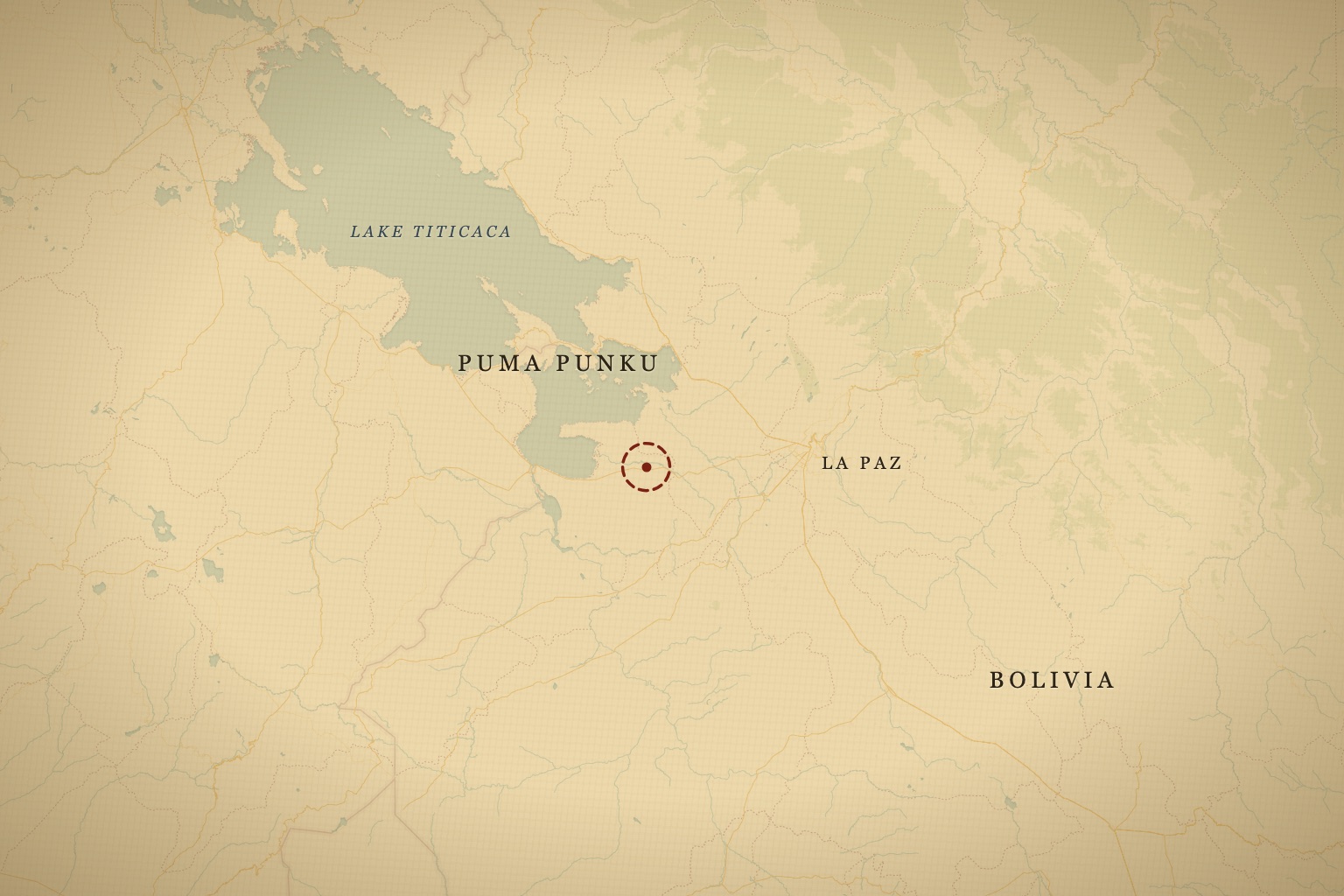
Puma Punku: The Precision Question
This is the episode's centerpiece, and it's where the most detailed claims appear.
What the show gets right: The precision of Puma Punku's stonework is genuine and genuinely impressive. The H-shaped blocks are remarkably uniform. The drill holes in the stone are smooth and consistent. The blocks are made from andesite — a very hard volcanic rock — that required sustained, skilled effort to shape. The show is correct that this represents an extraordinary level of craft for any ancient civilization, let alone one working at 12,800 feet with the tools available in 500-900 AD.
The show is also correct that the logistics are formidable. Andesite blocks came from a quarry across Lake Titicaca, approximately 90 kilometers away. Red sandstone was quarried locally. Neither material could be dragged to the site on wheeled vehicles — there were none — or pulled by horses. The transport question is real.
What the show gets wrong: The leap from "this is hard to do" to "this needs power tools, or aliens" is one place the trail actually goes somewhere — just not where the episode points. When archaeologist John Hoopes and other researchers looked at the drill holes under magnification, the holes gave up a secret: helical toolmarks, the signature of a pump or bow drill turning stone or bone bits through abrasive sand. You can't see them with the naked eye. Under the lens, they're unmistakable.
The episode also says the andesite is "as hard as diamonds." It isn't, quite — andesite sits around 7 on the Mohs scale, diamond at 10, and copper and bronze tools bite into stone up to hardness 7-8. The Tiwanaku had both. The H-shaped blocks line up so well because they were made to a template, the way standardized parts have been turned out across the ancient world. Which raises its own quiet wonder: somebody, twelve hundred years ago, was thinking in terms of interchangeable, prefabricated units at 12,800 feet.
The genuine puzzle: Here's what the magnification doesn't explain. The site was never finished. Production stones still lie along the ancient transport routes, the work stopped mid-stride. The Tiwanaku civilization collapsed around 1000 AD, and catastrophic drought is the leading suspect — but what was actually happening in the moment the chisels went down at Puma Punku, why this particular project froze where it froze, nobody can yet say. The half-cut blocks are still out there waiting, mid-sentence.
Tiwanaku: The Dating Controversy
The episode revisits the idea that Tiwanaku is far older than mainstream archaeology accepts.
What the show gets right: The question of Tiwanaku's date was genuinely controversial in the early 20th century. Arthur Posnansky, a Bolivian-German scholar who spent decades at the site, made a serious (if ultimately flawed) argument that astronomical alignments indicated construction as early as 15,000-17,000 BC. The show presents this as an established alternative timeline; it was, in its time, a legitimate academic debate.
What the show gets wrong: Posnansky's deep-time date rested on the rate at which Earth's axial tilt changes — and his assumed rate was off. Plug in the correct value and the 15,000-17,000 BC vanishes like a mirage. Radiocarbon dating, ceramic sequences, and stratigraphy then converge from three separate directions on roughly 300 to 900 AD. The episode treats Posnansky's timeline as a live fight among specialists; that fight is mostly over.
But notice what survives the correction. The thing that made Posnansky reach for 17,000 BC in the first place — the precision of the alignments — is still standing.
The genuine puzzle: The Kalasasaya's astronomical alignments are real, and they were meant. This site was built to catch celestial events as they happened, by people who were watching the sky closely enough to engineer stone to its motions. We can date the walls. What we can't fully recover is what they were tracking it all for — what the alignments meant to them, what knowledge and ritual moved through that courtyard at solstice. The Tiwanaku were sophisticated astronomers, and a good deal of what they knew went into the ground with them.
Lake Titicaca: Gods and Underwater Ruins
The episode uses Lake Titicaca as context for the Tiwanaku origin myths, particularly the story of Viracocha emerging from the lake to create humanity.
What the show gets right: Actual submerged structures have been found beneath Lake Titicaca. A 2000 expedition led by Italian archaeologist Lorenzo Epis and the Akakor Geographical Exploring group documented stone terraces, a road, and wall remnants about 20 meters beneath the surface near the Bolivian shore. These are consistent with the lake level having been lower in the past and Tiwanaku-era settlements extending to the shoreline.
What the show gets wrong: The submerged structures look like ordinary Tiwanaku building — no anomalous technology down there, no impossible stonework, just a settlement the water rose to meet. The episode hears the Viracocha emergence story as a possible memory of alien contact; read alongside the rest of Andean cosmology, it sits more naturally as a creation narrative — the kind a culture tells about where it came from.
The genuine puzzle: And yet the lake won't quite let go of its strangeness. For the Tiwanaku and the Inca after them, this was the sacred origin point — the place the world began. The Island of the Sun and Moon, the ruins under the surface, the Aymara ceremonies still being performed on the shore: the sheer density of the sacred here is something archaeology is still working to map. People have been certain, for a very long time, that something happened at this water. That conviction is itself part of the record.
Ollantaytambo: The Wall of Six Monoliths
The episode connects Puma Punku's precision stonework to the Wall of Six Monoliths at Ollantaytambo in Peru's Sacred Valley.
What the show gets right: The six massive pink granite monoliths of Ollantaytambo's Temple of the Sun were quarried from a site across the Urubamba River and hauled up a steep mountainside — a significant logistics challenge. The show is correct that their transport required extraordinary effort.
What the show gets wrong: The stone "knobs" on the monolith faces get cast as possible anti-gravity lifting devices. They're rope anchors — handholds for hauling, standard Andean practice — and the proof is sitting right there on the route: half-moved blocks still wearing their knobs, because nobody ever got around to chiseling them off. The detail meant to suggest a vanished technology turns out to be the fingerprint of human muscle and rope, which is its own kind of staggering when you stand under the weight of these stones.
The genuine puzzle: Ollantaytambo, too, stops mid-breath. The quarry sits abandoned, the transport route frozen with stones still on it. Something halted the work — most likely the Spanish invasion arriving in the 1530s — but the exact circumstances are lost in the shadows of that moment. Two great Andean sites, hundreds of miles apart, both caught in the act of building and then simply left. The repetition is the haunting part.
Episode Verdict
"The Mystery of Puma Punku" does the thing the best Ancient Aliens episodes do: it walks up to a genuinely extraordinary place and refuses to look away. The precision of the stonework, the logistics of moving andesite 90 kilometers across a lake, the sky written into the architecture — these are real puzzles, and the show is right to be amazed by them. Amazement is the correct first reaction. It's where every investigation worth taking starts.
The episode's leap is to treat "we don't fully understand this yet" as a door that only aliens can walk through. Follow the evidence and some of those doors do open — the drill holes confess their bow-drill marks, Posnansky's deep-time date dissolves into a math error — and you find, on the other side, not a letdown but people. People who quarried diamond-hard-sounding andesite with bronze and sand and patience, who raised one of the ancient world's great cities at 12,500 feet, who farmed one of the harshest climates on Earth and read the heavens off a courtyard wall.
And some of the doors don't open at all. Why the work stopped at Puma Punku. What the alignments were for. Why two sites, Puma Punku and Ollantaytambo alike, were abandoned mid-stone, as if everyone simply set down their tools and walked into the drought and the dark. Set the alien hypothesis aside and the mystery doesn't shrink — it changes hands. It becomes a human mystery, which is the deeper one, because we are still standing in the ruins asking what these people knew and where they went. The show is worth watching for teaching us to ask. The Altiplano is worth visiting because the answer is still up there, half-carved, waiting.
Track the 4 sites from this post on your map.
Free account · mark visited sites · build your bucket list.
Start tracking