What 'The Evidence' Got Right and Wrong
Season 1, Episode 1 of Ancient Aliens aired on April 20, 2010 — and it came out swinging. Four sites. One hour. An argument that human civilization couldn't possibly have accomplished what we know it accomplished.
A decade and a half later, "The Evidence" remains the template for everything the show would do. It picked the most dramatic ancient mysteries it could find, assembled a roster of enthusiastic theorists, and made a case worth sitting with. Here's where the trail actually leads — site by site.
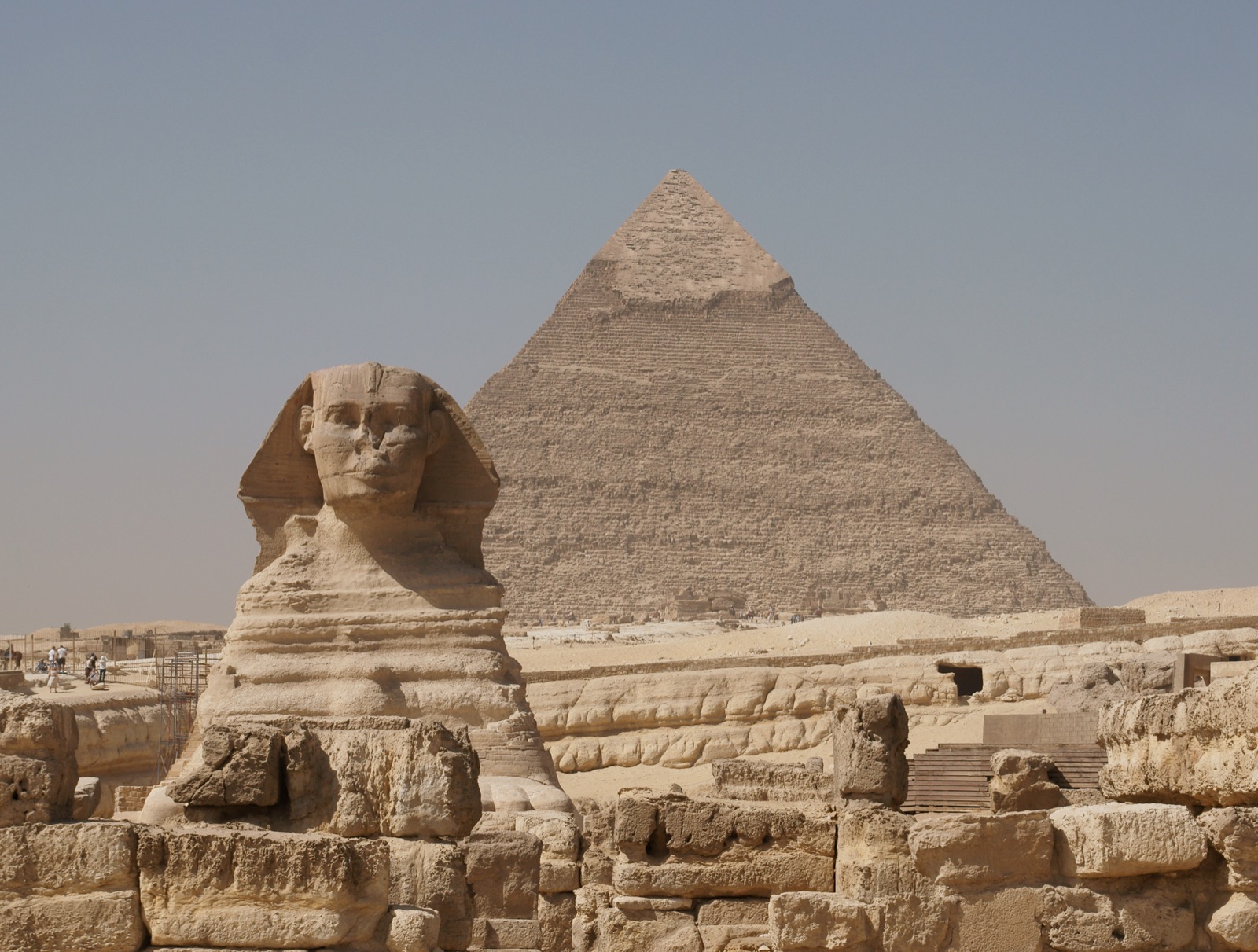
The Great Pyramids of Giza
What the episode claimed: The Giza complex is too precise, too massive, and too mathematically sophisticated to have been built by ancient Egyptians with copper tools and manual labor. The alignment with Orion's Belt points to knowledge that couldn't have existed in 2560 BC. An advanced — possibly extraterrestrial — civilization must have been involved.
What archaeology says: The Great Pyramid of Khufu is genuinely astonishing: 2.3 million stone blocks, the largest weighing 80 tons, built to tolerances of less than two inches. But we have extraordinary evidence for how it was done — and who did it.
In 1990, workers accidentally uncovered a workers' village at Giza. Archaeologist Mark Lehner and his team have since excavated a city that housed thousands of workers, complete with bakeries, breweries, a medical facility, and administrative offices. These weren't slaves — their skeletons show healed fractures that received care, and they were buried with the same food and equipment as higher-status Egyptians. Zahi Hawass, who directed the workers'-cemetery excavations, has said they were not slaves but Egyptians building for their own civilization — a national project.
The Orion correlation theory, proposed by Robert Bauval in 1989, is a real astronomical alignment — but it's contested. Skeptics note that you could match many three-star patterns to many three-monument groupings by adjusting the scale. The alignment also requires looking backward in time to 10,500 BC, when Orion matched better — but there's no archaeological evidence of a construction site at Giza that early.
Verdict: We can name the people who built the Great Pyramid, feed them in our imagination from their own bakeries, and trace the tools in their hands — and somehow that makes it more staggering, not less. A society reached for a tolerance of less than two inches across 2.3 million blocks because it wanted to. The Orion question is still genuinely unsettled, and the show is right about the deeper thing: stand at the base of Khufu's pyramid and you are looking at something the human story has not finished explaining to itself.
The Nazca Lines
What the episode claimed: The Nazca geoglyphs — hundreds of lines, geometric shapes, and animal figures etched into the Peruvian desert floor — can only be fully appreciated from the air. The ancient Nazca people couldn't fly. Therefore, the lines weren't made for human eyes. They were landing strips, or markers, or signals created to be seen by gods descending from the sky.
What archaeology says: The lines were made by removing dark surface pebbles to reveal the lighter ground beneath — a technique requiring no sophisticated tools, just patience and planning. Experiments have shown that small teams could recreate the largest figures using simple stakes and rope, working from scaled drawings.
The "visible from the air" argument holds up — but the ancient Andean worldview included gods who did live in the sky and were believed to observe ritual activities from above. Maria Reiche, the German mathematician who spent decades studying the lines, argued they formed a giant astronomical calendar. That theory has since fallen out of favor, but her broader point stands: ritual meaning doesn't require alien authorship.
The Nazca flourished between roughly 500 BC and 500 AD. Their ceramic art depicts the same animals found in the geoglyphs. The lines almost certainly served a ceremonial function — possibly connected to water rituals in a desert region where water was sacred.
Verdict: We know how the lines were made — and knowing the technique doesn't shrink the wonder, it relocates it. Picture a people who knew their sky gods were watching from above and decided to draw for them, at a scale no single human eye on the ground would ever take in. Then they kept it up for the better part of a thousand years, across 450 square kilometers of desert. The figures weren't built for aircraft. They were built for an audience the Nazca believed was really up there — and the sheer reach of that act of faith is the part that still stops you cold.
Palenque and the "Astronaut" Lid
What the episode claimed: The carved sarcophagus lid of Mayan king Pakal shows a man operating a spacecraft: his foot on a pedal, his hand on a control stick, breathing apparatus over his nose, and exhaust flames beneath. Erich von Däniken argued this in his 1968 book Chariots of the Gods, and Ancient Aliens revived it for a new audience. The implication: Pakal wasn't just a king. He was a space traveler.
What archaeology says: The lid has been decoded — thoroughly, rigorously, and definitively — by Maya epigraphers starting with Linda Schele in the 1970s. Every element maps precisely to standard Maya iconography of death and rebirth.
Pakal's figure is descending into Xibalba, the Maya underworld, along the World Tree — the cosmic axis that connected the underworld, earth, and heavens. The "breathing apparatus" is the cleft head of a deity. The "pedals" are the jaws of the underworld serpent. The "exhaust flames" are the Wakah-Chan Te', the World Tree growing from the underworld. The "spacecraft" is the Celestial Monster — a standard funerary image.
This isn't interpretation. The Maya left us texts. The imagery on the lid appears in other Maya art with known meanings. We can read it.
Verdict: Here the mystery doesn't dissolve so much as it changes shape — and the shape underneath is bigger than a spaceship. What's actually carved on Pakal's lid is a king falling down the axis of the cosmos, through the jaws of the underworld serpent, along a World Tree that joins the dead, the living, and the heavens. The Maya weren't hiding a rocket. They were mapping the entire architecture of existence onto a single stone, and they left us the language to read it back. That a civilization saw the universe that way — and built it into a tomb — is the wonder the show walked right past.
Baalbek's Trilithon
What the episode claimed: The temple complex at Baalbek, Lebanon, sits on a foundation of limestone blocks so enormous — each weighing 750 to 800 tons — that no ancient technology could have moved them. One stone still in the quarry weighs an estimated 1,000 tons. The Romans built their temples here, but the episode argues the foundation was built long before Rome, by someone — or something — we can't account for.
What archaeology says: The Heliopolis complex at Baalbek was built by the Romans beginning in the first century BC, dedicated to Jupiter, Venus, and Mercury. The Trilithon — three colossal limestone blocks forming part of the temple podium — are among the largest dressed stones ever placed in a building. Archaeologists believe they were quarried, moved roughly half a mile, and lifted into position using Roman engineering technology: levers, cranes, ramps, and organized labor.
Is this plausible? Researchers at the German Archaeological Institute have studied the question carefully. Their answer is yes — but it required exceptional effort, engineering know-how, and thousands of workers. The Romans moved large stones routinely. Their achievement at Baalbek was doing it at an unprecedented scale.
The "pre-Roman foundation" idea is the one thread that doesn't hold when you pull it: the surviving megalithic stones date to Roman construction phases. But the site itself was sacred to the Phoenician god Baal long before Rome ever arrived — so the Romans weren't choosing an empty field. They were building monstrous into a place that already mattered.
Verdict: We'll cover Baalbek in full in our dedicated deep dive, but the Trilithon is genuinely staggering and the most interesting question it raises is one nobody has fully answered. Not "could Romans move these stones?" — they could. The one that lingers is why: why reach for blocks of 750 to 800 tons when smaller stones would have held the temple up just as well? Something drove them past every practical limit, and that something is still out there in the quarry with the 1,000-ton stone they never finished cutting.
Overall Verdict on "The Evidence"
The episode is at its best when it shows you something real: a 50-ton pillar, a sarcophagus lid, a desert covered in animal shapes. These things are genuinely remarkable, and the wonder the show reaches for is real wonder. It isn't wrong to stand in front of Giza or Baalbek and feel that the ordinary story falls short.
Where it leaps is in the answer it hands you. "Therefore aliens" arrives fast — fast enough that it skips the part that's actually astonishing, which is that human beings did this. We have been capable of extraordinary, almost unaccountable feats for at least 12,000 years, and the more closely you look, the stranger and more wonderful that gets, not the more mundane. The aliens were never the interesting part. We are.
And "The Evidence" did the one thing a show like this can do that genuinely matters: it sent millions of people looking. Some of that search ran off into fringe country. Some of it landed in real archaeology, where the answers turned out to be every bit as wild as the questions that sparked them.
That's the gift of a good question. Not the answer it gives you, but the looking it sets loose.
Track the 4 sites from this post on your map.
Free account · mark visited sites · build your bucket list.
Start tracking