The Mystery of Stonehenge
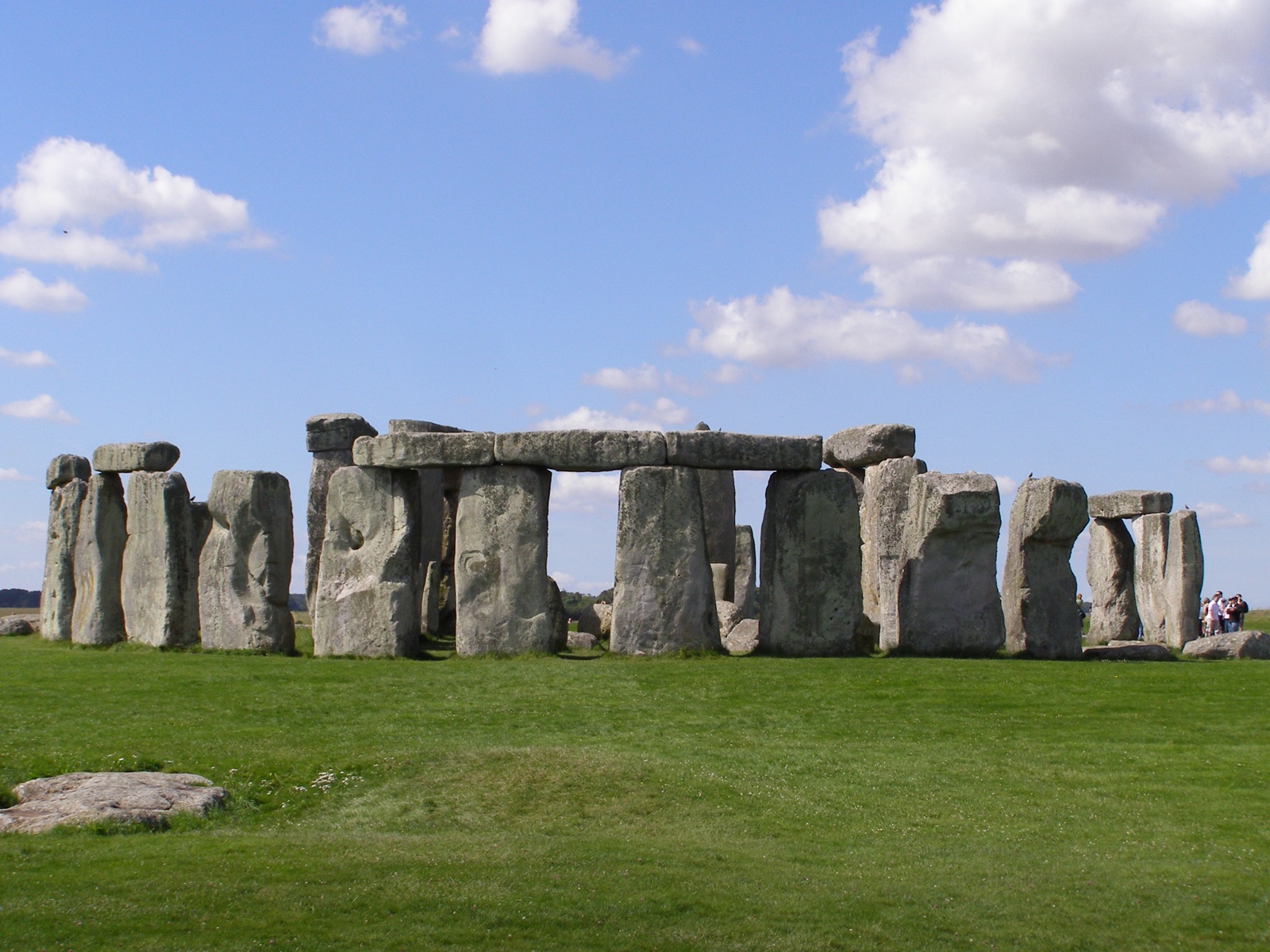
Stand on Salisbury Plain on the morning of the summer solstice. At 4:52 AM, the sun rises precisely over the Heel Stone — a single unshaped monolith standing outside the main circle — and its first light cuts directly through the entrance of the monument, illuminating the altar stone at the center. This alignment is not accidental. It has worked, reliably, for more than 4,000 years.
Every stone in Stonehenge's outer ring weighs around 25 tons. The inner bluestones — some 80 of them — each weigh up to 4 tons and came from the Preseli Hills in Wales, roughly 150 miles away. The lintels on top of the upright stones are secured with mortise and tenon joints: a technique borrowed from woodworking, applied here to boulders the size of small cars. Whoever built this knew what they were doing.
The Place
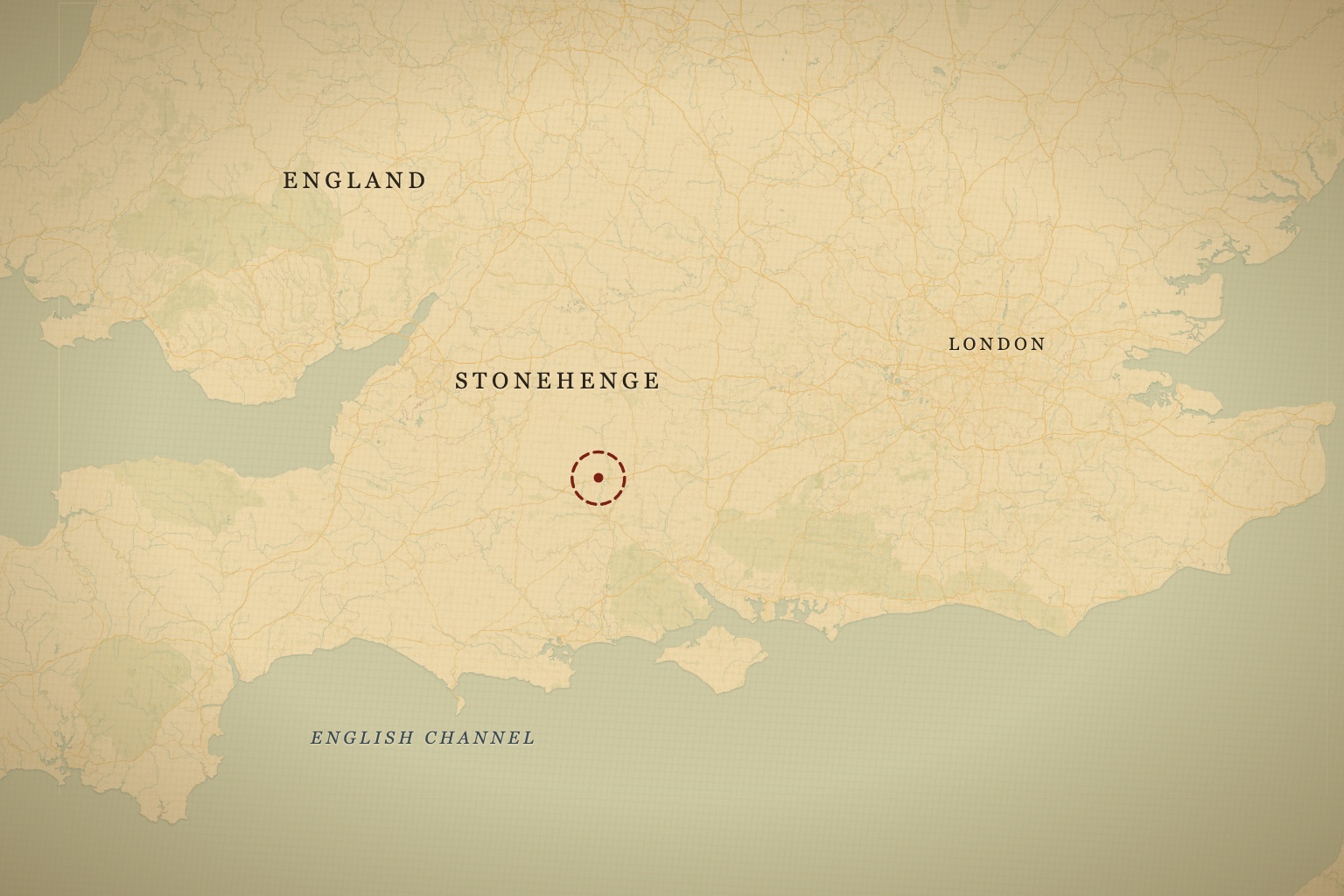
Stonehenge stands on Salisbury Plain in Wiltshire, England, about 8 miles north of the city of Salisbury. It sits within a complex of hundreds of associated monuments — burial mounds, ceremonial avenues, earlier circular earthworks — making it the densest concentration of Neolithic and Bronze Age sites in Britain.
Construction happened in stages over roughly 1,500 years, beginning around 3000 BC and continuing through to about 1500 BC. The earliest phase was a circular earthwork and ditch. Wooden structures came next. The famous stone circles were raised in multiple campaigns, with the massive sarsen stones — the outer ring and inner trilithons — transported from Marlborough Downs, about 25 miles north.
The bluestones are the real puzzle, and the more you look at them the deeper it gets. They're not from anywhere nearby. Their specific geology — spotted dolerite and other Welsh volcanic rock — traces to a cluster of outcrops in the Preseli Hills in Pembrokeshire. Getting those stones to Salisbury Plain required crossing the Bristol Channel, navigating rivers, and hauling them overland through rough terrain. Why anyone would insist on these stones, from there, is a question that only sharpens the closer you stand to it.
Today Stonehenge is a UNESCO World Heritage Site with a modern visitor center and shuttle service. About 1.5 million people visit each year, though access to the stone circle itself requires advance booking. The most atmospheric experience remains watching the solstice, if you can get there.
What the Show Claims
Ancient Aliens has returned to Stonehenge repeatedly: Season 2, Episode 8 ("Unexplained Structures"), Season 3, Episode 3 ("Aliens and Sacred Places"), and Season 14, Episode 17 are among the key episodes.
The show builds its argument from several interlocking claims. The first is logistical: transporting 80 bluestones 150+ miles, the show argues, is beyond the capabilities of Neolithic people using available technology. The second is astronomical: the solar and lunar alignments encoded in the monument suggest a level of mathematical and celestial knowledge that seems to exceed what we'd expect from pre-literate Bronze Age farmers.
The show also makes a more dramatic claim about the bluestones specifically — that they function as an energy conductor, channeling or focusing some kind of force. Several theorists featured in Season 3 suggest the ring acted as a portal, possibly for inter-dimensional or star travel. The oral traditions of the builders, as the show interprets them, describe the stones "arriving" at the site by means beyond human effort.
A related claim involves the builders themselves. The people who constructed Stonehenge seem to have no known descendants — the Neolithic population of Britain was largely replaced by a wave of continental immigrants during the Bronze Age, arriving just as the monument was completed. The show presents this disappearance as suspicious.
What Archaeology Says
Archaeology has spent decades chasing the transportation question, and what it has turned up is its own kind of astonishing. The most significant recent development came from researchers at University College London and the University of Southampton: in 2019, they identified the precise quarry sites in the Preseli Hills where the bluestones were extracted, complete with partially-removed rock columns still visible in the earth. The extraction technique comes into focus — wedges, levers, human muscle. Which means the effort was even more deliberate than the show imagines: not stones that arrived, but stones that people went and got, by hand, from a specific hillside they had reasons to choose.
On the question of transport, a minority of researchers — most persistently geomorphologist Brian John — have long argued the bluestones may have traveled part of the route via glacial action during the last Ice Age, with human effort required only for the final portion. Mainstream archaeology, including the team that identified the Preseli quarries, holds to human transport for the whole journey. This isn't universally accepted, and it doesn't close the case so much as complicate it — archaeologists are taking the logistics as seriously as the monument deserves, and even the "easier" version leaves the hardest stretch squarely on human shoulders.
The quarries produced a stranger thread still. In 2021, Parker Pearson's team published evidence from Waun Mawn, a dismantled stone circle in the Preseli Hills near the quarry sites — with a diameter matching Stonehenge's original enclosure ditch, an entrance aligned on the midsummer sunrise, and one empty stonehole whose unusual cross-section matches the base of a specific Stonehenge bluestone. Their proposal: part of Stonehenge stood first in Wales, and was taken down and carried east — as a monument, not just as material — perhaps by a migrating community bringing its ancestors with it. Subsequent fieldwork has questioned how much of a circle Waun Mawn ever really was, and the debate is live. But the idea it put on the table won't leave: that the stones were moved because they were already sacred somewhere else.
The solar alignments come into sharper focus, too. Mike Parker Pearson of University College London — arguably the world's leading Stonehenge archaeologist — has argued persuasively that the monument was a site of ancestor worship and seasonal ceremony, with the solstice alignments marking the movement between the realms of the living and the dead. The astronomical precision reflects sustained observation across generations — which is its own staggering claim: people who held a single celestial intent steady over lifetimes, with no writing to carry it.
Parker Pearson's Stonehenge Riverside Project put flesh on that argument. Two miles from the stones, his team excavated Durrington Walls and uncovered the remains of a Neolithic village — houses with hearths and middens thick with feasting debris — that appears to have housed the builders themselves around 2500 BC. Isotope analysis of the pig and cattle teeth from those feasts showed the animals had been raised all across Britain, some as far away as Scotland, and slaughtered in midwinter. Stonehenge wasn't built by a local tribe; it was built by gatherings drawn from the whole island, converging for the solstice. No one knows what kind of summons could reach that far.
And in 2024, the puzzle got physically larger. A geochemical study published in Nature traced the Altar Stone — the six-ton sandstone slab at the monument's heart, long assumed to be Welsh — to the Orcadian Basin of northeast Scotland, at least 700 kilometers away. However it traveled, someone in Neolithic Britain moved a six-ton stone most of the length of the island. The bluestones were the hard problem for a century. The Altar Stone just tripled the distance.
On the builders "disappearing": the genetic evidence is real — ancient DNA studies published in 2019 confirm a major population turnover in Britain around 2500 BC. Archaeologists read this as the broader Bell Beaker migration across Europe rather than a vanishing act — the Neolithic builders were assimilated or replaced by incoming populations, as happened across the continent. But notice what that timing does: a people poured fifteen centuries into this place and were folded into history almost exactly as it was finished. Whether that's coincidence or something we don't yet understand about how the monument and its makers ended together, the carving of dates keeps the question open.
The cremated remains of approximately 150 individuals buried at the site over five centuries suggest Stonehenge was a significant funerary destination for a wide region — its scale may reflect aggregated labor from many communities, which only widens the puzzle of who coordinated them, and how.
The Verdict
Even after all the research, Stonehenge leaves you with real questions — just different ones than the show raises.
The logistical question is largely, though not completely, answered. People moved those stones. We know roughly how. What remains open is the why: why these specific stones, from 150 miles away, when perfectly adequate building material lay nearby? What made Welsh spotted dolerite sacred enough to justify that effort? Parker Pearson thinks the bluestone quarry sites in Wales were already ancient sacred places, and bringing the stones to Salisbury Plain was the point — a kind of monument-building by relocation.
And there's a deeper question: who decided this? Who organized the multi-generational project that Stonehenge represents? How does a pre-literate society maintain architectural intent across 1,500 years and dozens of building campaigns? That requires something — institutional memory, religious authority, hereditary knowledge — that we haven't found direct evidence of.
Stonehenge is genuinely, profoundly strange, and the research has only deepened that strangeness rather than dissolved it. Archaeology has given us better questions, not final answers. The stones moved, and we know roughly how — but the why of these particular stones, and the who behind a fifteen-century intent held steady without writing, are exactly as open as the day you first stood there wondering. Go stand on Salisbury Plain at 4:52 AM and watch the solstice light find the altar stone, and let the monument ask you its questions directly. It has been asking them for more than 4,000 years. We are not done answering.
Covered On Screen
- The Secrets of StonehengeAncient Aliens · S14 E17
- Top Ten Mysterious SitesAncient Aliens · S17 E2
Track the 1 site from this post on your map.
Free account · mark visited sites · build your bucket list.
Start tracking