The Mystery of Sigiriya: The Lion Rock of Sri Lanka
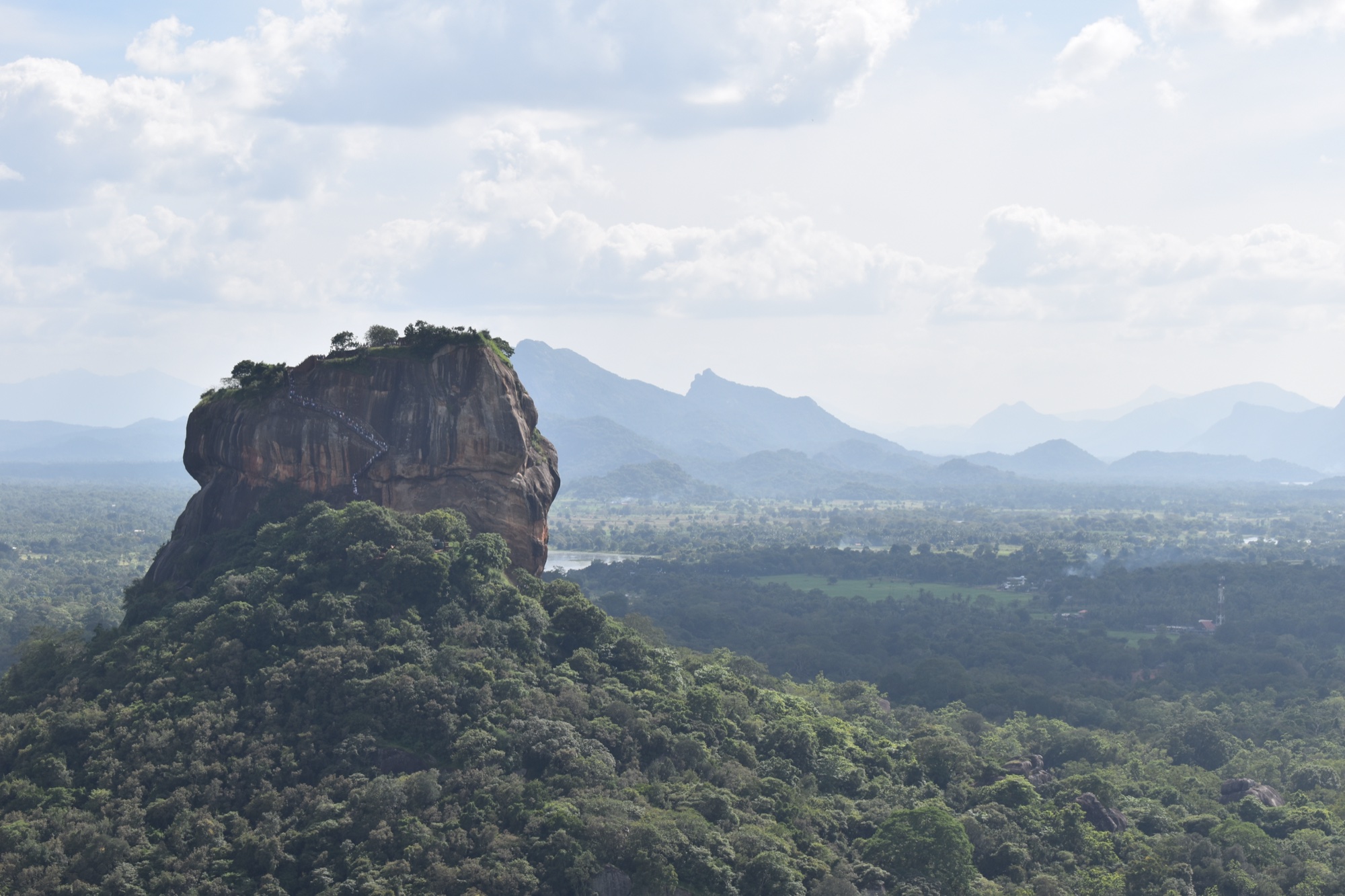
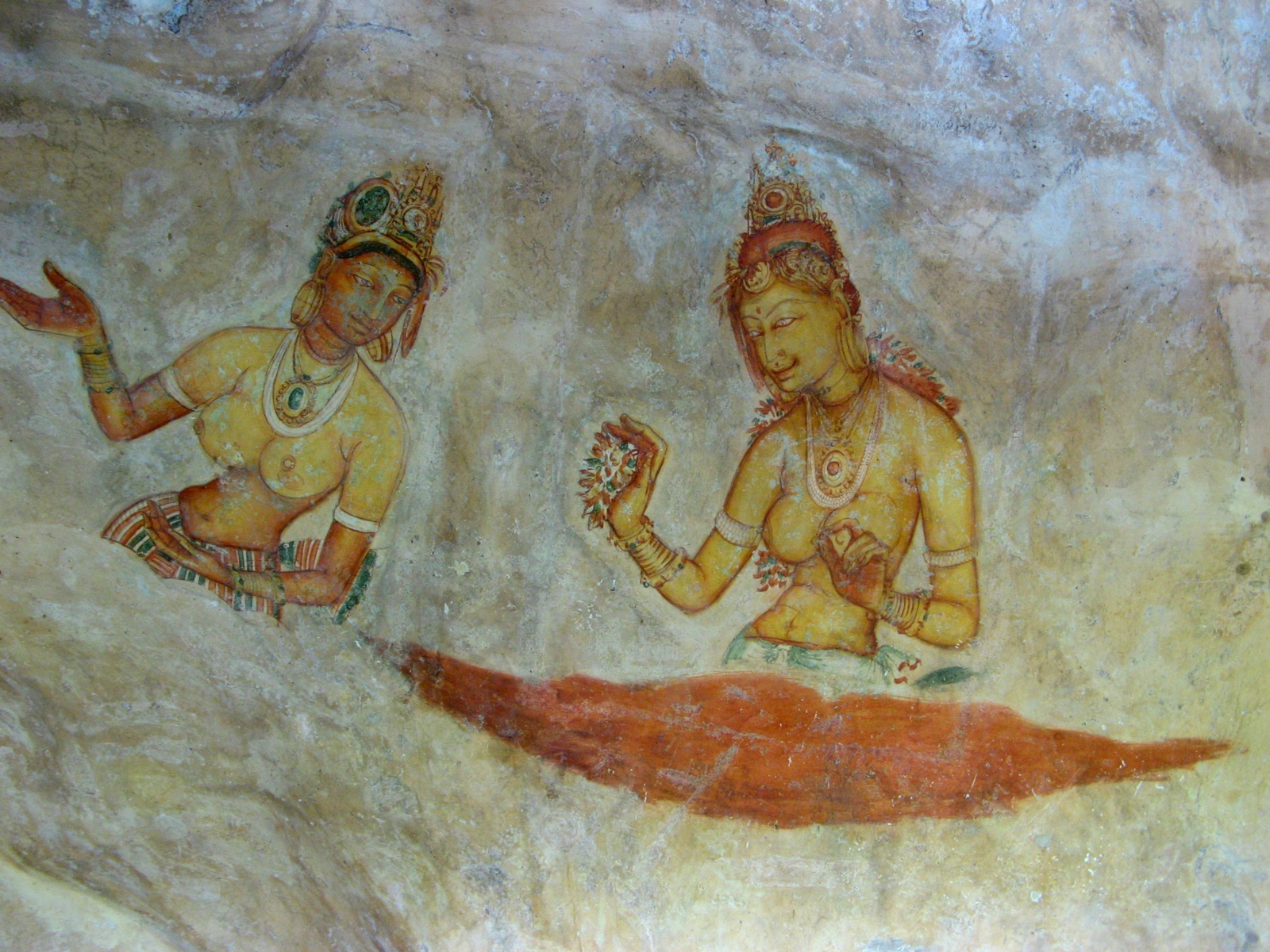
Somewhere around 1,500 years ago, someone stood at the base of a 660-foot column of hardened magma in the middle of the Sri Lankan jungle and decided to put a palace on top of it. Not beside it. Not carved into it. On top — on a summit so narrow and so high that even reaching it meant climbing a stone staircase that passed through the open mouth of a colossal lion, a beast built of brick and plaster so enormous that its two paws, all that survive today, are each larger than a car. And then, halfway up the sheer western face, on a polished wall the builders coated in a mirror-bright plaster, they left paintings of women — gilded, half-clothed, floating against gold — that have kept their color for fifteen centuries. Who lives like this? Who builds like this? And why, at the top of the world, on a rock that took superhuman effort to conquer, did the whole thing last barely eighteen years?
The Site
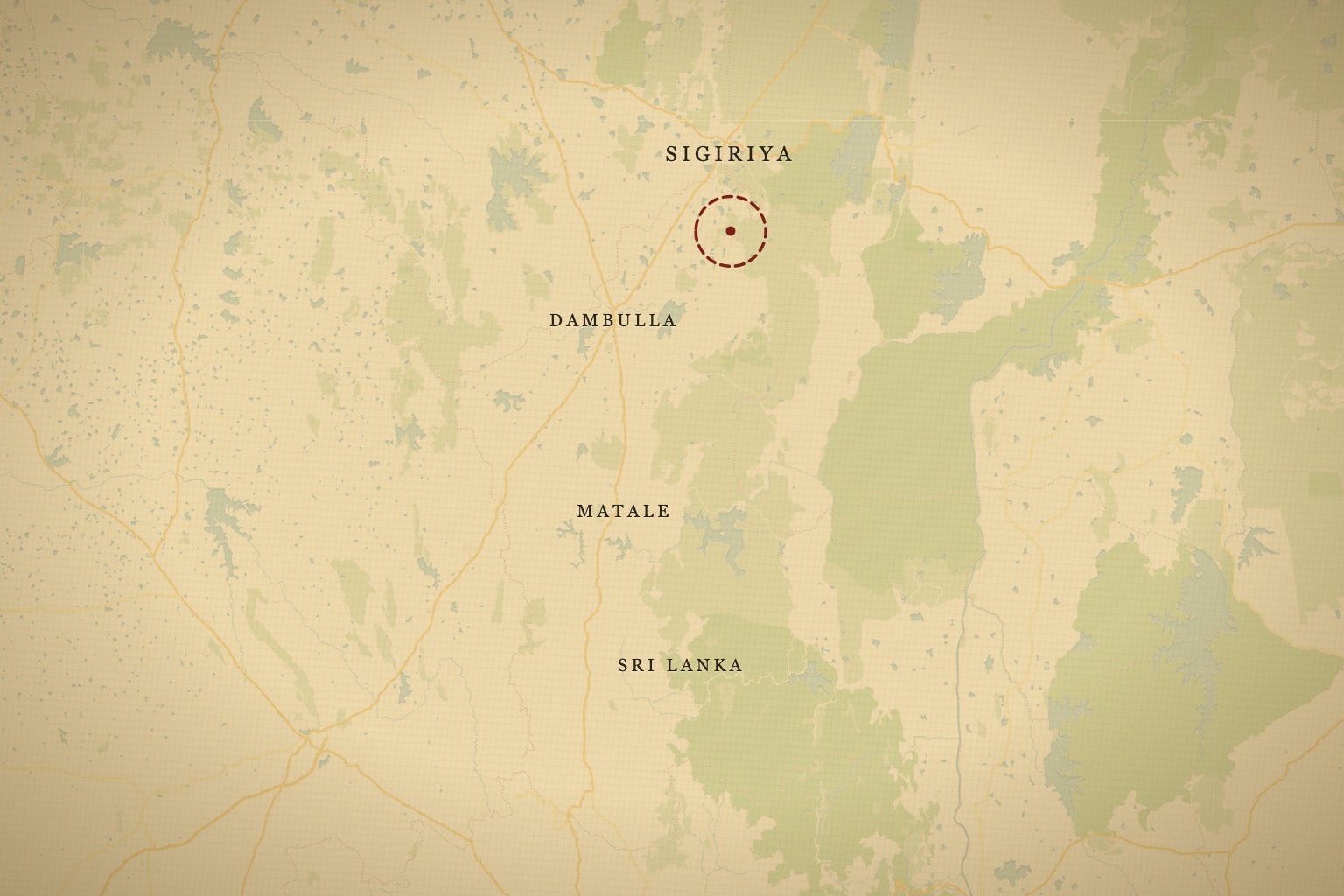
Sigiriya sits in the Matale District of central Sri Lanka, near the town of Dambulla, in the dry-zone plains of the island's cultural heartland. The rock itself is the hardened magma plug of a long-extinct volcano — a single mass of gneiss that rises roughly 200 meters (about 660 feet) above the surrounding forest, its sides nearly vertical, its top a plateau of a little over a hectare. From a distance it looks less like a hill than like something dropped from the sky. You can see it for miles across flat country, catching light the surrounding jungle never quite reaches.
It's one of the most complete surviving examples of ancient urban planning anywhere in Asia, and one of Sri Lanka's most visited places — a UNESCO World Heritage Site since 1982. Approaching from the west, you walk through a symmetrical layout of water gardens, fountain gardens fed by hydraulic systems that still run during the rains, boulder gardens threaded between natural rocks, and terraced gardens climbing the lower slopes. Then the staircases begin, switching back and forth up the face, past the famous frescoes and the polished "Mirror Wall," to the lion's paws at the northern plateau — the launching point for the final, dizzying climb to the summit palace.
The builder, according to Sri Lanka's great chronicle the Culavamsa, was King Kashyapa (also spelled Kasyapa), who reigned from roughly 477 to 495 CE. The story the chronicle tells is a dark one — and it's the reason Sigiriya exists at all.
What the Show Claims
To the Ancient Aliens worldview, Sigiriya is a maddening object, and the questions it raises are the ones the show loves best: how, and why there.
Start with the logistics. Getting building material — brick, timber, water, the huge quantities of it — to the top of a sheer 200-meter monolith is a problem that would give a modern crane operator pause. The show's framing leans on the sheer improbability: the effort involved in leveling a plateau, constructing cisterns to hold water at the summit of a rock in the dry zone, and engineering gardens with pressurized fountains at the base all point, in this reading, to a knowledge of hydraulics and construction that seems to arrive fully formed, without an obvious local pedigree. Where, the argument goes, did a 5th-century island kingdom acquire the engineering to pull water uphill and hold it, or to build symmetrical geometric water gardens centuries before Europe managed anything comparable?
Then there's the summit itself. Why build a royal residence in the single most inaccessible location imaginable? The conventional answer is defense or paranoia — but the show suggests the choice of this rock, this magma plug visible for miles, may point to something older: that Sigiriya was a sacred or significant site long before Kashyapa, perhaps chosen because something about it — its geology, its commanding position, its alignment with the surrounding landscape — already mattered. In that telling, Kashyapa didn't create Sigiriya's significance. He inherited it, building his palace on top of a place that had drawn attention, and possibly veneration, for reasons we've lost.
What Archaeology Says
Here's the thing about Sigiriya: the archaeology doesn't shrink the mystery. It just moves it somewhere more interesting.
The site has been studied intensively, most famously by the British explorer H.C.P. Bell, who conducted major surveys beginning in the 1890s, and later by Senake Bandaranayake, whose work under the UNESCO-Sri Lanka Cultural Triangle project from the 1980s onward remains foundational. What they and their successors have documented is that Sigiriya wasn't conjured out of nowhere. The rock and its surrounding shelters were used by Buddhist monks as far back as the 3rd century BCE — there are cave-drip ledges with early Brahmi inscriptions dating monastic occupation centuries before Kashyapa. So the show's instinct that the site predates the palace is, remarkably, correct. It just predates it as a monastery, not a mystery.
And the Culavamsa gives us a motive with teeth. Kashyapa, the chronicle says, seized the throne by walling up his own father, King Dhatusena, alive — and lived in fear of his half-brother Moggallana, the rightful heir who had fled to India promising to return with an army. Sigiriya, in this reading, is the palace of a usurper who needed a fortress he could not be reached in. The inaccessibility isn't an engineering flourish. It's terror rendered in stone.
But notice what the documented answers leave standing. The hydraulic gardens are real, and genuinely astonishing — surface and subsurface drainage, cisterns, and pressure fountains that still function after monsoon rain, making them among the oldest working hydraulic landscape systems on the planet. Archaeology confirms Sri Lankan engineers built them. It does not fully explain how a comparatively short-lived court achieved this level of sophistication so completely, with no clumsy prototype phase in the record. And the frescoes — the "Sigiriya Damsels," painted in a tempera technique on the western rock face — remain fiercely debated. Are they apsaras (celestial nymphs), portraits of Kashyapa's queens, or figures in some ritual we haven't decoded? Scholars have argued the point for over a century without settling it. The most famous confirmed date in the whole complex — Kashyapa's brief 5th-century reign — makes the engineering more impressive, not less, because it compresses everything into less than two decades.
And then the ending, which archaeology and chronicle agree on and neither can quite make comfortable. Moggallana did return. Around 495 CE, Kashyapa rode out to meet him in battle — and, the chronicle says, when his own war elephant turned aside and his troops read it as retreat, the king cut his own throat rather than be captured. Sigiriya was abandoned as a royal seat almost immediately and handed back to the Buddhist monks, who kept it until the 13th or 14th century. The most extraordinary palace in the ancient world was a capital for perhaps eighteen years.
The Verdict
Here is what stays genuinely unresolved about Sigiriya, after more than a century of excavation.
We know who built it, roughly when, and — if the chronicle is honest — the guilt and dread that drove him up the rock. We can map the gardens, run water through the fountains, date the monastic occupation that came before and the monastic occupation that came after. We can stand in front of the damsels and admire pigment that has outlasted empires. And with all of that, we still can't say for certain who those women are, we can't fully account for how a court that lasted less than twenty years perfected hydraulic engineering that wouldn't be matched for centuries, and we can't entirely shake the question the show asks in its cruder form and the archaeologists ask in their careful one: why here? Why did this particular rock draw monks for eight hundred years, then a doomed king, then monks again? What is it about a magma plug in the jungle that made generation after generation climb it?
Go stand at the lion's paws if you ever can — put your hand where the staircase once passed through the throat of a beast that no longer has a head — and look up at a summit a frightened man thought was worth the impossible effort of building on. Sigiriya answers the question of who. It has never once answered the question of why up there — and the higher you climb, the louder that silence gets.
Covered On Screen
- The Top Ten Mysterious MountainsAncient Aliens · S21 E6
Track the ancient sites you've visited on the interactive map.
Free account · mark visited sites · build your bucket list.
Open the tracker