The Mystery of Great Zimbabwe
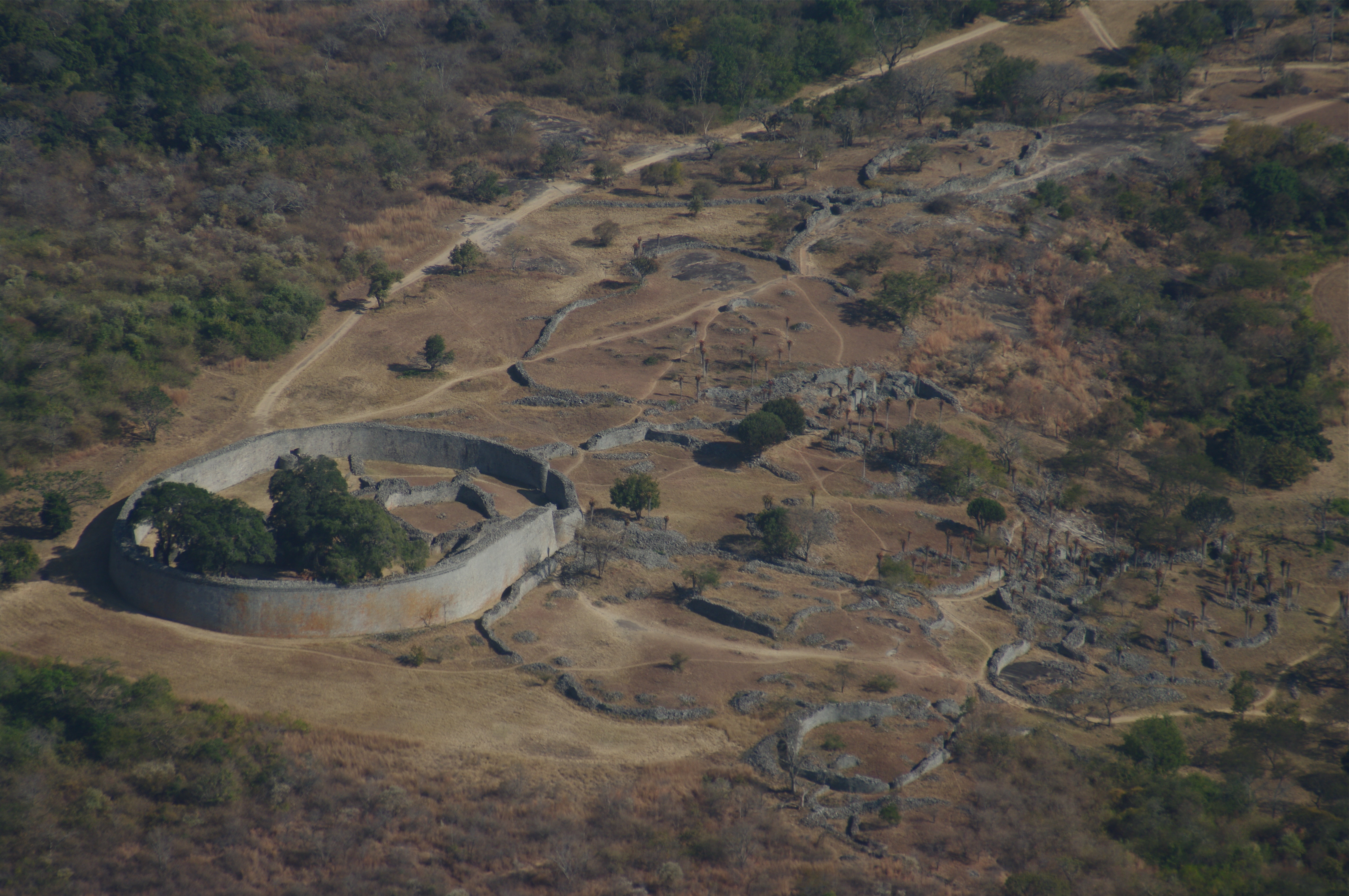
Somewhere between the Zambezi and Limpopo rivers, on a high granite plateau in southern Africa, there is a wall built from close to a million individual stone blocks. It curves for 250 meters. In places it rises eleven meters — as tall as a three-story building — and at its base it is five meters thick. Not one of those blocks is held by mortar. Every stone was shaped from the local granite, stacked, and wedged so precisely that the wall has stood for something like eight hundred years, through rains and roots and the slow patience of the bush, without falling.
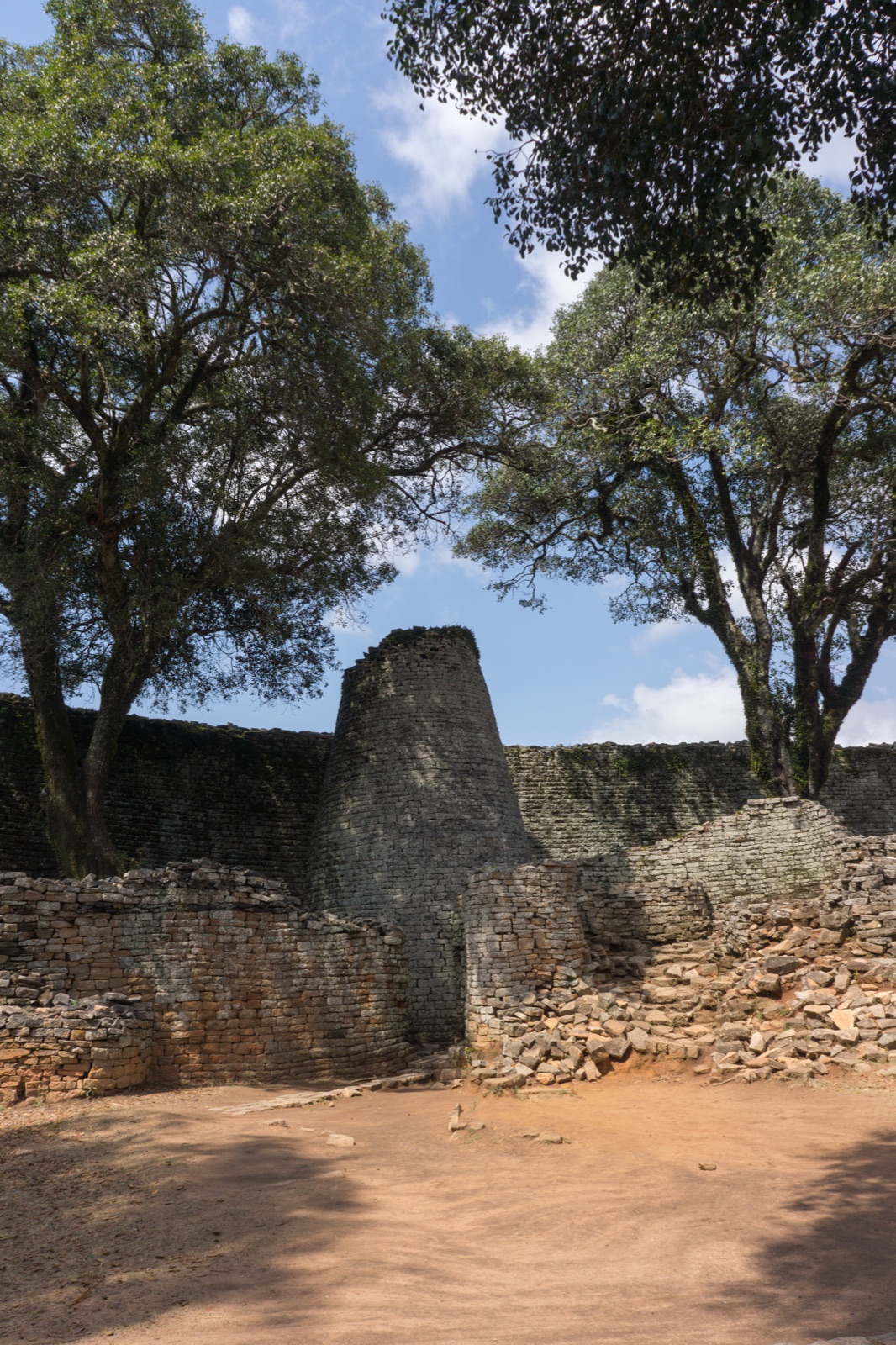
Inside that great enclosure stands a solid conical tower, ten meters high, tapering to a rounded top like an enormous grain bin cast in stone — and to this day nobody can say for certain what it was for. It holds nothing. It leads nowhere. It just stands there, a mystery made of masonry, at the heart of the largest ancient structure in sub-Saharan Africa.
The Site
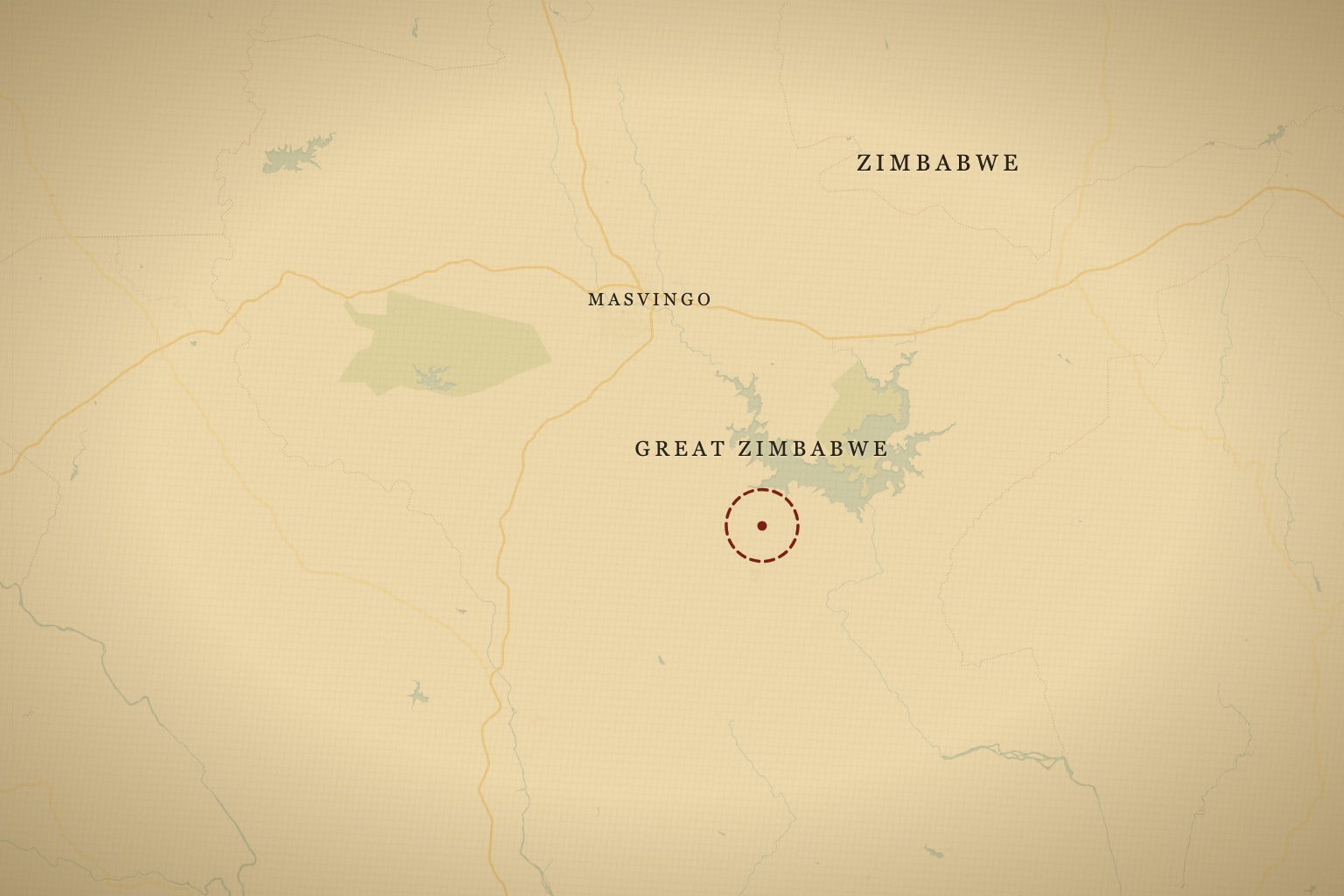
Great Zimbabwe lies in the modern nation that took its name — Zimbabwe, from the Shona dzimba dza mabwe, "houses of stone." The ruins sit near the town of Masvingo, in the southeast of the country, roughly 1,100 meters above sea level on the granite highveld. The site is open to visitors year-round; you can walk it in a day, though the scale is easy to underestimate until you're standing beneath a wall that dwarfs you.
The granite itself explains much of how the place was built. The plateau's rock weathers naturally into flat sheets and slabs, and the local masons learned to exploit that habit. Fires set against the outcrops, followed by dousing with water, would fracture the stone along its grain into workable blocks; those blocks could then be trimmed to a roughly uniform size and laid in level courses. There was no need to invent quarrying from scratch — the landscape offered its building material half-prepared, and generations of builders refined the craft of finishing it.
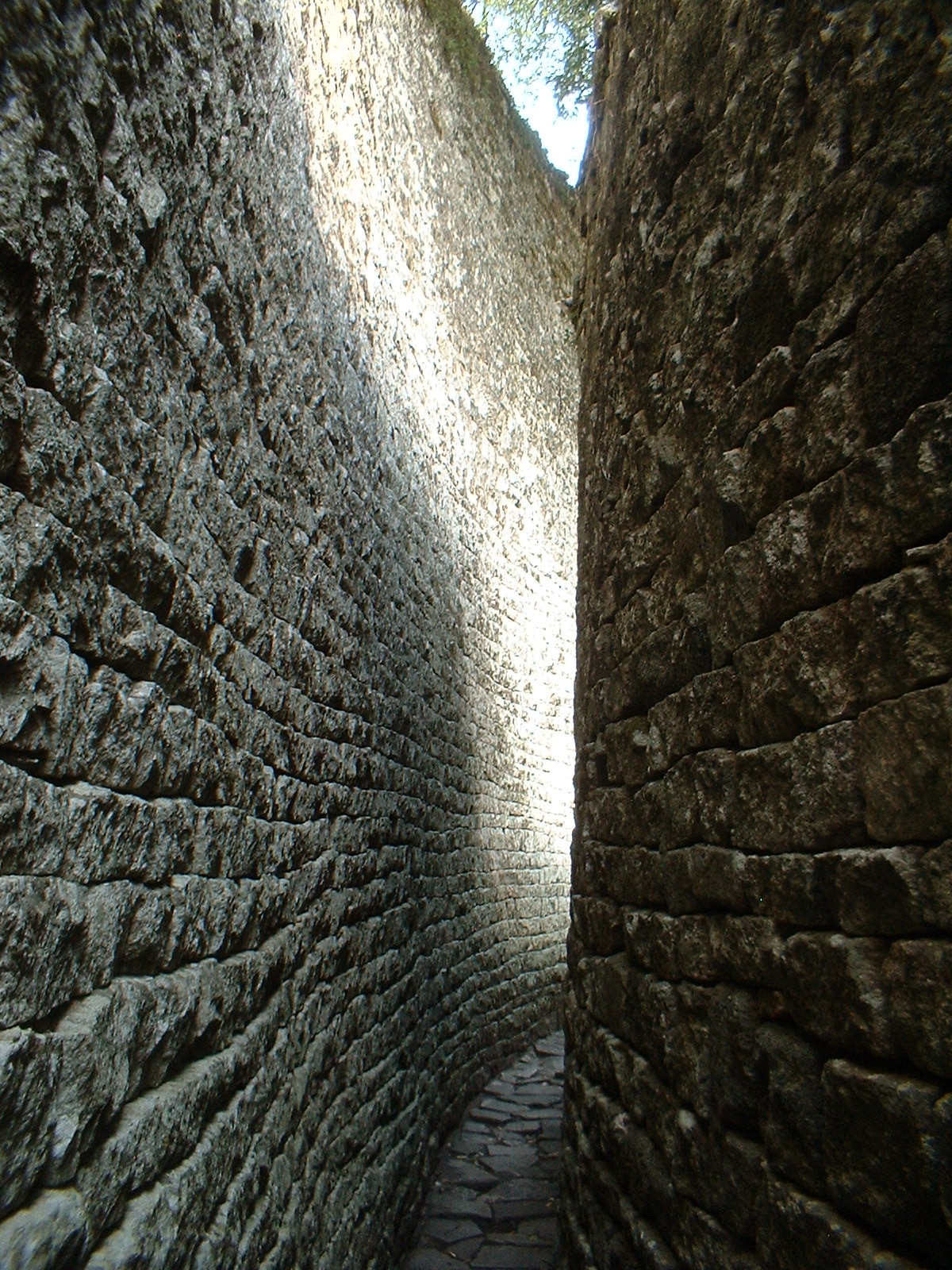
The complex sprawls across nearly eight square kilometers and divides into three main areas. The Hill Complex, perched on a granite outcrop, is the oldest part — a maze of walls threaded between and around gigantic natural boulders, so that stone masonry and living rock become almost indistinguishable. Walls run up to boulders, spring from their flanks, and use them as ready-made ramparts, so that it becomes hard to say where the hill ends and the architecture begins. Below it, on the valley floor, is the Great Enclosure, that circular curtain wall with its conical tower — the single most famous structure, and the largest ancient building south of the Sahara. Between the outer wall and an inner one runs the famous narrow passage, a corridor of stone that channels anyone walking it toward the tower at the far end. Scattered around them are the remains of the Valley Ruins, clusters of walled compounds where the general population lived, their daga — sun-dried earth and clay — houses long since dissolved, leaving the stone footings behind.
At its height, sometime around the 13th to 15th centuries, Great Zimbabwe may have housed as many as 18,000 people. It was the capital of a wealthy state that grew rich on cattle and, above all, on gold and trade. Archaeologists have pulled Chinese porcelain, Persian ceramics, and glass beads from the East African coast out of the soil here — objects that traveled hundreds of miles inland to a city that most of the medieval world never knew existed. Among the finds were also the carved soapstone birds — stylized raptors perched atop columns — that became emblems of the site and now appear on the modern national flag. Several of them were looted in the colonial era and scattered across collections abroad, and the effort to recover them has continued into recent decades.
What the Show Claims
To Ancient Aliens and the alternative-history community, Great Zimbabwe is a puzzle wrapped in an old and ugly controversy — and that controversy is where the argument begins.
The show leans on the sheer scale and precision of the dry-stone construction. Close to a million granite blocks, shaped and fitted without mortar, laid in courses so even that the walls stand plumb after centuries. How, the argument runs, did a society without the wheel, without draft animals suited to hauling, and without a written record of engineering, organize the labor and the know-how to raise something on this scale? The conical tower gets special attention: a massive solid structure with no entrance, no interior, no obvious function. In the show's framing, an object built with that much effort and no clear practical purpose points toward ritual, astronomy, or a knowledge the builders inherited rather than invented. Some readings go further, casting the tower and the site's alignments as evidence of astronomical observation, the kind of "encoded" knowledge the show habitually attributes to outside sources.
And then there's the trade network. Beads and porcelain from across the Indian Ocean, gold worked and moved across a continent — evidence, the show suggests, of a sophistication that "conventional" history was, for a very long time, unwilling to grant to a medieval African civilization. The alternative reading takes that historical reluctance and runs with it: if the site's own discoverers refused to believe Africans built it, what else, the argument asks, are we still refusing to see? The implication is that Great Zimbabwe encodes something — an outside influence, a lost technical tradition — that the standard story hasn't accounted for. It is a clever move, because it borrows the moral weight of a real injustice and redirects it toward a conclusion that, ironically, repeats the original insult: that the people who lived there could not have managed this alone.
What Archaeology Says
Here is where the real story of Great Zimbabwe becomes far more damning, and far more human, than any lost-technology theory — because the mystery this site spent a century fighting was not who its builders talked to across the stars, but whether the world would admit they existed at all.
When the German explorer Karl Mauch reached the ruins in 1871, he decided almost immediately that Africans could not have built them. He speculated the site was the work of the Queen of Sheba, a copy of Solomon's temple in Jerusalem — a fantasy he reportedly bolstered by claiming that a wooden lintel at the site smelled like cedar, and therefore must have come from Lebanon. This became colonial dogma, and it was politically useful: it turned the ruins into supposed proof that some vanished white or Near Eastern civilization had once ruled the region, a story that flattered the ambitions of the settlers moving into the country under Cecil Rhodes. In the early 1900s, an antiquarian named Richard Nicklin Hall was hired to "restore" the site and promptly dug out and discarded meters of what he considered worthless deposits — destroying, in the process, exactly the stratified evidence that could settle the question.
Then came the archaeologists who actually read the ground. In 1905, David Randall-MacIver excavated undisturbed layers and concluded the site was medieval and African in origin, noting that the objects in the soil matched the material culture of the region's own peoples rather than any imported Mediterranean world. In 1929, Gertrude Caton-Thompson, working with meticulous stratigraphy and sent out by the British Association for the Advancement of Science, confirmed it beyond serious doubt: Great Zimbabwe was built by ancestors of the local Shona people, and there was nothing foreign about it. Her conclusion was not a guess but the product of careful excavation in undisturbed ground, cross-checked against the datable trade goods sealed in those layers.
The archaeology since has only deepened that picture. Radiocarbon dates place the major construction between roughly the 11th and 15th centuries. The masonry belongs to a broad regional tradition — hundreds of smaller madzimbabwe dot the plateau, showing the style evolving over generations, from rough coursing to the fine, even walling of the Great Enclosure at the site's peak. This is exactly what you would expect from a homegrown craft maturing over time, not a technique dropped fully formed from outside. The trade goods are real, and they tell a real story: this was the capital of a state that controlled the flow of gold from the interior to Swahili merchants on the coast at Sofala, plugging medieval southern Africa into the Indian Ocean world. Gold and cattle were the foundations of its wealth, and the beads and porcelain are the return current of that exchange — proof of connection, not of foreign construction.
But notice what the settled facts leave standing. The Rhodesian government of the 20th century found the African origin of Great Zimbabwe so politically inconvenient that it actively suppressed and censored it — archaeologists were pressured to downplay the consensus, and guidebooks and official accounts were required to present the site's origins as an open question long after they were not. The truth became a matter the state preferred not to state. And the conical tower still refuses to explain itself. The best archaeological guess is that it symbolized a grain bin — a metaphor for the ruler's prosperity and his duty to feed his people, a familiar image in a society where a full granary meant a good and legitimate king. It's a beautiful reading. It also remains, after all this excavation, an educated interpretation of a solid stone object that tells us nothing directly. We know who built the tower. We still don't fully know what they meant by it.
There's another open thread, too. We don't know for certain why Great Zimbabwe was abandoned around the 15th century. Overgrazing, exhausted soils, shifting trade routes, political fracture — all have been proposed, none confirmed. A large population concentrated in one place puts steady pressure on grazing land, firewood, and water, and it is plausible the surrounding country simply could no longer sustain the city. As the gold trade shifted northward, the center of gravity may have moved with it. A city of 18,000 people simply wound down, its people dispersing to successor states like Mutapa and Torwa, carrying the same stone-building tradition with them and leaving the great walls to the grass.
The Verdict
What is genuinely unresolved about Great Zimbabwe is not who built it. That question was answered a hundred years ago, and the answer is unambiguous: it was built by Africans, ancestors of the Shona, in the medieval period, with skill that needs no explanation from beyond the plateau. The real scandal of Great Zimbabwe is that this plain fact had to be won — dug out of the ground by Caton-Thompson and defended against a colonial establishment that would rather have believed in the Queen of Sheba than in the people living right beside the ruins. The alternative-history version, whatever its intentions, keeps that establishment's habit alive: it looks at a remarkable African achievement and reaches instinctively for someone else to credit.
But the site keeps two questions open even now. Why was it left? And what did they mean by that silent conical tower — the object they poured a mountain of labor into, gave no door and no chamber, and never explained? We can date the granite. We can trace the beads back to the Indian Ocean. We can name the tradition and read the trade. And still that tower stands in the middle of the Great Enclosure, solid to its core, keeping its own counsel after eight centuries.
Go and see it if you can. Walk the parallel passage where the wall rises above your head, put your hand against granite that was shaped and stacked without a drop of mortar, and stand at the foot of the tower that has outlasted every empire that tried to explain it away. Then ask the only question Great Zimbabwe still can't answer for you: not who built this — but what were they trying to say?
Track the ancient sites you've visited on the interactive map.
Free account · mark visited sites · build your bucket list.
Open the tracker