The Mystery of Göbekli Tepe: The Temple That Rewrote History
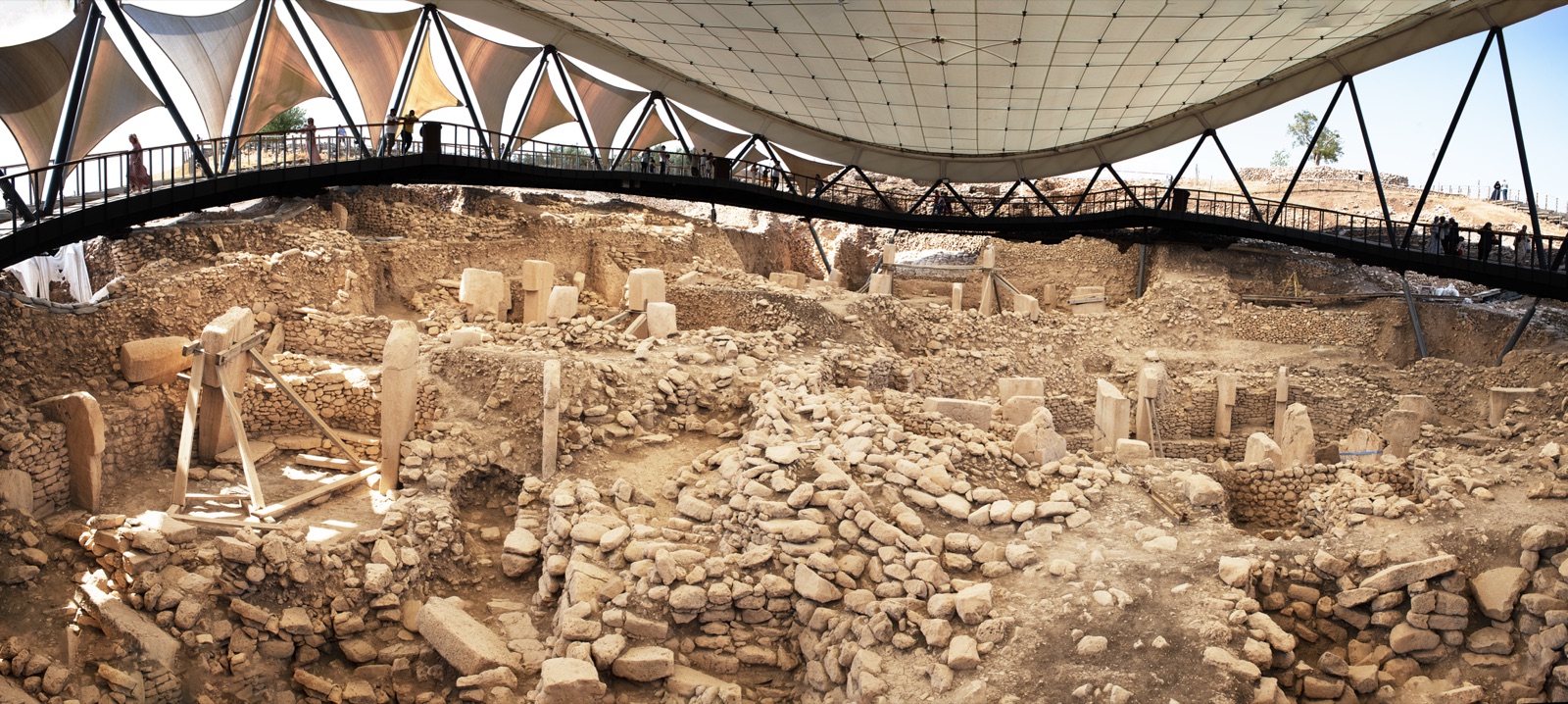
In 1994, a Kurdish shepherd noticed something odd in a hillside in southeastern Turkey — flat stones jutting from the soil at strange angles. What archaeologists found beneath that hill didn't just surprise them. It forced them to rewrite the story of human civilization from the first chapter.
Göbekli Tepe predates Stonehenge by 6,500 years. It was carved before the wheel, before writing, before agriculture. The people who built it lived in small bands, hunted wild animals, and gathered plants. And yet they somehow quarried, shaped, and erected T-shaped limestone pillars weighing up to 50 tons — some standing more than 18 feet tall — and arranged them in elaborate circular enclosures decorated with detailed animal reliefs. No one expected this was possible. The discovery didn't close a question. It opened one we're still inside of.
The Place
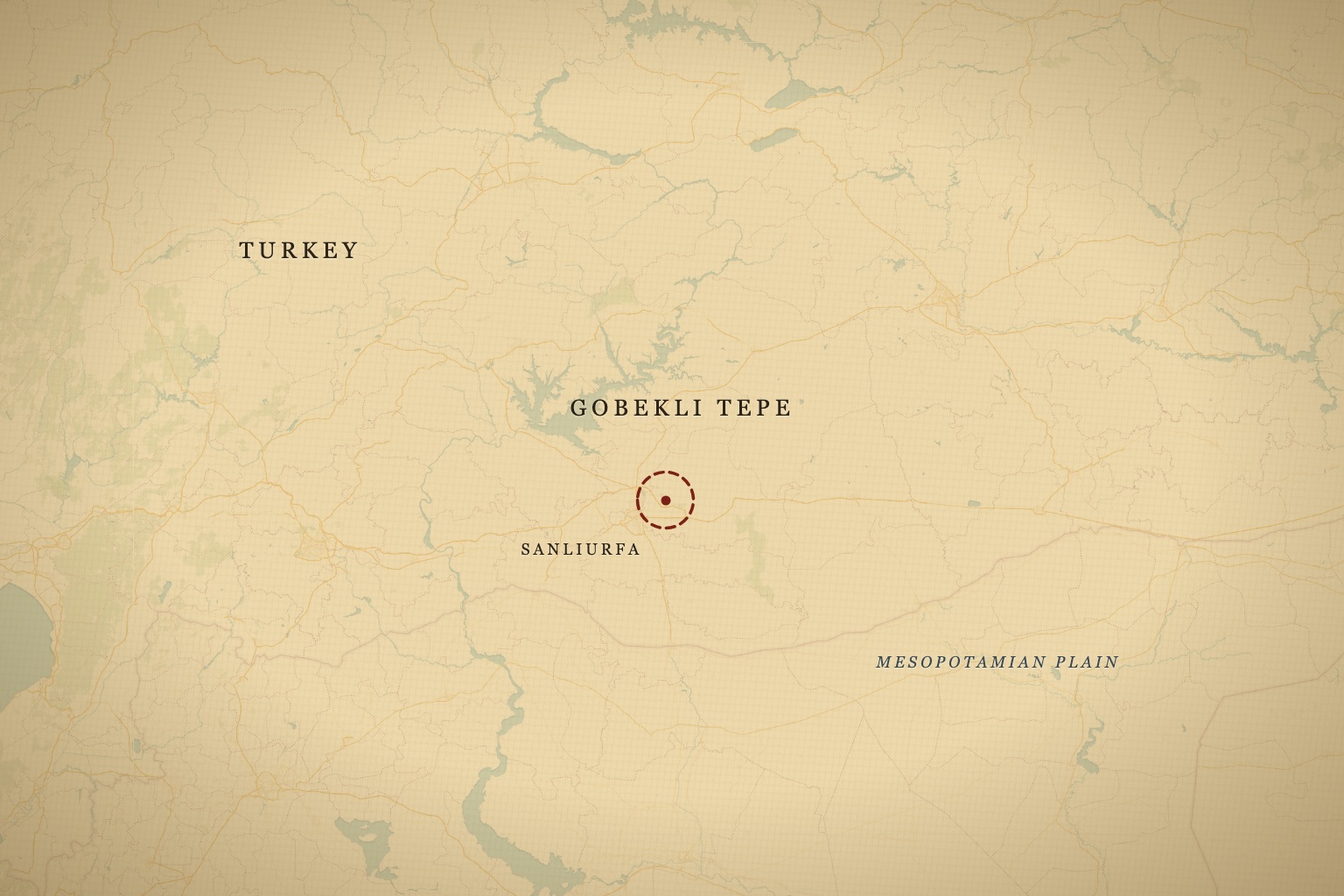
Göbekli Tepe — roughly translated as "Potbelly Hill" — sits in the Southeastern Anatolia Region of Turkey, about 15 kilometers northeast of the city of Şanlıurfa. At an elevation of around 760 meters, the site commands sweeping views of the Harran Plain. Today it's a UNESCO World Heritage Site, and you can visit the partially excavated enclosures under a protective shelter.
The site was first noted by American archaeologist Peter Benedict in 1963, but mistakenly written off as a medieval cemetery. It wasn't until German archaeologist Klaus Schmidt began excavating in 1995 that the true age and significance of the site became clear. Carbon dating placed the construction at approximately 9600 BC — the very beginning of the Neolithic period.
What Schmidt and his team uncovered was not one temple but many: at least 20 circular stone enclosures, most still buried, arranged across the hilltop. The structures vary in diameter from 10 to 30 meters, and each contains pairs of elaborately carved central pillars surrounded by rings of smaller stones. The pillars are carved with foxes, snakes, vultures, scorpions, cranes, and abstract symbols. Some appear to have humanoid features — stylized arms running along their sides, suggesting they may represent giant, faceless beings.
Then, at some point after construction, the entire site was deliberately buried under thousands of tons of rubble. And abandoned.
What the Show Claims
Ancient Aliens has devoted considerable attention to Göbekli Tepe over the years, and it's not hard to see why — the site practically begs for bold interpretation.
The core argument the show makes is one of capability: how could hunter-gatherers, living in small nomadic groups without metal tools, organized labor, or settled infrastructure, build something this complex and this large? The standard archaeological story, the show argues, doesn't add up. Something — or someone — must have given them help.
The show's theorists point to the sheer weight of the pillars (up to 50 tons), the precision of the carvings, and the organizational sophistication required to feed and coordinate hundreds of workers at a remote hilltop. They suggest that an advanced civilization — potentially of extraterrestrial origin — either built the site directly or gave early humans the knowledge to do it.
A specific claim centers on "Pillar 43," one of the most ornately carved stones at the site. Some researchers argue its carvings encode the date of a catastrophic cosmic event — possibly a comet impact around 10,900 BC that caused the Younger Dryas cooling period. In this reading, Göbekli Tepe isn't just a temple; it's a monument to a civilization-ending disaster, built by survivors who remembered what fell from the sky.
The deliberate burial adds another layer of intrigue. Why would the builders go to extraordinary effort to bury their own creation? The show suggests this points to hidden knowledge, concealment from outside forces, or a ritual act tied to extraterrestrial instruction.
What Archaeology Says
Archaeologists who have spent their lives in the soil of this hill read it differently than the show does — and what they've found makes the site stranger, not smaller. It forces us to fundamentally revise what we thought we knew about ourselves.
Klaus Schmidt's excavations established that the site was built by hunter-gatherers, and that fact carries a radical implication: the conventional wisdom that large-scale organized society required agriculture appears to be backwards. Göbekli Tepe suggests that complex ritual life — the need to build something monumental together — may have actually driven the development of agriculture, not the other way around. People didn't settle down and then build temples. They built a temple, and the logistics of feeding that workforce may have catalyzed the first experiments in farming. Sit with that. The show asks who gave these people their knowledge. The archaeology answers with something harder to absorb: nobody did, and the act of building this may have remade them into the kind of people who farm, settle, and inherit the world. The mystery doesn't move offworld. It moves inward.
The 50-ton pillars are heavy, and experimental archaeology has shown that Neolithic communities could move and erect stones of comparable size using wooden sledges, rope, earthen ramps, and organized human effort — Stonehenge's builders moved stones hundreds of miles over decades. But knowing it could be done by hand doesn't make it ordinary. The capacity to summon and coordinate that much human will, on a remote hilltop, for no shelter and no harvest — only a shared idea worth carrying 50 tons up a mountain for — is one of the defining and least-understood traits of Homo sapiens. The technology was rope and muscle. The astonishing part is the motivation, and we still don't know what it was.
The Pillar 43 cosmic catastrophe theory is taken seriously enough to be published in peer-reviewed journals, and it remains genuinely contested. The interpretation rests on a specific symbolic reading of the carvings that many archaeologists find speculative — but speculative is not the same as wrong, and the question it raises is still open: a comet around 10,900 BC, a people who remembered something falling from the sky, a stone that might be carrying the memory forward. It's a hypothesis, not a consensus — which means the carving still hasn't told us everything it knows.
The deliberate burial is perhaps the most haunting aspect of the site. Current thinking holds it was likely a ritual act — perhaps a form of purposeful decommissioning, echoing practices documented at other ancient sites where structures were "killed" after serving their sacred purpose. That naming doesn't dissolve the strangeness: it deepens it. These people climbed back up the hill they had labored over for generations and, on purpose, swallowed it under thousands of tons of rubble — and we don't know what made it necessary. The burial preserved the site extraordinarily well, which is the quiet irony at the heart of it: the act meant to end Göbekli Tepe is the reason we get to stand inside its questions at all.
The Verdict
Archaeology has given us better questions about Göbekli Tepe, not final answers — and the biggest one it has handed us is also the simplest. Even within mainstream archaeology, we still don't know exactly what it was for.
There's no permanent habitation at the site. No cooking hearths, no grain storage, no houses. Analysis of animal bones found in the fill suggests enormous feasting events — thousands of animals consumed over generations. The site appears to have been a place people traveled to, not lived at. A pilgrimage destination. A gathering place for scattered hunter-gatherer bands, possibly coming from hundreds of miles away. Something on this hill was worth the journey. We don't know what.
What drew them? What were they worshipping, or commemorating, or celebrating? The faceless pillar figures — if they do represent beings — remain unidentified. The symbols carved on the stones haven't been decoded. The full extent of the site remains mostly unexcavated. Every answer the dig has surrendered so far has only sharpened the central question instead of retiring it.
Göbekli Tepe is 12,000 years old, and we've only been looking at it seriously for 30 years. The excavation is estimated to be less than 5% complete. Whatever it holds is still mostly underground — which means the people best positioned to understand this place may not have been born yet.
So the question the hill keeps asking is still unanswered, and asking it honestly is the opposite of explaining it away. Hunter-gatherers stood here more than a hundred centuries ago and decided to build something that would outlast everything they knew — and we still cannot say with confidence why. That's not a gap waiting to be tidied shut. That's the thing itself.
Go visit if you can. Stand in those stone circles. Let the hill ask you its question directly. And wonder.
Track the 1 site from this post on your map.
Free account · mark visited sites · build your bucket list.
Start tracking